

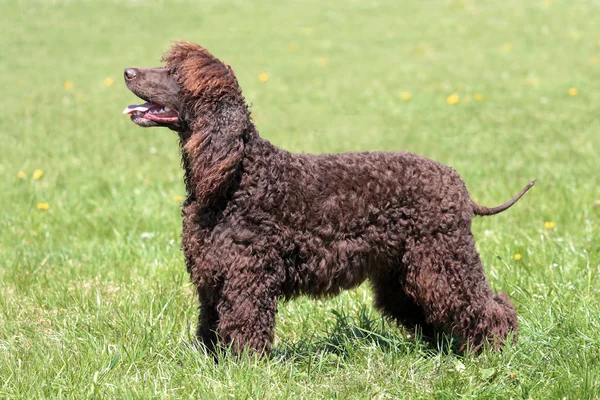
| Height | 51–61 cm |
| Weight | 20–30 kg |
| Lifespan | 10–12 years |
| FCI group | 8 · retrievers, spaniels, water dogs |
| Origin | Ireland |
Exact ratings
- Generally a robust working breed
- Hip dysplasia
- Ear infections (drop ears, loves water)
- Hypothyroidism
- Follicular dysplasia; sensitivity to some vaccines/medications
Balanced food for an active water spaniel, with weight control. Dry and check the drop ears regularly; clip and comb the curly coat; provide exercise, water and mental tasks.
The Irish Water Spaniel is not just a dog; it’s a genuine personality wrapped in a mystery of origin and gifted with a unique sense of humor. Built for tough conditions, waterfowl hunting, and high activity, this curly-coated athlete gets into the zone and completely forgets about fatigue. It is capable of fearlessly retrieving game from icy waters and rushing river currents. This brave, smart, and incredibly loyal hunter’s helper forms a deep bond with its owner, serving them with limitless love. Learn more on Tvaryny.
While long walks and active games are mandatory for the Irish Water Spaniel, it is worth remembering that no city conditions can replace the open space and natural enviornment this freedom-loving dog was created for. They are the ideal companion for active people living in the country who are ready to dedicate plenty of time to their pet.
General Breed Characteristics
| Parameter | Characteristic |
| Origin | Ireland |
| First Mentioned | ~1600s, modern standard since 1830s |
| FCI Classification | Group 8 (Retrievers, Flushing Dogs, Water Dogs), Section 3 (Water Dogs) |
| Lifespan | 10-14 years |
| Height at Withers | Males: 21-23 in, Females: 20-22 in |
| Weight | Males: 55-65 lbs, Females: 45-58 lbs |
| Temperament | Intelligent, playful, inquisitive, loyal, energetic |
| Energy Level | High |
| Grooming Needs | High |
| Shedding | Minimal, hypoallergenic coat |
| Attitude Toward Children | Good, with proper socialization |
| Attitude Toward Other Animals | Requires early socialization |
| Trainability | High, but can be stubborn |
History: The Mystery of the Irish Bogs
The history of the Irish Water Spaniel is one of the most enigmatic among all dog breeds. Although the modern type was finally established in Ireland in the 1830s thanks to the efforts of Dublin enthusiast Justin McCarthy, the roots of these dogs go much deeper. There are written records dating back to the 1600s about “water dogs with tails like rats” that hunted ducks and other game on the Irish bogs. The exact origin remains a subject of debate.
There are several main theories:
- Persian Heritage: One version claims that the breed’s ancestors came to Ireland from Persia via Spain.
- The French Connection: Another popular theory suggests a cross between Poodles and other water dogs, possibly such as the Barbet, which is also known for its curly coat and love of water.
- The Portuguese Trace: A third version links the breed to Portuguese working dogs brought to Ireland by fishermen. This theory makes sense given the working qualities and similar passion for the water, much like the Portuguese Water Dog.
Despite the uncertainty, the entire modern population of Irish Water Spaniels descends from a single dog named Boatswain, who was born in 1834 and owned by Justin McCarthy. It was his genetic material that became the foundation for the breed’s standardization. By the late 19th century, the Irish Water Spaniel had become one of the most popular sporting breeds in the UK and North America, although today it is considered relatively rare.
What Does the Irish Water Spaniel Look Like?
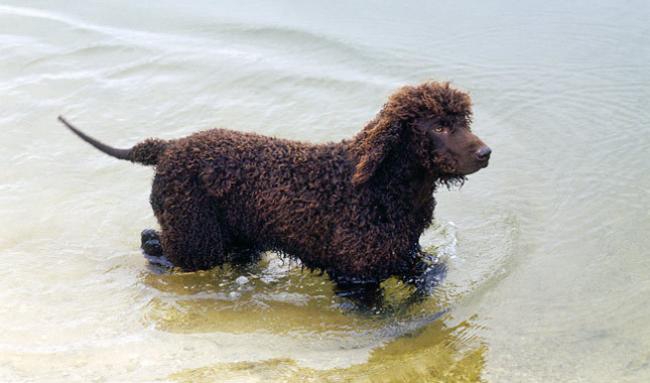
The appearance of the Irish Water Spaniel is unique and easily recognizable. It is the tallest member of the spaniel family – a sturdy, muscular dog built for endurance and water work.
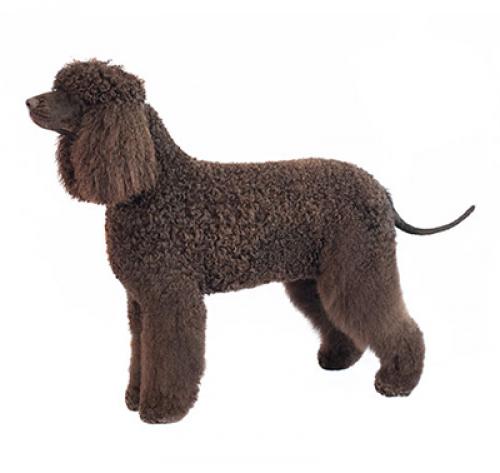
Coat and Color: The breed’s calling card is its coat. It consists of dense, tight crisp ringlets that cover the entire body except for the face and tail. This coat is naturally oily, making it waterproof and protecting the dog from hypothermia. The color is always the same – a rich, deep liver brown, often with a characteristic purple hue that is especially noticeable in the sunlight.
Head and Muzzle: The head is adorned with a high “top-knot” of long curls that falls over the eyes, giving the dog a look that is both comical and mysterious. In contrast, the face, throat, and cheeks are covered with short, smooth hair. This creates a very expressive and unique image.
Body and Tail: The body is well-proportioned with a deep chest for powerful lungs. The back is strong and level. But the most amazing feature, aside from the coat, is the “rat tail.” It is thick and covered with curls at the base (about 3-4 inches), while the rest of the tail is smooth or covered with fine, short hair, tapering to a point. This tail serves as a rudder when swimming.
Temperament: The Clown of the Spaniel Family
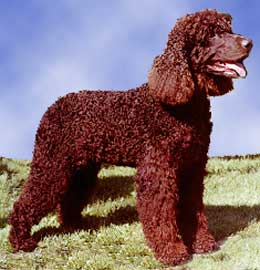
The Irish Water Spaniel is often called the “clown” of the dog world, and for good reason. This is an extremely intelligent, inquisitive, and playful dog with a great sense of humor. They love being the center of attention and often resort to funny antics to entertain their family.
They are boundlessly loyal to their owners and form a strong bond with them. They get along well with children, especially if raised together, becoming patient and fun companions. However, their energy and size require supervision during play with small toddlers.
Despite their openness within the family circle, Irish Water Spaniels can be reserved and wary of strangers. They are not aggressive, but their vigilance makes them decent watchdogs who will always announce the arrival of guests with a loud bark. Early and proper socialization is key to ensuring this trait doesn’t turn into shyness or excessive suspicion.
Pros and Cons of the Breed
Like any breed, Irish Water Spaniels have their strengths and weaknesses. It is important to objectively assess them before bringing such a dog home.
| Pros | Cons |
|---|---|
| Unique hypoallergenic coat. Sheds very little, making the breed a good choice for people with allergies. | High grooming requirements. The coat needs regular brushing (several times a week) and professional clipping (every 2-3 months) to avoid matting. |
| High intelligence and trainability. Quickly learns commands and tricks. | Tendency toward stubbornness. Their smarts can lead to independence. They require consistent and patient training. |
| Playful and cheerful nature. An excellent companion for an active family, loves games and fun. | Very high energy level. Requires at least 1-2 hours of intense physical activity daily. Not suitable for apartment living. |
| Loyalty to family. Bonds strongly with their people and gets along well with children. | Wary of strangers. Requires thorough early socialization to avoid becoming too shy or suspicious. |
| Natural born swimmer. Adores water and is an excellent dog for hunting or just water fun. | Relative rarity. Finding a good breeder and a puppy can be difficult and expensive. |
Care and Maintenance
Caring for this breed has its own specifics, primarily related to the unique coat and high activity needs.
Grooming: How to Care for Curly Hair
The coat of the Irish Water Spaniel is its pride and the main chore for the owner. It sheds very little, but requires constant care to remain healthy and beautiful. It must be thoroughly combed 2-3 times a week with a special wide-toothed comb to reach the undercoat and prevent mats from forming. Bathe the dog only when necessary, using mild shampoos so as not to wash away the natural oil layer that protects the skin and coat. Professional grooming is needed every 8-12 weeks to maintain the shape.
Physical Exercise and Activity
This is a very energetic breed. A simple walk on a leash will not be enough. The Irish Water Spaniel needs daily intense exercise, which includes off-leash running, active games (Frisbee, fetch), and, of course, swimming. Access to a body of water where the dog can swim freely is the best gift for them. Lack of activity can lead to destructive behavior, excessive barking, and general anxiety. Their endurance and love for work align them with breeds like the Curly-Coated Retriever, the rugged Wetterhoun, and the American Water Spaniel.
Training and Socialization
Although Irish Water Spaniels are very smart and eager to please, training them can be a challenge. Their intelligence is combined with independent thinking and stubbornness. Therefore, training must be consistent, fair, but firm. Positive reinforcement methods work best – praise, treats, and games.
They get bored quickly with monotony, so sessions should be short, varied, and interesting. Early socialization is absolutely essential. From a very young age, the puppy needs to be introduced to different people, sounds, places, and other animals. This will help raise a confident and balanced dog rather than a skittish or overly suspicious animal. A general obedience course will be very beneficial.
Health: Common Issues and Prevention
Irish Water Spaniels are generally a healthy breed, but like many other purebred dogs, they are prone to certain genetic conditions. It is important to be aware of these risks and conduct preventive check-ups on time.
| Condition | Description and Symptoms | Prevention and Action |
|---|---|---|
| Hip and Elbow Dysplasia | Abnormal joint development leading to pain, lameness, and arthritis. | Choose a puppy from responsible breeders who test the parents. Maintain a healthy weight and provide moderate exercise. |
| Eye Diseases | Susceptibility to cataracts, Progressive Retinal Atrophy (PRA), entropion (eyelid rolling inward), and distichiasis (eyelashes growing toward the eyeball). | Regular exams with a veterinary ophthalmologist. Watch for redness, cloudiness, or tearing. |
| Ear Infections (Otitis) | Long hanging ears and thick hair create ideal conditions for bacteria and fungi. | Inspect and clean ears regularly (weekly). Keep them dry, especially after swimming. |
| Allergies | May suffer from food or contact allergies showing as itching and skin problems. | Monitor reaction to food. Consult a vet to identify the allergen if symptoms appear. |
| Hypothyroidism | Underactive thyroid gland leading to weight gain, lethargy, skin and coat issues. | Diagnosed via blood test. Treated with hormone therapy. |
| Sensitivity to Anesthesia and Vaccines | Some breed members may have atypical reactions to certain drugs, specifically Sulfa drugs and Ivermectin, as well as vaccinations. | Always warn your vet about breed susceptibility before any medical procedures. |
Nutrition: How to Feed an Irish Water Spaniel?
Proper nutrition is the key to your pet’s health and energy. Due to their high activity level, Irish Water Spaniels need a high-quality, balanced diet.
Key Recommendations:
- High-Quality Protein: The foundation of the diet should be high-quality protein (meat, poultry, fish). Choose super-premium dry foods designed for active medium-to-large breeds.
- Fatty Acids: Omega-3 and Omega-6 fatty acids are extremely important for maintaining skin health and the coat’s waterproofing. Choose foods with fish oil or add it to the diet.
- Portion Control: Do not overfeed the dog. It is better to seperate the daily allowance into two meals (morning and evening) to reduce the risk of bloating and gastric torsion.
- Natural Feeding: If you choose a natural diet, it should include lean meat, organ meats, grains (rice, buckwheat), vegetables (carrots, pumpkin, broccoli), and a small amount of dairy products. Be sure to consult a veterinary nutritionist to create a balanced menu.
- Fresh Water: Always provide access to clean, fresh water, especially after physical exertion.
Interesting Facts About the Irish Water Spaniel
- The Oldest Spaniel: The Irish Water Spaniel is considered one of the oldest spaniel breeds, with a history spanning at least four centuries, and possibly more.
- Unknown Ancestors: Despite its long history, no one knows for sure exactly how this breed appeared. Justin McCarthy, the “father” of the breed, took this secret to the grave.
- Natural Clown: Their playful, mischievous behavior and tendency to “perform” for an audience earned them the nickname “the clowns of the spaniel family.”
- “Rat Tail” – A Multi-tool: The unique smooth tail not only helps the dog steer in the water like a rudder but also doesn’t get caught in bushes and branches when moving on land.
- Rare Breed: Despite its popularity in the 19th century, the Irish Water Spaniel is a fairly rare breed today. Meeting one on the street is a stroke of luck.
Frequently Asked Questions (FAQ)
Does the Irish Water Spaniel shed a lot?
No, it sheds practically not at all. Their hair grows constantly, similar to human hair, and dead hairs get stuck in the curls rather than falling on the floor. This makes them an excellent choice for allergy sufferers, but requires regular brushing.
Is this breed suitable for apartment living?
Categorically no. The Irish Water Spaniel needs space to move. The ideal option for them is a private house with a large, securely fenced yard and, preferably, access to water.
Are they easy to train?
They are very smart and capable learners, but at the same time independent and stubborn. Training requires patience, consistency, and the use of positive reinforcement methods. Boring, monotonous sessions tire them quickly.
How do they get along with children and other animals?
Typically, they treat children in their family well. They can coexist with other dogs and animals if they have undergone early and thorough socialization. However, their hunting instinct may manifest towards small animals, particularly birds.
Do they bark a lot?
They are not prone to barking without reason, but they are good watchdogs and will always voice an alert if they notice something suspicious or hear a stranger at the door.
Video About the Breed
- Clever, sharp-witted, easy to train
- A fearless water retriever
- The curly coat barely sheds
- Devoted, with a unique sense of humor
- A very high need for exercise and work
- Reserved with strangers
- The curly coat needs care
- Not for an apartment without exercise
| Spanish Water Dog | Portuguese Water Dog | Poodle (Standard) | |
|---|---|---|---|
| Height | 40–50 cm | 43–57 cm | 45–62 cm |
| Energy | 4.5 | 4.5 | 4 |
| Apartment | 2.5 | 2.5 | 3 |
| Beginners | 3 | 3 | 4 |
Why is the Irish Water Spaniel called a “clown”?
What sets the Irish Water Spaniel apart?
Is the breed suited to an apartment?
FCI Standard No. 124 · Irish Kennel Club
For apartments · For kids · For beginners · Active · Smartest · Hypoallergenic · All rankings →