Group 8. Retrievers, Flushing Dogs, Water Dogs. Section 3. Water Dogs. · Portugal
Portuguese Water Dog
A curly worker of the sea with a companion's soul: clever, energetic, devoted and virtually non-shedding. The Portuguese Water Dog helped fishermen herd fish and carry messages between boats; today it is an athletic, hypoallergenic partner for an active family.
Height
43–57 cm
Weight
Males: 19–25 kg, Females: 16–22 kg
Lifespan
11–14 years
FCI group
Group 8. Retrievers, Flushing Dogs, Water Dogs. Section 3. Water Dogs.
Apartment · with caveatsKidsCatsOther dogsBeginners
The Portuguese Water Dog is an ancient breed that harmoniously combines tireless physical stamina, exceptional service qualities, a sharp mind, and an incredible work ethic. Its unique features, such as webbed feet, a waterproof undercoat, and thick, coarse hair, make it an unrivaled swimmer capable of working even in freezing water. This energetic yet balanced dog is the embodiment of the ideal four-legged friend. Learn more on Tvaryny.
Portuguese Water Dog: A Brief Breed Overview
Portuguese Water Dog: A Brief Breed Overview · 7
Origin
Portugal
First Mentioned
First written records date back to 600 BC
Life Span
10–14 years
Height at Withers
Males: 50–57 cm, Females: 43–52 cm
Weight
Males: 19–25 kg, Females: 16–22 kg
FCI Group
Group 8. Retrievers, Flushing Dogs, Water Dogs. Section 3. Water Dogs.
Other Names
Cão de Água Português, Portie
Interesting Facts About the Breed
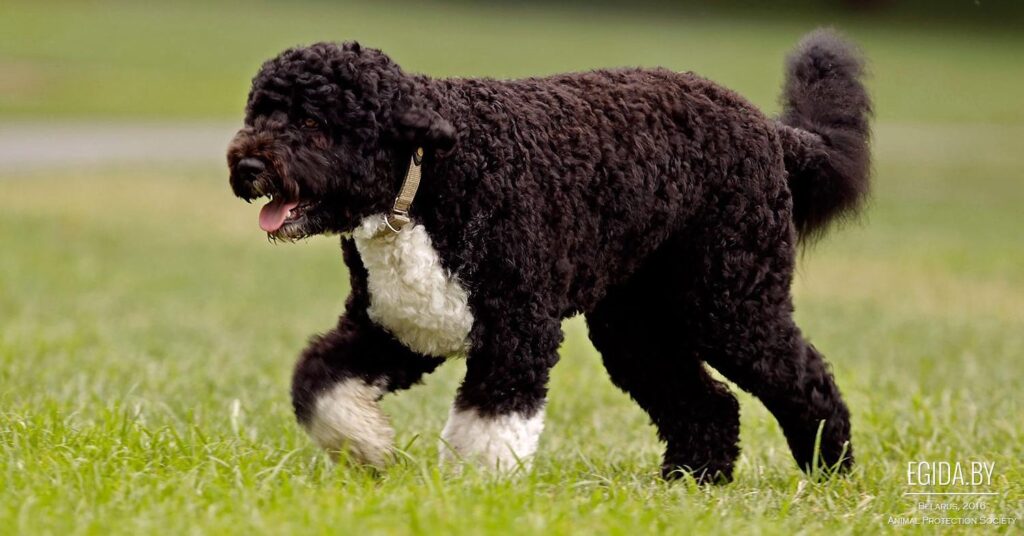
White House Dogs: Perhaps the most famous representatives of the breed were Bo and Sunny, who belonged to the family of the 44th US President, Barack Obama. This breed was chosen because of its hypoallergenic qualities, as the president's daughter, Malia, suffered from allergies.
Unique Voice: Portuguese Water Dogs have a wide range of vocalizations. They can not only bark but also make various sounds, effectively "talking" to their owners.
Born Divers: These dogs are capable of diving to a depth of up to 4 meters to retrieve objects from the bottom. Their webbed feet and ability to hold their breath make them excellent swimmers and divers.
Work Ethic: Even today, being primarily companions, these dogs retain an incredible capacity for work. They are happy when they have a task, whether it is fetching a ball or helping around the house.
Do Not Confuse: Despite some superficial resemblance to Poodles or other water breeds, such as the Cirneco dell'Etna (although that is a hound), the Portuguese Water Dog is an absolutely distinct breed with a unique history and character.
History of the Breed
The history of the Portuguese Water Dog goes back to ancient times. It is believed that the ancestors of these dogs arrived on the Iberian Peninsula with Persian sailors as early as 600 BC. The Romans, who later arrived in these lands, called them "canis piscator," which translates as "fisherman's dog." For centuries, these dogs were bred along the entire coast of Portugal, where they became indispensable helpers to fishermen. Their main task was to herd fish into nets, retrieve tackle that had fallen overboard, and even deliver messages from one ship to another or to the shore.
The southernmost province of Portugal, the Algarve, became the center of the breed's development, as the fishing industry was particularly advanced there. The dogs lived directly on the fishing trawlers, working side by side with humans. However, from the mid-20th century, as fishing technologies modernized, the need for canine assistance began to plummet. This led to the breed finding itself on the brink of extinction and even being listed as one of the rarest breeds.
The world owes the breed's revival to the Portuguese tycoon Vasco Bensaude, who became fascinated by these dogs in the 1930s and created a breeding program. Thanks to his efforts and those of other enthusiasts, the breed was saved. In 1954, several specimens arrived in England, and in 1958 in the USA, where they quickly gained popularity. The American Kennel Club (AKC) officially recognized the breed on January 1, 1984. Today, the Portuguese Water Dog is primarily a wonderful companion, show dog, and athlete, although it has not lost its unique working qualities.
What the Portuguese Water Dog Looks Like: Standard and Appearance
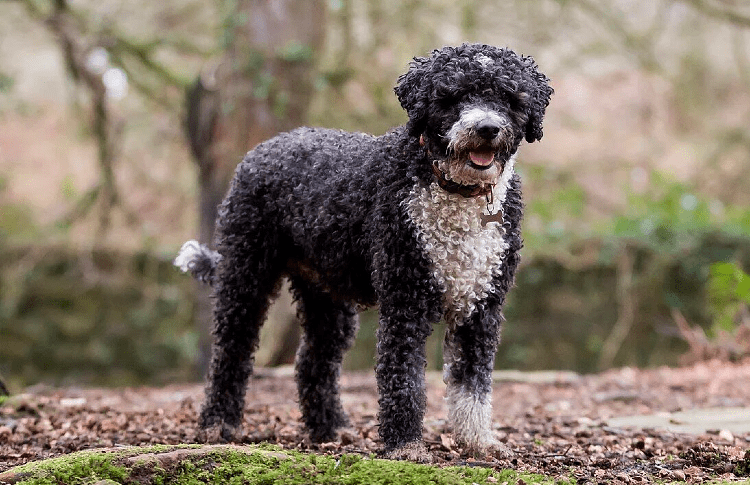
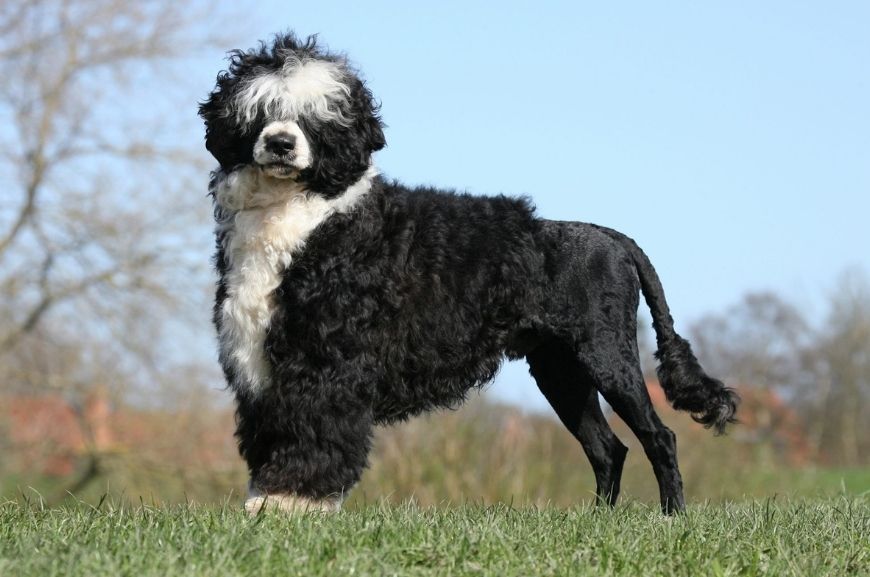
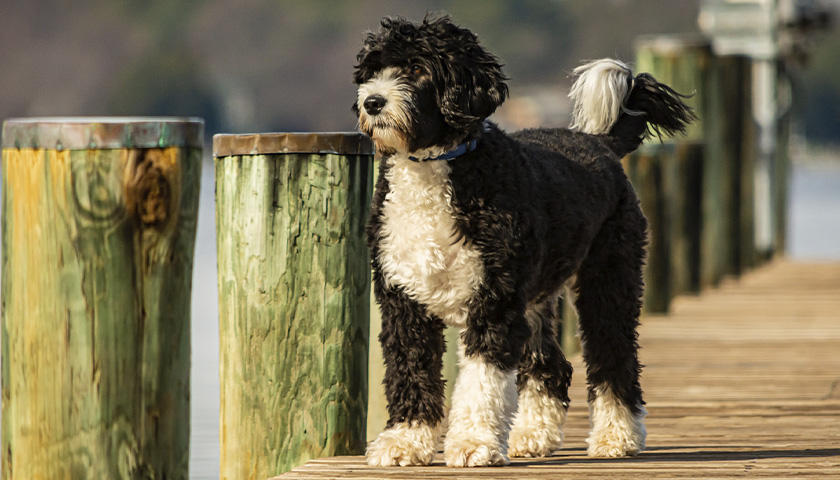
This is a medium-sized dog with a strong, muscular build. Its appearance suggests strength, stamina, and agility. The head is broad and proportional, with a distinct stop (transition from forehead to muzzle). The eyes are of medium size, round, usually dark brown or black, with an intelligent and penetrating gaze. The ears are set high, heart-shaped, and lie flat against the head. A characteristic feature of the breed is the tail - thick at the base and tapering toward the tip; it serves as a rudder for the dog when swimming. At rest, the tail hangs down, but when moving or excited, it curls playfully in a ring over the back.
The Portuguese Water Dog has a single coat with no undercoat, which is a significant advantage as the dog barely sheds. There are two coat types:
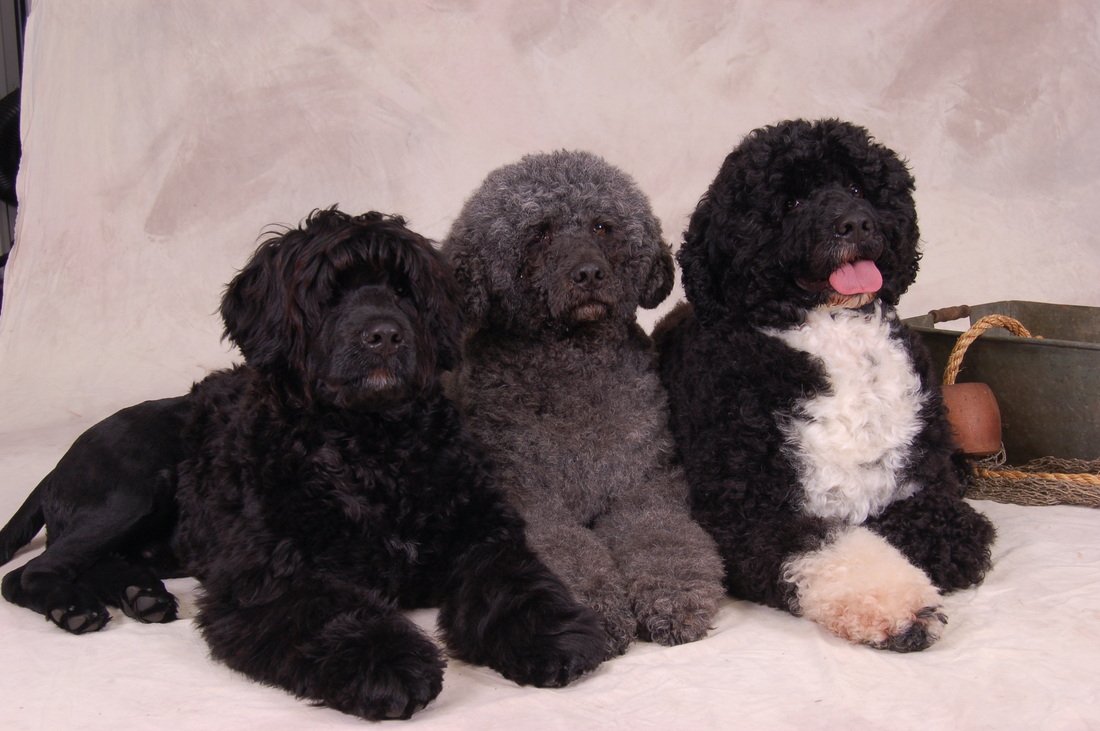
Curly coat: The hair forms dense, cylindrical curls. It appears somewhat matte in texture.
Wavy coat: The hair is longer, softer, with a slight sheen, falling in gentle waves.
The color can be black, white, various shades of brown, as well as a combination of black or brown with white. Interestingly, solid white dogs are not albinos - they must have a black nose, lips, and eyelids.
Character: Temperament and Behavior
The Portuguese Water Dog is a true bundle of energy, inteligence, and devotion. He is extremely smart, obedient, and always keen to please his owner. This makes him relatively easy to train, although he can sometimes show stubbornness and independence, a legacy of his working past. These dogs need an owner who can be a leader but will treat the pet with love and respect.
These are very social and family-oriented dogs. They tolerate solitude poorly and require constant contact with people. If left alone for long periods, a "Portie" may get bored and invent destructive entertainment for himself. They get along famously with children, especially if raised together, and become tireless playmates for them. With other animals, including cats and rodents, they usually coexist peacefully as their hunting instinct is quite weak. They are wary of strangers but not aggressive, making them good watchdogs who will always announce the arrival of guests with a loud bark.
Training and Socialization
The Portuguese Water Dog is an extremely capable student who loves the training process. However, his sharp mind requires a creative approach. Monotonous repetition of the same commands can bore him quickly, and he will start to show stubbornness. Therefore, training sessions should be short, interesting, and varied. Training and socialization should start as early as possible, from 8–10 weeks of age.
Early socialization is key for this breed. The puppy needs to be introduced to different people, sounds, places, and other animals so that he grows into a confident and balanced dog. Thanks to their energy and intellect, "Porties" excel in many dog sports, such as agility, obedience, flyball, and, of course, water disciplines. Giving the dog the opportunity to engage in such activities is the best way to satisfy his exercise needs. If you do not plan to do sports, ensure long daily walks with elements of play and training. Water games, fetching, and searching for objects will all help channel his energy in the right direction.
Comparing their activity needs, they are similar to other energetic dogs such as the Sussex Spaniel, although "Porties" are significantly more water-oriented. Their ability to work in water is unique, and in this regard, they are similar to specialized water dogs like the Spanish Water Dog, the Lagotto Romagnolo, and the Barbet.
Pros and Cons of the Breed
Pros and Cons of the Breed · 6
Pros
Cons
High intelligence and trainability
Requires high physical and mental stimulation
Hypoallergenic coat, almost no shedding
Tendency to bark loudly
Devoted to family, gets along great with kids
Tolerates solitude poorly, can be destructive
Energetic and playful companion for active people
Requires regular and thorough coat care
Good health and stamina
Can be stubborn and independent
Gets along well with other animals
High cost of puppies
Grooming and Coat Care
Coat care is one of the most important aspects of owning this breed. Since they do not shed, their hair grows constantly, much like human hair, and without proper care, it can mat into tangles. Regular brushing (several times a week) is mandatory. The dog should be bathed as necessary, approximately once every 1–2 months, using high-quality dog shampoos. After bathing, it is advisable to blow-dry the coat while brushing simultaneously to avoid tangling.
Additionally, Portuguese Water Dogs need regular clipping, approximately every 4–8 weeks. There are two traditional clips for this breed:
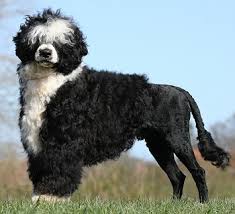
The Lion Clip: The hindquarters, muzzle, and base of the tail are shaved very short, while a pompom is left on the tail tip. This clip had practical significance for fishermen: it facilitated the movement of the hind legs in the water, while the long hair on the chest and head protected vital organs from hypothermia.
The Retriever Clip: The entire coat is clipped evenly over the body to a length of about 1 inch (2.5 cm). This is a lower-maintenance option that gives the dog a tidy appearance.
Also, do not forget to regularly check the condition of the ears, as their drop shape and love of water make them prone to infections. Claws should be trimmed once every 3–4 weeks.
Nutrition
Nutrition: Key Recommendations
Health and risks
Health: Typical Diseases and Prevention
Frequently Asked Questions (FAQ) · 4
Is the Portuguese Water Dog suitable for living in an apartment?
Yes, provided there is sufficient daily walking and exercise. This dog is quite compact, but his energy needs an outlet. Long walks, jogging, and games are mandatory.
How much do they shed?
This is a hypoallergenic breed that practically does not shed. Instead of seasonal shedding, their hair grows constantly, and dead hairs remain in the coat rather than on the furniture. That is precisely why they need regular brushing and clipping.
Is coat care difficult?
Grooming requires regularity and time. You will have to brush the dog several times a week and take him to a groomer every 1–2 months. If you are not ready for such procedures, it might be worth considering another breed.
Are they aggressive toward people or other animals?
No, Portuguese Water Dogs are not prone to aggression. They are friendly toward people and usually get along well with other dogs and animals, especially with proper early socialization.
Video About the Breed
FAQ
Is the Portuguese Water Dog hypoallergenic?
Mostly yes — the curly coat barely sheds and releases less allergen; this is why sensitive people choose the breed (though no one guarantees full safety).
Does this breed love water?
Very much — it was bred to help fishermen: to herd fish, retrieve gear and carry messages between boats; swimming is its favorite activity.
Is the breed suited to a novice?
Yes — clever, people-oriented and trainable; the key is to provide enough exercise, grooming and mental tasks.