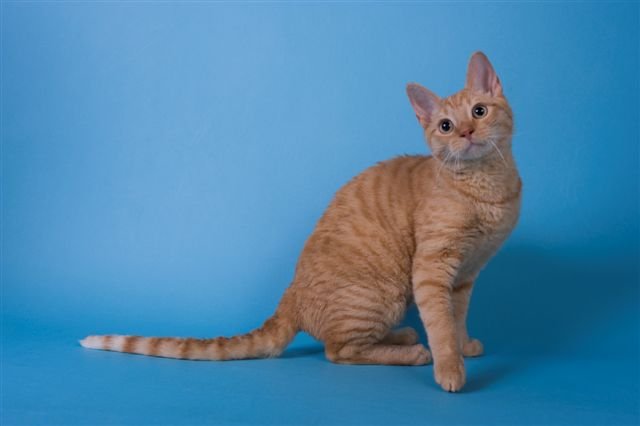
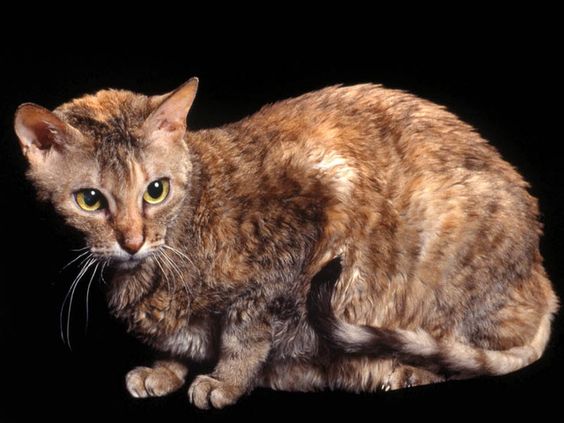
A velvety, wavy “plush” cat with robust health — gentle and people-oriented: affectionate, calmly playful, sociable and devoted. The breed is considered hardy, yet it has predispositions of its own, set out below.
A hardy breed, yet with predispositions of its own (below)
Gentle, affectionate, devoted to its family
Calmly playful, sociable
The soft wavy coat barely sheds
Cons
Very attached — dislikes solitude
A thin coat — sensitive to cold
Needs warmth and attention
Rare — hard to find
Size
ToySmallMediumLargeGiant
Compatibility
KidsDogsOther catsBeginnersTime alone · with caveats
The German Rex is a captivating domestic cat breed with a unique curly coat and a history that dates back to the mid-20th century. Often considered the first of the Rex breeds, these cats are true companions who embrace life with an optimistic and cheerful spirit. Their playful energy and cleverness are truly impressive. A German Rex loves being the center of attention, gladly playing with children and other pets, and soaking up all the warmth and love its owner has to offer. Its velvety, wavy coat, which lacks stiff guard hairs, requires minimal grooming, but the cat itself thrives on warmth and affection, becoming a charming "curly" addition to any home. You can read more about this on Tvaryny.
German Rex: At a Glance
German Rex: At a Glance · 11
Characteristic
Description
Origin
Germany (East Berlin)
Time of Origin / Recognition
~1947 / 1951, 1982 (FIFe recognition)
Lifespan
12–16 years, sometimes longer
Height
~12–14 inches
Weight
Females 7–9 lbs; Males 9–11 lbs
Temperament
Affectionate, social, playful, intelligent, patient, active
Grooming
Minimal (light brushing with a soft brush or hand once a week; ear care)
Activity Level
Moderate / High
Vocalization
Moderate
Child Compatibility
Excellent
Compatibility with other pets
Good
Fun Facts About German Rexes
The First Rex? While the debate continues, many believe that Lämmchen and the German Rex breed represent the first recorded instance of the Rex mutation in cats, predating the appearance of the Cornish Rex.
"The Little Lamb" from Berlin: The name of the breed's founding cat, Lämmchen, translates to "little lamb," a nod to her unusual curly coat.
Same Gene, Different Story: The gene that causes the curls in the German Rex is identical to the Cornish Rex's gene (Rex Type 1, re gene), but it arose spontaneously and independently in a different cat population.
Curly Whiskers: Like other Rexes, the German Rex's whiskers and eyebrows are also short, brittle, and curly.
A Rare Treasure: The German Rex remains one of the world's rarest cat breeds, especially outside of Germany and Europe.
Warm "Hot Water Bottles": Due to their thin fur, they adore warm spots—sunny windowsills, radiators, their owner's lap, or cozy blankets.
The History of the German Rex
The story of the German Rex doesn't begin with a deliberate breeding program but with a stroke of luck and the keen eye of one woman. Unlike initial accounts of it being a cross between an Angora and a Russian Blue, the real history involves an unnamed black curly-haired cat found around 1947 (or 1951, by some accounts) in the garden of the Hufeland Hospital in East Berlin. A doctor named Dr. Rose Scheuer-Karpin noticed the unusual animal and named her Lämmchen, which is German for "little lamb," due to her curly, sheep-like coat.
Lämmchen lived freely on the hospital grounds and regularly had kittens. It wasn't until 1957 that the first deliberate breeding took place, pairing Lämmchen with one of her sons (a black cat named Fridolin) to solidify the curly coat gene. The result was a litter of kittens with the same wavy fur, proving that the mutation responsible for the curls was recessive.
The breed’s development continued in Germany. Interestingly, the mutation that causes the curly coat in the German Rex (known as the re gene, or Rex Type 1) turned out to be identical to the mutation of the Cornish Rex, a breed that was developing around the same time in the UK but completely independently. This means that when you breed a German Rex with a Cornish Rex, all the kittens will have curly fur. However, the mutation of the Devon Rex (Rex Type 2) is different, and breeding a German Rex with a Devon Rex would result in straight-haired kittens.
Although Lämmchen appeared earlier than the first Cornish Rex (Kallibunker, born in 1950), the German Rex breed developed more slowly and remains significantly rarer than its British "curly" relatives. It wasn't officially recognized by the Fédération Internationale Féline (FIFe) until 1982. Some other major feline associations, particularly American ones like the CFA and TICA, still don't recognize the German Rex as a separate breed, often viewing it as a variation of the Cornish Rex.
German Rex Appearance: What They Look Like
The German Rex is a medium-sized cat with balanced proportions. It's muscular but not overly bulky, giving the impression of a sturdy yet elegant animal that resembles a European Shorthair, but with a standout coat.
Head: Round, with well-developed cheeks and a strong chin. It's wider between the ears than the Cornish Rex. The profile has a gentle curve at the base of the nose, but without the pronounced "Roman nose" of the Cornish Rex.
Ears: Large, wide at the base, and slightly rounded at the tips. They are set fairly wide apart, with the outer line of the ear continuing the line of the head. Covered in fine fur.
Eyes: Medium to large, oval-shaped, set wide apart, and slightly slanted. The eye color is bright, clear, and should harmonize with the coat color (e.g., yellow, gold, green).
Body: Medium in length, robust, muscular, with a well-developed, rounded chest. The back is straight. Not as sleek and "oriental" as the Cornish Rex.
Legs: Medium length, quite slender but strong, ending in oval or rounded paws.
Tail: Medium length, thick at the base, gradually tapering to a rounded tip. Well-covered with curly fur.
Coat:The most distinctive feature of the breed. It's short, soft, and velvety to the touch, sometimes compared to plush or astrakhan. It has a distinct wave or curl across the entire body. The German Rex's unique coat (like the Cornish Rex) is defined by the absence of stiff guard hairs. The coat consists mainly of a soft undercoat and fine downy hairs, which gives it that delicate texture. Whiskers and eyebrows are also short and curly.
Coat Colors and Textures
The breed standard allows for all possible colors and patterns, including:
Bicolor (a combination of a main color with white)
Colorpoint
The coat texture can vary slightly, but it should always be soft, silky, and wavy. The curl can be tighter or looser.
German Rex Personality: Temperament and Behavior
The German Rex isn't just about its unique look—it also has a wonderful personality. These are incredibly affectionate, social, and people-oriented cats. They adore the company of their humans and want to be involved in all family activities. For more on people-oriented cat breeds, check out the Burmese Cat or the Burmilla.
Attachment: They form strong bonds with their families and need regular interaction and attention. They don't like being left alone for long periods.
Playfulness and Activity: These are energetic and curious cats who maintain their playful spirit into old age. They love interactive games, exploring new spots, and "helping" their owners with daily tasks.
Intelligence: German Rexes are smart and clever, and they can easily learn various tricks and good behaviors.
Patience and Balance: Despite their active nature, they have a very balanced temperament. They aren't prone to aggression, are patient, and get along very well with children, making them excellent family pets.
Friendliness: They are typically friendly with strangers (after a short adjustment period) and get along famously with other pets, including dogs and other cats.
Adaptability: They adapt easily to life in an apartment or a house (as long as they are safe and warm).
Vocalization: They aren't overly "talkative," only vocalizing when they want to get your attention or tell you something.
Overall, the German Rex is a cheerful, loving, and low-maintenance companion who will bring a lot of joy to their owners.
Training and Socializing a German Rex
Thanks to their intelligence, playfulness, and desire to interact with people, German Rexes are quite easy to train and socialize.
Learning Rules: They quickly understand where the litter box and scratching post are, especially if you start training them young. Positive reinforcement (praise, treats) works best.
Learning Tricks: Their cleverness can be used to teach simple tricks like fetching a toy, giving a paw, or responding to commands. The key is to make sessions fun, short (5–10 minutes), and never force the cat.
Socialization: It's very important to introduce a kitten to different people, sounds, and, if possible, other animals from an early age. This will help them grow into a confident and friendly cat.
Providing Activity: Due to their energetic nature, German Rexes need regular physical and mental stimulation. Offer them a variety of toys, wand toys, balls, and interactive puzzles. They will love climbing cat trees and exploring their environment.
While the German Rex is smart, don't expect "dog-like" obedience. They are still cats with their own independent personalities, but they are always happy to cooperate with a loving owner.
German Rex Pros and Cons
German Rex Pros and Cons · 7
Pros
Cons
Very affectionate and people-oriented temperament: an ideal companion.
Needs attention and interaction: doesn't like being left alone for long periods.
Minimal coat care: easy grooming.
Sensitive to cold: needs warmth and protection from drafts.
Low shedding: less hair around the house (but not hypoallergenic!).
Prone to earwax buildup: needs regular cleaning.
Playful, active, and intelligent: easy to train, a fun friend.
Possible tendency for greasy skin.
Gets along well with children and other animals: a great family choice.
Rare breed: kittens are hard to find and expensive.
Relatively robust health.
Not recognized by all feline organizations.
Unique and attractive appearance.
Needs sufficient physical and mental stimulation.
Grooming a German Rex
Despite the initial impression that a curly coat might be high-maintenance, grooming a German Rex is actually very simple.
Coat Care: The main rule is to not overdo it. The soft, velvety coat without stiff guard hairs isn't prone to matting. Gently run a soft, natural-bristle brush (to avoid static) or simply a damp hand over their fur once a week to remove dead hair and dust. Brushing too often or too vigorously can damage their delicate curls.
Bathing: Bathe your German Rex only when necessary, such as when their coat gets greasy or dirty. Use a mild cat shampoo. After bathing, towel-dry them well and keep them warm until they are completely dry.
Ear Care: This is a critical part of their care. Due to their tendency for earwax buildup, their ears should be regularly (every 1–2 weeks) checked and cleaned with a special ear-cleaning solution and cotton pads.
Eye Care: Their eyes usually don't need special care; just wipe away any natural discharge from the corners of their eyes as needed.
Nail Trimming: Regularly trim their claws (every 2–4 weeks) with cat nail clippers.
Dental Hygiene: As with all cats, regular tooth brushing is recommended to prevent tartar and gingivitis.
Also, don't forget to provide a warm and cozy spot for your curly companion to rest.
Nutrition
German Rex Diet: Key Recommendations
Health and risks
German Rex Health: Common Issues and Prevention
Frequently Asked Questions (FAQ) · 4
Is the German Rex a hypoallergenic breed? No, there is no such thing as a completely hypoallergenic cat. However, due to the unique structure of their coat (lacking guard hairs) and less shedding, some people with allergies may have a milder reaction to a German Rex than to other breeds. The allergen is a protein called Fel d 1 (found in saliva and skin secretions), not the hair itself. It's recommended to spend time with the breed before getting a kitten.
How does the German Rex differ from the Cornish Rex and Devon Rex?
From the Cornish Rex: Although the curl gene is the same, the German Rex has a sturdier build, a less elongated body, a wider and rounder head, a less pronounced "Roman" nose, and less exaggerated ears. The German Rex's coat may also be slightly denser.
From the Devon Rex: The curl gene in the Devon Rex is completely different (Rex Type 2). The Devon has a more "elf-like" appearance with very large, low-set ears, a short, wide muzzle, and large eyes. The texture of the Devon's coat is also different. Breeding a German Rex with a Devon Rex would result in straight-haired kittens.
Is the German Rex good with children? Yes, the German Rex is considered an excellent choice for families with children thanks to its patient, playful, and non-aggressive nature.
How difficult is German Rex coat care? Grooming is very simple. A light brushing with a soft brush or a damp hand once a week is all that's needed. The main thing is not to overdo it to avoid damaging the curls. Regular ear care is more important.
How active are these cats? German Rexes are quite active and playful cats who need regular physical and mental stimulation. They love interactive games and exploring their surroundings.
FAQ
What is the German Rex?
It is a German breed with a soft, wavy “velvety” coat, arisen from a natural mutation; unlike the Cornish and Devon Rex it has a broader gene pool (outcrossed to European Shorthairs).
Does the German Rex shed much?
Little — the thin wavy coat with no coarse guard hair sheds weakly; it is not brushed (that spoils the curl), an occasional smoothing with a damp hand is enough.
What is the German Rex's character?
Very gentle and people-oriented: an affectionate, calmly playful and devoted cat that adores company, follows its owner and gets on well with children and other animals, so it copes poorly with solitude.