

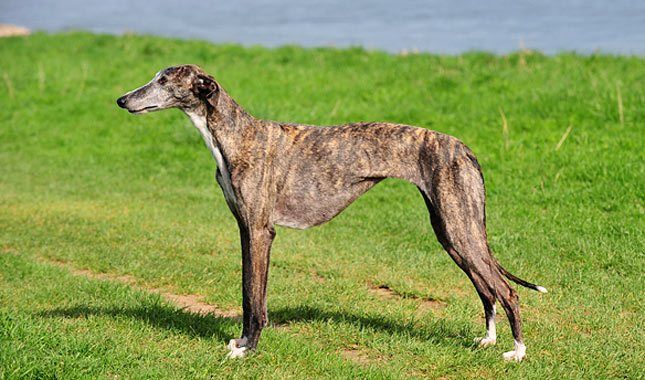
| Height | 60–70 cm |
| Weight | 20–30 kg |
| Lifespan | 12–15 years |
| FCI group | 10 · sighthounds |
| Origin | Spain |
Exact ratings
- A generally healthy, long-lived breed
- Osteosarcoma (bone cancer)
- Hypothyroidism
- Heart disease
- Anesthetic sensitivity (as in all sighthounds)
A moderate quality diet and weight control (a lean build is normal). Protect the thin skin from cold and injury; provide regular safe runs to satisfy the drive.
The Spanish Galgo — Galgo Español at home — is the sighthound most Americans have never heard of and never forget once they have met one. It is older than the Greyhound it resembles, built for hours of pursuit across open country rather than thirty seconds on an oval, and it reached the United States through a side door: the same volunteer adoption network that spent two decades rehoming retired racers. If a lean, long-nosed dog in a fleece coat has ever stopped you on the sidewalk and turned out not to be a Greyhound after all, you have probably met a galgo. Learn more on Tvaryny.
This is a dog with a split résumé. In the Spanish countryside it is a working hare hound with a hunting season, a job, and — for a great many of them — a hard ending. In an American living room it is one of the quietest, cleanest, least demanding companions you can own, a dog that sleeps sixteen to eighteen hours a day and asks for very little beyond a soft place to do it. Understanding both halves is the whole job of owning one, because the second half only works if you respect the first.
History of the Breed
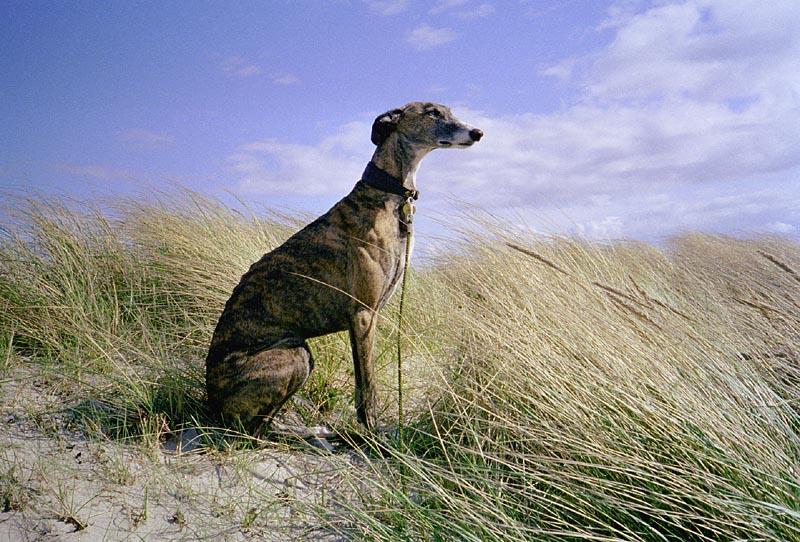
The roots of the Spanish Galgo run deep into antiquity. The ancestors of these dogs are believed to have reached the Iberian Peninsula with Celtic migrations around the sixth century BC, and the breed’s name traces back to the Latin Canis Gallicus — the “Celtic dog.” The Romans who later took the peninsula thought highly of the local coursing hounds and wrote about them. Distinct as its own development has been, the Galgo belongs to the same deep family of ancient working hounds that produced dogs as far-flung as the exotic Rajapalayam (Polygar Hound) or, on this side of the Atlantic, the relentless Plott Hound.
What shaped the modern galgo was not a show ring but a specific job: running down the European hare across open, broken Spanish country. Not a track. Not a lure. Terrain — stubble, stones, plowed furrows, dry watercourses — where the hare turns hard and the dog has to turn with it and keep going. That job favored a lighter, flatter-muscled, more heat-tolerant animal with enormous stamina rather than a heavyweight sprinter. Everything odd about the galgo’s build makes sense the moment you picture that field.
In medieval Spain, owning one was a privilege of the nobility, and killing another man’s galgo carried real penalties. The breed’s cultural standing is easy to date: the very first sentence of Cervantes’ Don Quixote, published in 1605, equips its hero with an old shield, a bony nag, and a galgo corredor — a running galgo. Four centuries later the dog in that sentence would still be recognizable today.
The modern chapter is less romantic. In much of rural Spain the galgo has long been treated as equipment rather than as a pet — bred in volume, culled by performance, and turned loose or surrendered at the close of the hunting season. Spain’s animal-welfare law, Ley 7/2023 of March 28, 2023, was a genuine advance for companion animals, but hunting dogs were deliberately left outside its scope, which is exactly why Spanish shelters still fill up on the same calendar every year. That surplus, and the volunteers who refuse to accept it, is the reason there are galgos in Ohio and Oregon at all.
Appearance and Breed Standards
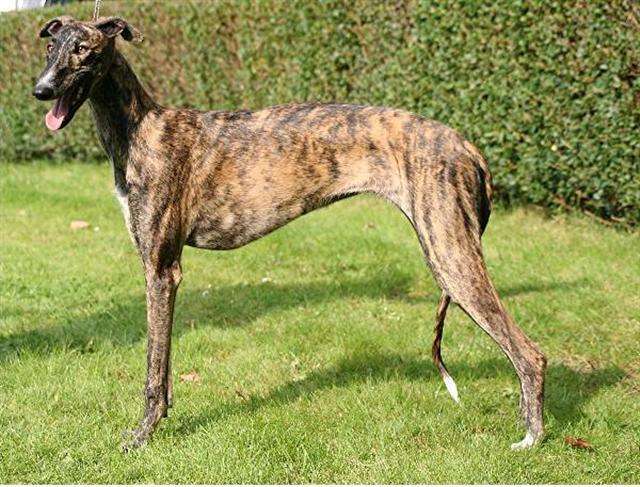
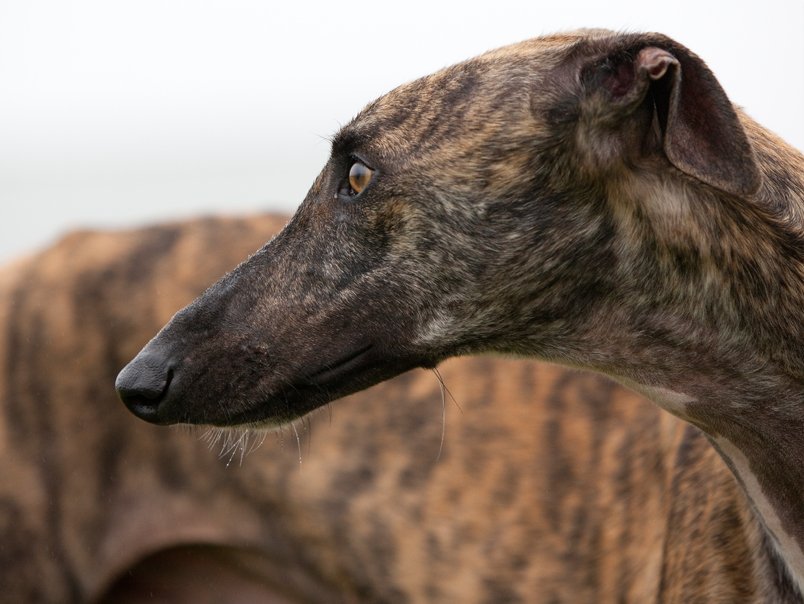
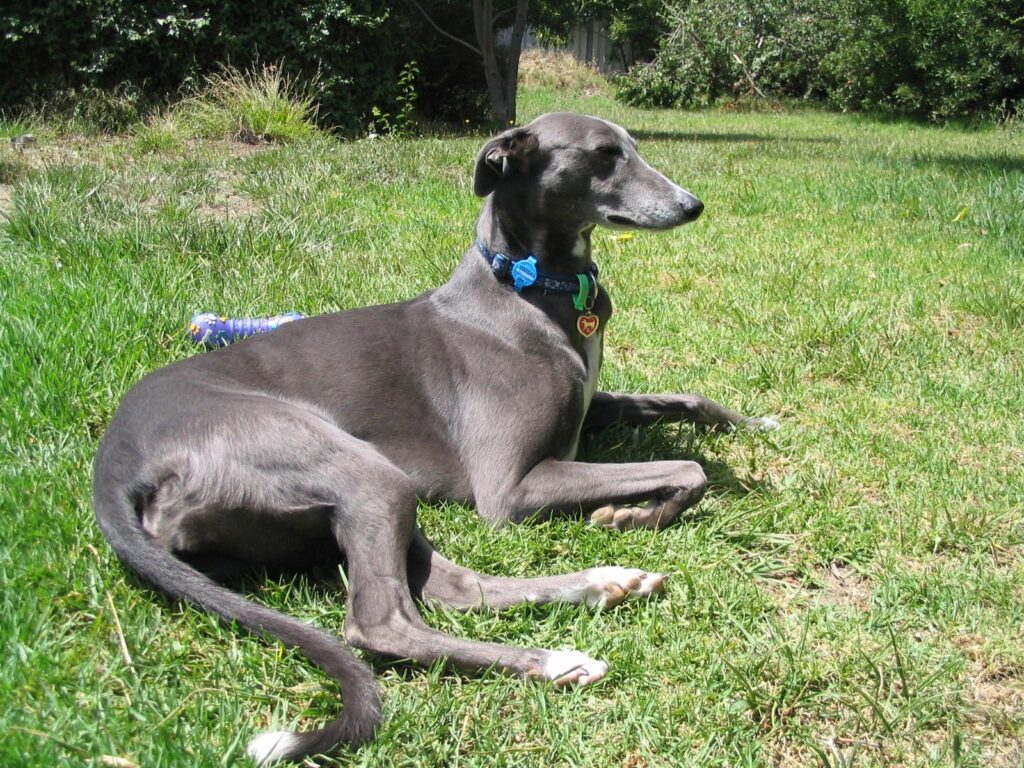
The Galgo Español is described by FCI Standard No. 285 and sits in Group 10, Section 3 — short-haired sighthounds. It is the embodiment of aerodynamics. Compared with its cousin the Greyhound, the Spanish hound carries flatter, longer musculature: less explosive off the line, far more durable over distance. The body is longer than tall, the head narrow and dry with a long muzzle, and the feet are “hare feet” — long, tight, high-arched toes made for grip on rough ground.
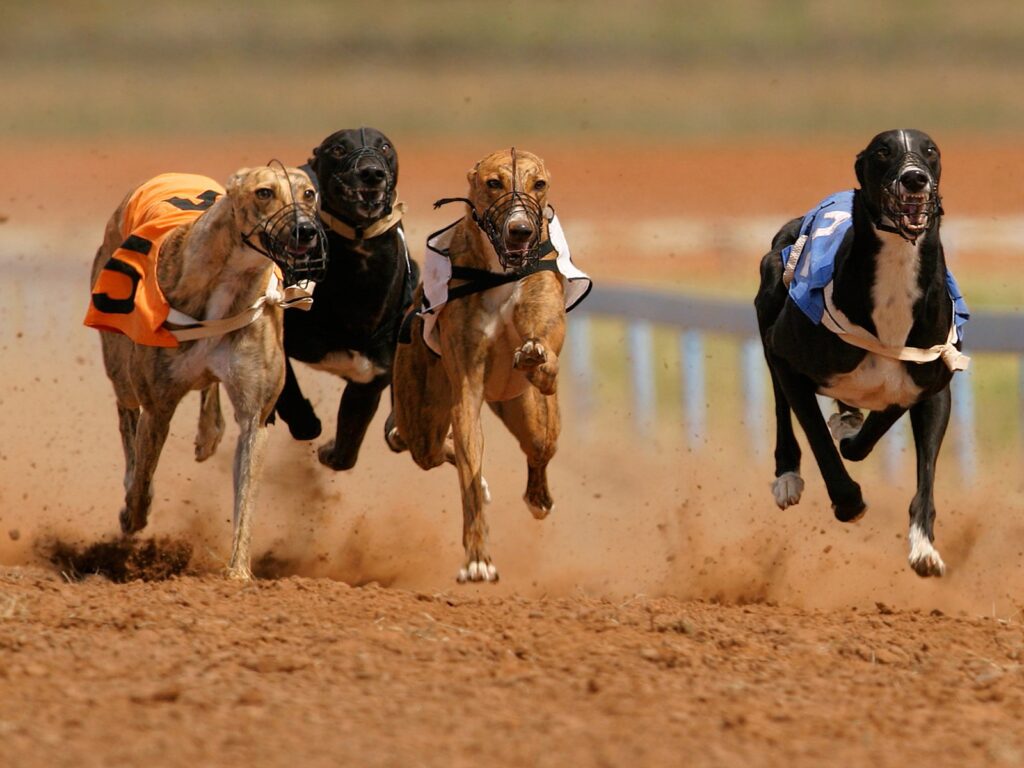
Three details confuse first-time owners and are worth naming outright. The chest is narrow and very deep, reaching to the elbow, and behind it the belly sweeps up into a dramatic tuck-up — that steep abdominal cut is breed-correct anatomy, not starvation. The ears fold back into a rose ear at rest and half-lift when the dog is interested. And at speed the galgo runs a double suspension gallop: twice in every stride all four feet are off the ground, once with the legs bunched under the body and once with the dog fully extended. That is the gait that makes a running sighthound look like it is being animated rather than simply moving.
The Galgo’s coat comes in two types:
- Smooth-coated: Short, fine, lying tight to the body — the version most Americans picture.
- Wire-haired (barbudo): Rougher and harsher, often with a small beard, mustache, and eyebrows that give the dog a wry, professorial look.
Both coats are one breed, not two, and — this surprises nearly everyone — smooth and wire-haired puppies can appear in the same litter. Neither is a crossbred and neither is preferred; the barbudo simply carries the rough-coated gene. Color is wide open, and Spanish coat vocabulary is worth learning if you plan to read a shelter listing: barcino (brindle), canela (cinnamon), tostado (toasted, a deep red-tan), and berrendo (particolored, white with patches), plus black, fawn, and every combination of them.
| Characteristic | Description |
|---|---|
| Height at withers | Males: 24.5-27.5 in; Females: 23.5-26.5 in |
| Weight | 44-66 lbs (20-30 kg) |
| Life span | 12-15 years |
| Constitution type | Dry, strong, elegant |
| Color | Brindle, black, fawn, cinnamon, white (and combinations) |
How Galgos Get to America: Riding the Retired-Racer Pipeline
Here is the part of the story that is uniquely American. For most of a century, the sighthound Americans knew was the retired racing Greyhound, and an entire volunteer culture grew up around placing them — foster homes, meet-and-greets outside pet stores, cat-testing protocols, home visits, and a shared vocabulary that any adopter would recognize. Then the supply ended. Greyhound racing has been banned in the large majority of states; Florida voters passed Amendment 13 in November 2018, its tracks ran their last races in December 2020, and commercial dog racing became illegal in the state where the modern sport was invented as of January 1, 2021. Only a couple of tracks remain nationwide.
What did not end was the infrastructure. Hundreds of sighthound adoption groups across the country still exist, still have experienced foster homes, still have volunteers who know how to introduce a chase-driven dog to a house cat, and still have vets on speed dial who understand sighthound anesthesia. Into that ready-made pipeline walked the galgo. Groups such as the Galgo Rescue International Network — a volunteer-run 501(c)(3) founded in 2006 to connect Spanish shelters with American adopters — now move galgos and podencos out of Spain to homes in the United States, and traditional Greyhound groups increasingly place them alongside their remaining racers.
Practically, adopting one looks like this. You apply to a group rather than shop a litter, because there is essentially no domestic breeding of the breed in America. You are screened: application, references, a home visit or a video walkthrough, and hard questions about fencing, cats, and small dogs. You may be matched to a dog still sitting in a Spanish shelter, sight unseen except for photos and a foster’s notes. The dog then flies — commonly as accompanied cargo, sometimes escorted by a volunteer flying the same route — into a major hub, and you meet a jet-lagged, underweight, thoroughly overwhelmed animal in a crate at the freight terminal. Fostering first is common and, for a first sighthound, genuinely advisable.
What arrives with the dog is usually a Spanish rabies vaccination record, an ISO microchip, a spay or neuter already done, some travel-history notes, and — if the group is doing its job — Mediterranean disease test results. What does not arrive is house training in an American sense, stair experience, familiarity with hardwood floors, sliding glass doors, elevators, garbage trucks, or the concept that a couch is furniture you are allowed on. Expect to teach all of it, gently, over weeks.
Federal Paperwork: CDC Dog Import Rules You Actually Have to Meet
Bringing a dog into the United States is a federal matter, and the rules were rewritten recently, so anything you read from before 2024 is out of date. Under the current CDC framework, every dog entering or returning to the country — adopted rescue, show dog, or family pet coming home from vacation — has to clear the same baseline: the dog must be at least 6 months old, must appear healthy on arrival, must carry an ISO-compliant 15-digit microchip, and must be accompanied by a completed CDC Dog Import Form receipt. The microchip has to be documented before the rabies paperwork that references it, so the order of operations matters.
The good news for galgo adopters is that Spain is not on the CDC’s high-risk list for dog rabies. That places a Spanish dog on the simpler track: no rabies serology titer, no mandatory arrival at one of the handful of ports with a CDC-registered animal care facility, no 28-day quarantine on landing. Rabies vaccination is still strongly recommended and your own state and vet will expect it, but the heavy high-risk machinery does not apply — provided the dog has not spent time in a high-risk country in the six months before entry, which is worth confirming with the rescue for a dog that transited elsewhere.
Two traps catch people. First, the 6-month minimum age is absolute, which is one more reason American adopters get adults rather than puppies. Second, if you ever take your galgo abroad and bring it back, the return trip is an import too, and a US-vaccinated dog needs the correct USDA-accredited certification completed before it leaves. Sort that out before you book, not at the counter.
Character: A Dual Personality
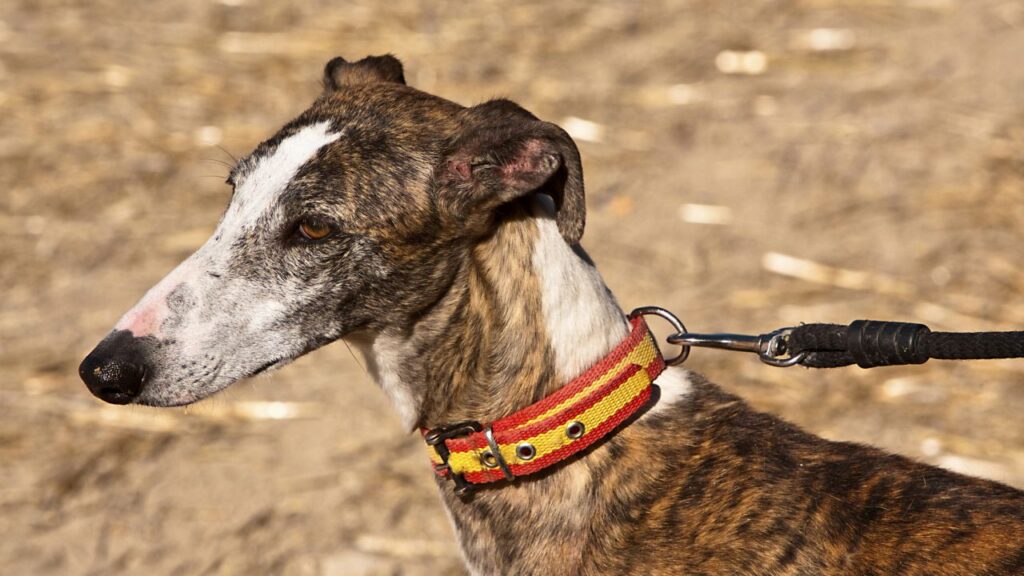
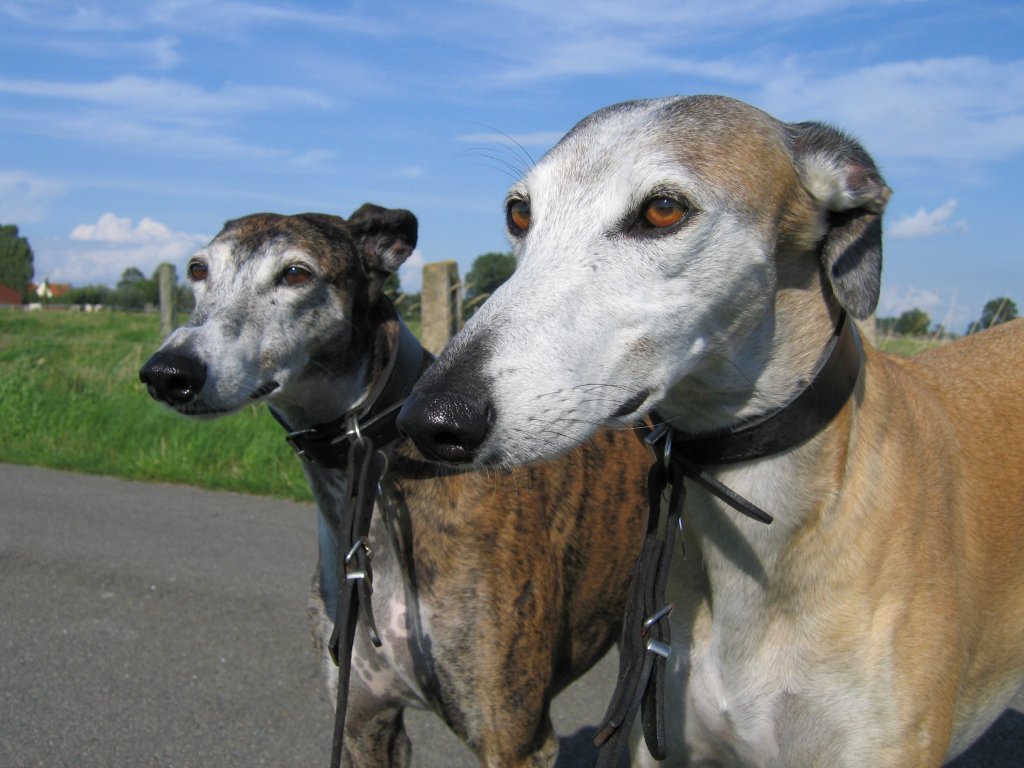
American Greyhound adopters have a bumper-sticker phrase for this breed type, and it fits the galgo perfectly: the 45-mph couch potato. It is not a translated metaphor, it is the actual slogan the adoption world coined, and it captures the paradox exactly. Indoors, a galgo is a soft, quiet, undemanding shadow that sleeps most of the day, barks almost never, has essentially no doggy odor, and would rather lean against your leg than be picked up. Outdoors, with a jackrabbit forty yards off, it becomes a different animal in under a second.
The critical thing to internalize is that the chase is reflexive, not disobedient. It is triggered by sight — motion at distance — and once it fires, the dog is functionally deaf. He is not ignoring you; the channel is closed. No amount of obedience work removes the reflex, and treating a chase as a training failure is how people end up angry at a dog that did exactly what four thousand years of selection built it to do. You do not train the reflex out. You manage the environment so it never gets a chance to fire: leash, long line, or genuinely secure fencing, every single time.
Socially, galgos bond hard to their people and are often reserved, even a little aloof, with strangers — a coolness common across the sighthound group, including the Ibizan Hound (Podenco Ibicenco). Many arrive shy. Some flinch at raised hands, brooms, or men in hats, and a few will hit the deck at a dropped pan. That fades with predictable routine and zero pressure. What does not work is force: the galgo is not a servant looking for orders, it is a partner deciding whether you are safe. Harsh corrections shut this breed down rather than sharpen it.
With other dogs they are usually excellent, particularly with other sighthounds — they read each other’s body language fluently and will happily sleep in a heap. With cats and small dogs, see the honest answer further down: it depends entirely on the individual, and indoors and outdoors are two different questions.
Leash Laws, Coyotes, and the American Ground
The American landscape presents a sighthound with a specific set of hazards that no Spanish shelter can prepare it for.
Leash ordinances are local, and they are your friend. Almost every American municipality has a leash law or a “dog at large” ordinance, and for a galgo owner that is not a bureaucratic nuisance — it is the rule that keeps your dog alive. Off-leash exercise in this country belongs in three places only: a fully fenced private yard, a fenced dog park, or a rented private field of the kind that has spread across the country in the last few years and is ideal for a dog that cannot be trusted loose. Beaches, trailheads, and “he’s friendly, he stays close” open space are not on the list, no matter how good the recall looked in the backyard.
Fence height is a real number. Four feet is decorative to a galgo. Six is the working minimum, solid rather than chain link if the dog can see game through it, and gates need self-closing latches because a galgo will read a gap the way a burglar reads an open window. Check the bottom line too — these dogs are narrow and will consider a gap that would stop a Lab.
Coyotes are the hazard Europeans do not plan for. Coyotes are now established in suburban and even urban areas across the continental United States, and they are most active around dawn and dusk — precisely when Americans walk dogs in summer. A galgo has zero defensive instinct; its entire toolkit is running away, and a loose galgo that gives chase to what it thinks is a fleeing animal can end up drawn into a pack. Leash after dark, avoid greenbelts and drainage corridors at twilight, and never let a galgo “go say hi” to a canid at distance.
Livestock is a legal hazard, not just an ethical one. If you live near ranch or farm country — much of the West, Midwest, and rural South — understand what a loose sighthound represents legally. Many states carry long-standing statutes permitting a livestock owner to kill a dog found chasing or “worrying” stock, often before any animal has actually been injured. California law allows a person finding a dog worrying, wounding, or killing cattle, swine, horses, sheep, or goats to kill it at that moment, with no damages owed to the dog’s owner. Colorado’s statute covers a dog found running, worrying, or injuring livestock. Virginia and Oklahoma have comparable provisions. A galgo does not know a lamb from a hare, and the law will not care that he was only playing.
Heat is the American climate problem. Spanish galgos handle warmth better than a thick-coated northern breed, but they are also thin-skinned, low-fat, and often light-colored, which means sunburn on the belly and ears and rapid overheating in a Phoenix, Houston, Atlanta, or Central Valley summer. Asphalt that measures comfortable to your foot can blister paw pads; the standard American test — press the back of your hand to the pavement for seven seconds — applies double to a dog with almost no protective tissue. Walk early and late, carry water, and treat a panting, unsteady galgo as an emergency, not a rest break.
Foxtails and grass awns are a Western specialty. These barbed grass seeds are concentrated in the western half of the country — year-round in parts of California — and they travel one direction only, boring into paws, ears, noses, eyes, and occasionally lungs. A short-coated dog is not safe from them; the classic entry point is between the toes. From late spring through fall, comb the dog out after every walk in dry grass and check the webbing of every foot.
Apartments and HOAs. Ironically, the galgo is one of the best large dogs in an apartment: silent, clean, minimal shedding, content with a bed and a window. The obstacles are administrative, not behavioral — weight caps in the low double digits of pounds will exclude a galgo, and some HOA and rental policies restrict by size or appearance. A galgo is not on any breed-restriction list because nobody has heard of it, but be prepared to explain what it is, and get the approval in writing before the dog is on a plane.
Care and Maintenance
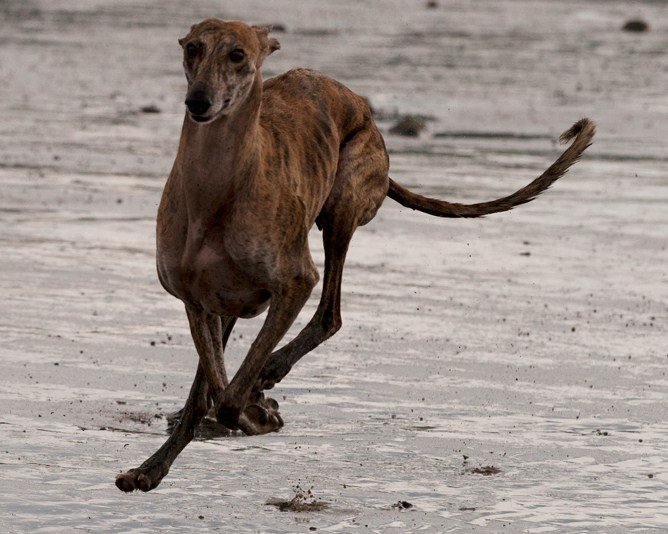
Contrary to popular belief, galgos do beautifully in city apartments provided the walks are good. This is not a dog that needs to be run for hours. It needs a burst — the chance to open up and sprint in a genuinely safe enclosure — and then it needs to sleep it off. Two solid leash walks a day plus a hard run once or twice a week covers most adults.
The Martingale Collar Is Not Optional
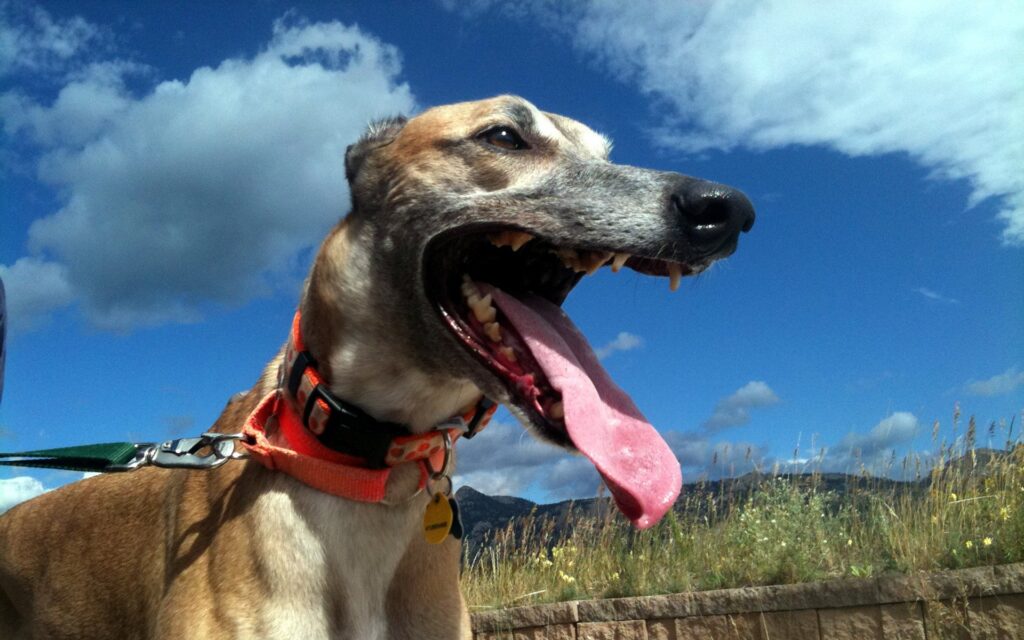
A galgo’s head is narrower than its neck. A standard buckle collar loose enough to breathe in is loose enough to be reversed off over the ears by a dog that plants and backs up — which is exactly what a frightened newly imported dog does in a parking lot. The answer is a martingale (limited-slip) collar: two loops, so tension tightens it to neck size and no further, without choking. Every American sighthound group considers this standard equipment, and many will not release a dog without one. A wide-panel martingale also spreads pressure across a delicate neck. Pair it with a well-fitted harness for extra security in the first weeks, and keep the ID tag and the microchip registration current — a lost galgo covers ground faster than you can call animal control.
The Bed Matters More Than You Think
A galgo has almost no subcutaneous fat and very little muscle padding over its elbows, hocks, and hips. On tile, hardwood, or a thin mat, those pressure points develop calluses and fluid-filled swellings called hygromas, which are ugly, slow to resolve, and can become infected. A genuinely thick orthopedic or memory-foam bed in every room the dog uses is preventive medicine, not luxury. Most galgos will also claim the couch, and most owners give up fighting about it within a week.
Coat Care and Clothing
Grooming is close to nothing — a rubber curry mitt once a week, nails every two to three weeks, and teeth as often as you can manage, because sighthound dentition is a genuine weak point and imported dogs frequently arrive with tartar and losses. The real gear question is clothing. The Spanish Galgo gets cold. That is a fact of anatomy, not fussiness: no undercoat, no fat, huge surface area.
- Fall/Spring: A light shell or fleece sweater. In the Pacific Northwest and the Northeast, waterproof matters as much as warm.
- Winter: A warm, belly-covering coat plus a snood, because that long neck sheds heat fast. In Minnesota, Chicago, or Denver in January, expect boots as well — road salt shreds thin pads.
- Summer: Guard against heatstroke and sunburn — pale and particolored dogs burn on the belly and nose. Shade, water, and dog-safe sunscreen on exposed pink skin.
Training Specifics
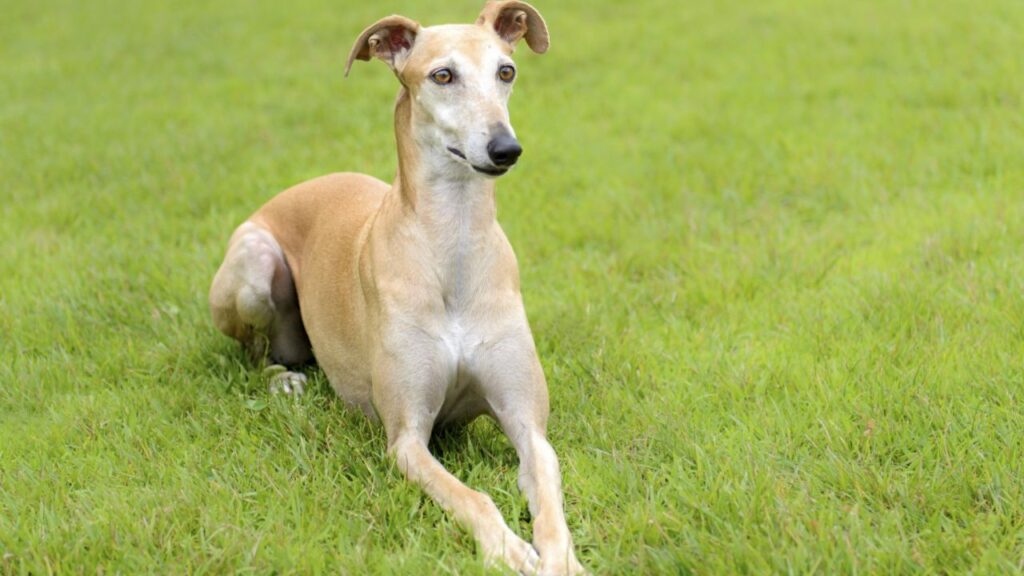
Galgos are intelligent, but they do not work “automatically” the way a herding breed does. A galgo hears a cue and visibly runs the math: what’s in this for me? Play and food answer that question; repetition and volume do not. Keep sessions short, end them while the dog still wants more, and use a marker word or clicker — this breed reads timing well.
Recall deserves its own paragraph. Train it from day one, reward it lavishly, practice it on a thirty-foot long line in an open field, and then — this is the part people resist — never bet the dog’s life on it. A recall trained to perfection still loses to a reflex that closes the ears. American sighthound owners frame it as a percentage: your recall might be 95% reliable, and the 5% is a dog on an interstate. In town, on leash, always.
House training an imported adult is usually fast, because these dogs are naturally clean, but stairs, slick floors, and glass doors may all be brand new and should be introduced with traction rugs and zero pressure. Separation is the other common issue: a dog that has never been alone in its life may panic the first time you leave. Build absence in minutes, not hours, and consider a second dog — galgos are genuinely happier with company.
For sport, there is an American answer to the “what do we do together” question. The Galgo Español is not recognized by the American Kennel Club and is not listed in the AKC’s Foundation Stock Service, so a conformation career is off the table. But a dog with no path to full registration can be enrolled in AKC Canine Partners — the program for mixed breeds and dogs ineligible for regular registration — and Canine Partners enrollees are eligible for AKC companion and performance events, including agility, obedience, rally, and, most relevantly, the Coursing Ability Test (CAT) and Fast CAT, the 100-yard timed straight-line dash. Enrollment requires the dog be spayed or neutered, which nearly every imported galgo already is. Watching a galgo run Fast CAT is the closest most owners will get to seeing the animal the breed was actually built to be.
Nutrition: Key Recommendations
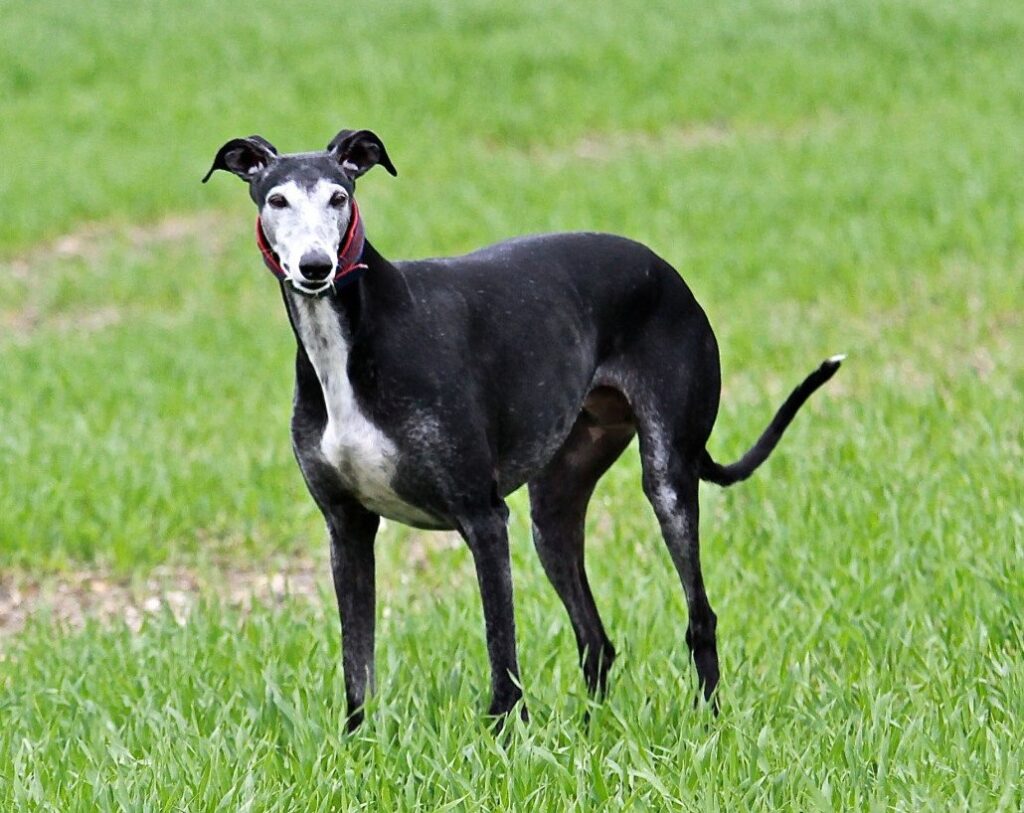
Sighthound metabolism differs from that of other dogs. They need high-quality protein for muscle recovery and they carry far less fat as a buffer, so both underfeeding and overfeeding show up quickly. Feed twice a day rather than once, in part to reduce the risk of gastric dilatation and volvulus — bloat — to which deep-chested dogs are predisposed. Keep the dog quiet for an hour after meals, and know the signs of bloat cold: unproductive retching, a distending abdomen, restlessness. It is a same-hour emergency-vet trip, not a wait-and-see.
Two rules matter more than the brand on the bag. First, lean is the standard, not a problem to fix. On a correct galgo you should see the last two or three ribs, the hip points, and a hard tuck-up. Well-meaning neighbors, and occasionally vets who have never handled a sighthound, will tell you the dog is starving. A body-condition score in the middle of the scale for a Labrador is overweight for a galgo, and every extra pound is loaded onto fine bones and long joints.
Second, and this one is specific to adopted dogs: refeed slowly. A galgo that arrives genuinely emaciated from a Spanish shelter cannot be filled up. Rapid refeeding of a starved dog risks serious metabolic consequences, and even short of that, a shrunken gut responds to sudden volume with diarrhea that sets the dog back further. Small, frequent, moderate meals, a gradual increase over several weeks, and weight checks — a good rescue will hand you a plan, and a good vet will supervise it.
| Dog’s Age | Meals per Day | Diet Features |
|---|---|---|
| Puppies (2-6 months) | 3-4 times | Balanced calcium and protein for bone growth; do not over-supplement |
| Juniors (6-12 months) | 3 times | Balanced ration, weight control |
| Adults (from 1 year) | 2 times | Maintenance of muscle mass, joint supplements |
| Seniors (from 7-8 years) | 2 times | Easily digestible food, reduced calories |
Health and Genetic Features
The Spanish Galgo is a surprisingly healthy breed. Centuries of hard natural selection, where only the fastest and soundest were bred on, did their job, and galgos carry far fewer of the inherited disorders that plague heavily bred show populations. But there are specific things every American owner and every American vet needs on file:
- Anesthetic sensitivity: The single most important line in the chart. Low body fat, altered drug distribution, and slower clearance mean a standard dose calculated for a same-weight dog of another breed can be dangerous or fatal. Sighthounds classically do badly with older thiobarbiturate protocols and need adjusted drug choices, careful dosing, and active warming — they lose body heat on a table fast. Say the words “sighthound protocol” out loud at every dental, spay check, or biopsy.
- Osteosarcoma: Bone cancer is the sighthound’s shadow. It appears less often in galgos than in racing Greyhounds, but persistent lameness in a middle-aged or older galgo — especially in a front limb, especially without a trauma story — warrants radiographs early rather than a course of anti-inflammatories and a wait.
- Injuries: These dogs hit around 40 mph. Muscle tears, ligament and toe injuries, and lacerations from a hidden fence post or a stump are routine. A galgo will also keep running on an injury it should not.
- Thin skin: Galgo skin tears where another dog’s would bruise. Crate corners, thorny brush, and rough play all produce wounds that look catastrophic and need suturing. Keep a real first-aid kit and know your nearest 24-hour emergency clinic before you need it.
- Hypothermia and pressure sores: No undercoat and no fat means cold intolerance and hygromas over bony points — both preventable with coats and thick bedding.
- Dental disease: Common across sighthounds and worse in dogs that arrive from shelters. Budget for cleanings and remember every one of them is an anesthetic event.
Sighthound Blood Work: Why a Healthy Galgo Can Look Sick on Paper
This is the section to print out and hand to your vet, and it is the single most common source of unnecessary panic — and unnecessary treatment — in American sighthound ownership. Sighthounds do not share the general canine reference intervals that come preprinted on a lab report. Their normal is different, and a healthy galgo run against Labrador numbers can generate a report that reads like kidney failure plus hypothyroidism plus an immune disorder.
This is well documented in American veterinary literature — much of the foundational work on Greyhound-specific reference intervals came out of Ohio State University’s Greyhound health research and Dr. Guillermo Couto’s group — and the major US reference labs, including IDEXX, publish Greyhound-specific intervals you can ask for by name. Most of these differences have been described across other sighthound breeds too, which is why they are the sensible starting frame for a galgo.
| Analyte | General canine interval | Sighthound / Greyhound typical | What a vet may wrongly suspect |
|---|---|---|---|
| Hematocrit (PCV) | approx. 37-55% | Higher — commonly 49-65% | Polycythemia, or “he’s dehydrated” — leading to fluids the dog does not need |
| Red blood cells | approx. 5.5-8.5 M/µL | Higher, tracking with the hematocrit | Erythrocytosis; an unnecessary hunt for a marrow or cardiac cause |
| Hemoglobin | approx. 12-18 g/dL | Higher, in step with RBC mass | Same as above; also masks a real anemia — a “normal” number can mean the dog has already lost blood |
| Platelets | approx. 200-500 K/µL | Lower — often around 100-200 K/µL | Immune-mediated thrombocytopenia, or a tick-borne infection; risk of steroids the dog does not need |
| White blood cells | approx. 6-17 K/µL | Lower — often around 3.5-6.5 K/µL | Bone-marrow suppression, immunosuppression, occult infection |
| Neutrophils | Proportional to the general WBC range | Lower in step with total WBC | Neutropenia; delay of an elective procedure for no reason |
| Creatinine | approx. 0.5-1.5 mg/dL | Higher — a Greyhound-specific interval runs about 1.2-2.1 mg/dL | Chronic kidney disease. The classic false alarm. With normal urine concentrating ability, a high creatinine in a sighthound is muscle mass and higher glomerular filtration, not failing kidneys |
| Total T4 | approx. 1.0-4.0 µg/dL | Lower — most healthy sighthounds sit below 1.5 µg/dL | Hypothyroidism. The second classic false alarm, and the one that gets galgos put on lifelong levothyroxine they never needed |
| Cardiac troponin | Standard canine cutoffs | Higher at baseline in sighthounds | Myocardial injury or heart disease on an incidental screen |
| Total protein / globulins | Standard canine ranges | Lower total globulins | Immune deficiency; also blunts the globulin rise that would otherwise flag a chronic infection |
The practical rule: before any panel, tell the clinic the dog is a sighthound and ask that results be read against sighthound intervals. If a thyroid result is low, ask for a full panel including free T4 and TSH plus clinical signs — coat, weight, energy — before anyone writes a prescription. If creatinine is high, ask for a urine specific gravity and SDMA in context rather than a kidney diagnosis on one number. And note the inverse trap: because a galgo’s baseline hematocrit is so high, a value that looks perfectly normal on the printout can mean the dog is already significantly anemic and bleeding somewhere.
One upside of all this: the same high red-cell mass and universal-type-friendly blood makes sighthounds prized canine blood donors, and American veterinary blood banks actively recruit them. If your galgo is the right age and weight and healthy, donating is a way for a rescued dog to save other dogs.
Mediterranean Diseases That Fly In With the Dog
A galgo imported from Spain can carry infections that a typical American small-animal vet has read about once and never seen. The main ones are leishmaniasis (Leishmania infantum, transmitted by sand flies), ehrlichiosis, babesiosis, and heartworm, along with less common tick-borne organisms. Leishmaniasis is the one that matters most: it can stay latent for months or years, then surface as weight loss, skin lesions and crusting around the eyes and ears, overgrown brittle nails, nosebleeds, lameness, or kidney disease.
The American problem is not that the disease is untreatable — it is manageable, though usually not curable — but that nobody suspects it. US veterinarians reasonably treat leishmaniasis as a travel-acquired rarity and may not put it on a differential list for a dog in front of them in Indiana. Published case series of imported and domestic cases in the United States and Canada point straight at the Mediterranean basin, Spain very much included. Diagnosis leans on serology, often followed by PCR on skin or tissue samples.
What to do, concretely: get the rescue’s pre-export test results in writing and keep them; write “imported from Spain” at the top of your dog’s chart in permanent ink and say it out loud at every visit for the rest of the dog’s life; retest on your own vet’s advice after arrival, since a dog can test negative in Spain and convert later; keep the dog on year-round heartworm prevention and tick control; and if unexplained skin, nail, nosebleed, or kidney signs appear, ask directly whether leishmaniasis has been ruled out rather than waiting for it to be proposed. Sand flies capable of transmission are not a widespread concern in most of the country, and the practical risk is to the individual dog rather than to your neighborhood — but vertical transmission from dam to pups is documented, which is one more argument for the spay-and-neuter policy every reputable rescue already follows.
Pros and Cons of the Breed
| Pros (+) | Cons (-) |
|---|---|
| Very gentle and calm at home | Strong hunting instinct (risk for cats/small animals) |
| Almost never bark, no “doggy” smell | Require mandatory walking on a leash in the city |
| Genetically healthy, long-lived | Very sensitive to cold, require a wardrobe |
| Aesthetically perfect, attract attention | Can be thievish (counter surfing for food) |
| Get along well with other dogs | Sensitive psyche, do not tolerate shouting |
| Excellent apartment dogs — quiet neighbors, minimal shedding | Not AKC-recognized: no conformation, few local mentors, vets unfamiliar with the breed |
| An established American rescue pipeline already exists | Adoption means an adult with unknown history and possible Mediterranean disease exposure |
Interesting Facts About the Breed
- Roaching: Galgos sleep in impossible positions — tied in a knot, or flat on their backs with all four legs pointing straight up. American sighthound owners call that second one “roaching,” after a dead cockroach, and photographing it is an entire subculture.
- Two coats, one litter: Smooth and wire-haired (barbudo) puppies can be born to the same parents in the same litter. Both are purebred galgos.
- Ancient blood: The galgo has changed remarkably little in two thousand years. The dog beside your couch is very close to the dog the Romans described.
- Universal donors: Their unusual blood profile makes sighthounds sought-after donors, and many American veterinary blood banks maintain sighthound donor programs.
- Cervantes’ dog: The galgo corredor in the opening line of Don Quixote puts this breed into the first sentence of arguably the first modern novel.
- Social sleepers: Galgos do better with canine company, especially other sighthounds, and will happily pile into a single heap to share heat.
- Two suspensions: The double suspension gallop means a galgo at full speed is airborne twice per stride — the same gait that makes a cheetah look like it is flying.
Frequently Asked Questions
Is the Galgo Español recognized by the AKC, and can I compete with one?
No. The Galgo Español is not an AKC-recognized breed and it is not listed in the AKC’s Foundation Stock Service — there simply are not enough of them in the country to support a national breed club, which is the practical gate to recognition. That closes conformation, but not sport: a galgo can be enrolled in AKC Canine Partners, the program for dogs ineligible for regular registration, which makes it eligible for agility, obedience, rally, tracking, and the coursing events — the Coursing Ability Test and Fast CAT. Enrollment requires the dog be spayed or neutered, which imported galgos already are.
Can I let my galgo off leash at a dog park or on a trail?
At a fully fenced dog park, once the dog knows you and the park is not crowded with small dogs, usually yes — check the fence line yourself first and mind that many galgos are overwhelmed by chaotic play. On a trail, on a beach, or in any unfenced open space: no. Municipal leash ordinances make it illegal in most places anyway, and the reason is the same reason the law exists. Rented private fields and long lines are the American workaround, and they are excellent ones.
Will a galgo work in an apartment or an HOA neighborhood?
Behaviorally, extremely well — a galgo is quieter than most terriers, sheds little, and spends the day asleep. The friction is paperwork. Building weight caps will exclude a 55-pound dog regardless of temperament, and some HOAs regulate by size or require approval. No breed-restriction list names the Galgo Español, because almost nobody has heard of it, so expect to explain the breed and get written approval before the dog is booked on a flight. If you have a yard, the HOA’s fence-height rules are the other thing to check: a four-foot fence does not contain this dog.
How does a Galgo differ from a Greyhound?
Galgos are smaller and lighter, with flatter, longer musculature, a longer tail that often curls at the tip, and frequently longer ears. The Greyhound is explosive power over a short track sprint; the galgo is endurance over rough country — fields, stones, plowed ground. Galgos also come in a wire-haired variety, which Greyhounds do not, and tend to be a little softer and more sensitive in temperament. In the United States there is also a sourcing difference: your Greyhound most likely came off a track, and your galgo most likely came off a plane from Madrid.
Can a Galgo live with cats?
It depends entirely on the individual dog’s prey drive, and indoors and outdoors are two separate questions. Plenty of galgos live peacefully with resident cats, treat them as family, and sleep next to them. That same dog may classify that same cat as prey if it bolts across a yard. Insist on a cat-tested dog, do a slow structured introduction with baby gates and a leash indoors, and never leave them loose together unsupervised in the first months. With rabbits, guinea pigs, and toy-breed dogs, the honest answer is that a galgo is a poor risk.
What must I tell my vet before anesthesia or surgery?
Say “this is a sighthound” before anything else, and ask specifically about a sighthound anesthetic protocol. Low body fat and altered drug handling mean a standard dose calculated for another breed of the same weight can be dangerous. Ask about drug selection, dose adjustment, active warming during and after the procedure, and slower expected recovery. If a clinic waves this off as a myth, find another clinic — practices near former racing tracks and those used by local Greyhound adoption groups will know exactly what you mean.
His blood work came back abnormal — should I panic?
Usually not. A high hematocrit, low platelets, low white cells, high creatinine, and low total T4 together describe a perfectly healthy sighthound, not a sick dog. Ask that results be read against sighthound reference intervals — US reference labs publish Greyhound-specific ones — before anybody starts treatment, and be especially skeptical of a kidney-failure or hypothyroid diagnosis based on a single value in an otherwise well dog with a good coat, stable weight, and normal energy.
How much exercise does a galgo need, and how long until he settles in?
Two walks of thirty to forty minutes plus a hard run in a safe enclosure once or twice a week suits most adults. They are sprinters, not marathoners, and they tire faster than their build suggests. Settling in follows a pattern most American rescue volunteers describe in threes: about three days to stop being terrified, three weeks to learn the household routine, and roughly three months before the real personality is fully out. Imported galgos often sleep enormously for the first two weeks and appear almost eerily calm — that is decompression, not their finished temperament.
Video About the Breed
- Quiet, calm and clean in an apartment
- Gentle, tender and devoted
- Hardier than the English Greyhound
- Sheds little, low-maintenance
- A strong prey drive (dangerous for cats)
- Needs long off-leash runs in a safe place
- Sensitive thin skin and cold intolerance
- Can be shy, needs gentle handling
| English Greyhound | Sloughi | Whippet | |
|---|---|---|---|
| Height | 68–76 cm | 61–72 cm | 44–51 cm |
| Energy | 3.5 | 4 | 3.5 |
| Apartment | 4 | 3.5 | 4.5 |
| Beginners | 3.5 | 3 | 4 |
How does the Galgo differ from the English Greyhound?
Is the Galgo suitable for an apartment?
Can a Galgo live with cats?
Is the Galgo Español recognized by the AKC, and can I compete with one?
Can I let my galgo off leash at a dog park or on a trail?
Will a galgo work in an apartment or an HOA neighborhood?
How does a Galgo differ from a Greyhound?
What must I tell my vet before anesthesia or surgery?
His blood work came back abnormal — should I panic?
FCI Standard No. 285 · Real Sociedad Canina de España
For apartments · For kids · For beginners · Active · Smartest · Hypoallergenic · All rankings →