

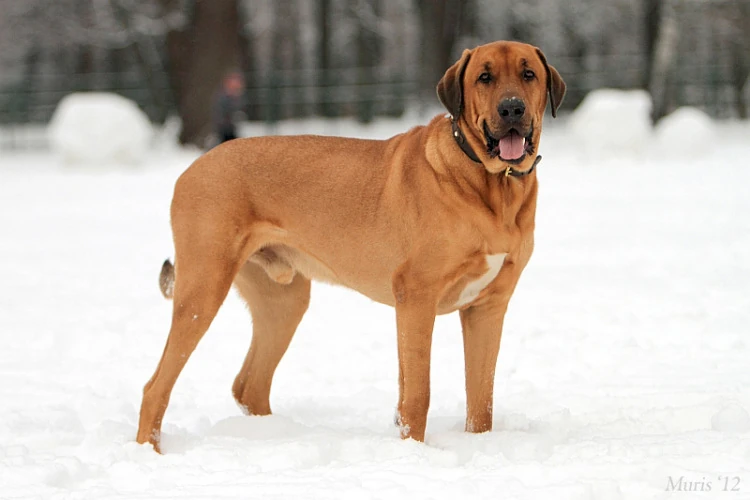
| Height | 70–75 cm |
| Weight | 40–70 kg |
| Lifespan | 8–11 years |
| FCI group | 2 · pinschers, schnauzers, molossoids |
| Origin | Denmark |
Exact ratings
- Hip and elbow dysplasia
- Gastric torsion (bloat, giant breed)
- Osteochondrosis (OCD) in puppies
- Heart disease (less often)
- A giant's shorter lifespan
Quality large-breed food, with controlled growth in puppyhood (joints) and feeding in small portions (torsion risk). Moderate exercise without overloading the joints when young; space.
The Broholmer is a Danish giant, so handsome and attractive that it looks like it belongs in a royal court. Unfortunately, this breed is quite rare, and not everyone can get one. These dogs are huge and look intimidating, which might scare strangers. However, unprovoked aggression is completely alien to these Danish dogs. They are wary of outsiders but won’t act until they sense a real threat. They are excellent protectors, kind, reliable, and loyal friends. Learn more on Tvaryny.
History of the Breed: The Rebirth of Danish Pride
The history of the Broholmer has deep roots reaching back to ancient times. It is believed that their ancestors were Mastiffs brought to Denmark from Germany during the Middle Ages. These dogs were used for hunting big game, specifically stags and wild boar, as well as guarding noble estates. The breed was named after Broholm Castle on the island of Funen, where Count Niels Frederik Broholm began breeding them purposefully in the 18th century, aiming to create the ideal guard dog.
Count Broholm not only refined the breed but also gifted puppies to many Danes, which boosted its popularity. The Broholmer became a symbol of strength and reliability. However, the 20th century brought severe trials for the breed. Two world wars, a distemper epidemic, and economic crises pushed the Broholmer to the brink of extinction. By the mid-1970s, the breed was considered practically lost.
The revival began in 1974 thanks to a group of enthusiasts led by cynologist Ulrich von Weiss and supported by the Danish Kennel Club. They tracked down the few surviving representatives of the breed that matched the ancient descriptions and launched a recovery program. Thanks to their efforts, the breed was officially recognized by the FCI in 1982, and today the Broholmer is a national pride of Denmark.
Standard and Appearance
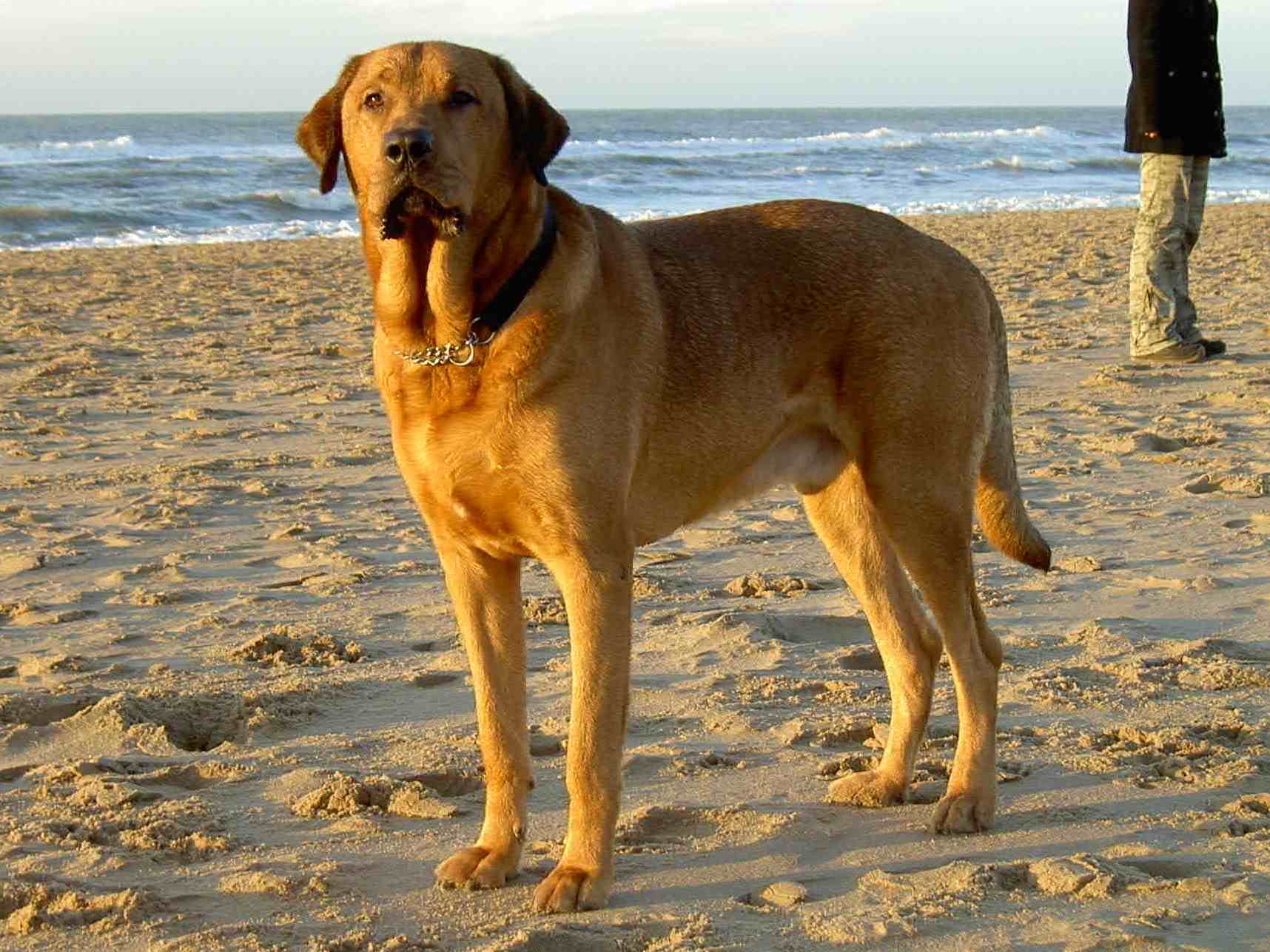
The Broholmer is a Mastiff-type dog, rectangular in build, large, and powerful. Its appearance radiates calm, strength, and confidence. Its movement is free and measured. The defining characteristic is its massive head and broad, voluminous muzzle.
Key Breed Characteristics:
- Head: Massive and broad, with slightly drooping lips. The skull is wide and flat.
- Muzzle: Massive, relatively short. A black mask is desirable.
- Eyes: Round, not too large, ranging from light to dark amber. The gaze is confident and calm.
- Ears: Medium-sized, set high, hanging.
- Body: Rectangular with a straight top line. The neck is very powerful with a slight dewlap. The chest is deep and broad.
- Tail: Saber-shaped, thick at the base. Carried low when at rest, raising to a horizontal level when moving.
- Coat: Short, dense, with a thick undercoat.
- Color: Fawn (yellow) with a black mask, golden-red, or black. White markings on the chest, paws, and tip of the tail are permitted.
| Parameter | Value (Metric / Imperial) |
|---|---|
| Height at withers (Males) | approx. 75 cm / 29.5 in |
| Height at withers (Females) | approx. 70 cm / 27.5 in |
| Weight (Males) | 50-70 kg / 110-154 lbs |
| Weight (Females) | 40-60 kg / 88-132 lbs |
| Life Expectancy | 8-10 years |
Character and Temperament
Despite their formidable look, the Broholmer is a balanced, calm, and friendly dog. They are very family-oriented and form strong bonds with their owners. It is typically a “one-person dog” but loves all members of the famiy. Their self-confidence makes them excellent guards: they are always watchful but rarely bark, doing so only when absolutely necessary. They treat strangers with mistrust but without aggression, carefully observing the situation.
Broholmers are patient with children and can be wonderful companions for them, provided the kids are taught to respect such a large dog. Thanks to their loyalty and almost total lack of fear, the Broholmer is ready to protect its family in any situation. Its character can be compared to other large guarding breeds, such as the Caucasian Shepherd Dog, though the Broholmer is generally more manageable and less prone to making independent decisions.
Training and Education
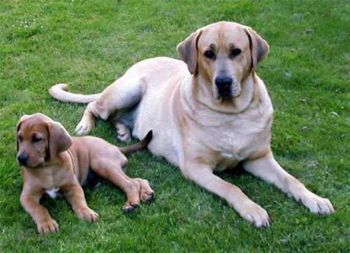
Training a Broholmer must start from the very first day the puppy arrives home. These are intelligent dogs that learn easily, but their size and independent streak require firmness, consistency, and patience from the owner. You must become the undeniable leader for the dog, the “pack leader” it can trust and respect. In this regard, they are similar to other large Molossers, such as the English Mastiff or the Great Dane, for whom the owner’s authority is key.
Early socialization is critically important. Introduce the puppy to various people, sounds, places, and other calm dogs. This helps to raise a confident and well-adjusted dog, rather than a cowardly or aggressive giant. The foundation of training is positive reinforcement. Praise and reward the dog for correct behavior. Roughness and physical punishment are unacceptable – they can destroy trust and provoke aggression.
Care and Maintenance
The ideal living arrangement for a Broholmer is a private house with a large, securely fenced yard. This dog needs space to move and the opportunity to exercise its guarding instinct. Apartment living is categorically not for them.
Caring for a Broholmer is straightforward:
- Coat: Brushing with a rubber mitt once a week is sufficient to remove dead hair. During shedding seasons (twice a year), this should be done more frequently.
- Ears: Check and clean the ears regularly to prevent infections.
- Eyes: Monitor the condition of the eyes. For minor discharge, they can be wiped with chamomile tea.
- Nails: If the nails do not wear down naturally during walks, they need to be trimmed.
- Exercise: The Broholmer does not require intense training, but it needs daily long walks at a calm pace. It is important not to over-exercise puppies and young dogs under 1.5-2 years until their skeletons are fully formed.
Health and Common Diseases
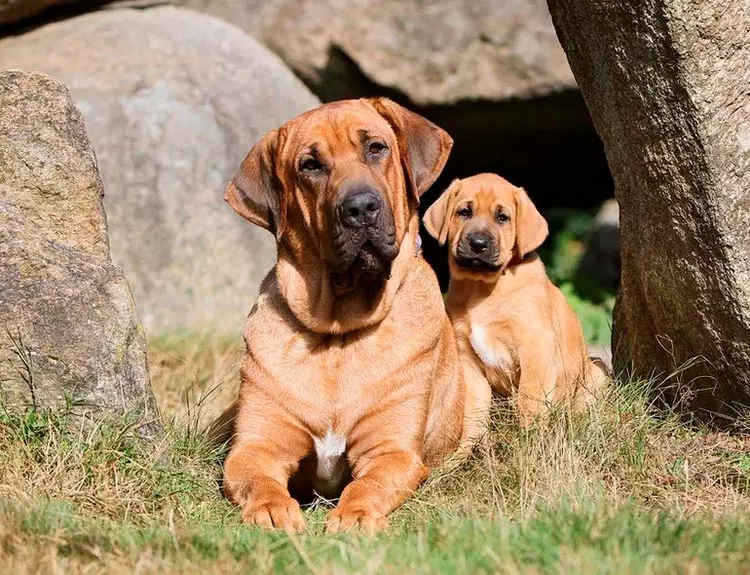
Thanks to the recovery program, Broholmers generally have quite robust health. However, like all giant breeds, they are prone to certain conditions:
- Hip and Elbow Dysplasia: This is the most common problem. It is vital to choose a puppy from tested parents. Proper rearing also plays a key role: a balanced diet and moderate exercise.
- Gastric Torsion (Bloat): A life-threatening condition. To minimize the risk, feed the dog small portions 2-3 times a day and do not allow active play immediately after eating.
- Cardiomyopathy: A disease of the heart muscle. Regular check-ups with a cardiologist are recommended.
- Entropion (inward turning of the eyelid): Can cause irritation to the cornea.
Prevention is the key to a long and healthy life for your pet. Regular visits to the vet, proper nutrition, and paying close attention to any changes in the dog’s behavior will help avoid many problems.
Nutrition: Key Recommendations for a Giant
Feeding a giant dog is a huge responsibility. The diet must be balanced and cover all the needs of the growing body, and later, the adult dog. The basis of the diet should be high-quality proetin. This can be either natural food or super-premium dry food designed for giant breeds.
If feeding a natural diet, it should include:
- Meat: Lean beef, turkey, chicken (boneless).
- Offal: Tripe, heart, liver.
- Sea Fish: Once a week, boneless.
- Grains: Rice, buckwheat.
- Vegetables: Carrots, pumpkin, zucchini.
- Dairy: Kefir, low-fat cottage cheese.
Important: For the proper development of the musculoskeletal system, puppies and young dogs need chondroprotectors (glucosamine, chondroitin). Be sure to consult a vet or breeder regarding supplements.
| Age | Meals per Day | Dietary Features |
|---|---|---|
| 2-4 months | 4-5 times | Food for giant breed puppies with controlled calcium; growth rate matters more than fast gain. |
| 4-8 months | 3 times | Gradual increase in portion size, introduction of chondroprotectors. |
| 8-18 months | 2 times | Transition to junior food or continuing puppy food. |
| After 18 months | 2 times | Transition to adult diet. |
Pros and Cons of the Breed
| Pros | Cons |
|---|---|
| Reliable Guard: Innate guarding instinct. | Needs lots of space: Not suitable for apartments. |
| Calm Temperament: Balanced and not prone to hysteria. | High maintenance costs: Food, veterinary care. |
| Family Devotion: Loves and protects its owners intensely. | Drooling: Like many Molossers, can slobber. |
| Good with children: Patient and caring (with proper socialization). | Needs early socialization: Important to introduce to other people and animals. |
| Low coat maintenance: Short hair requires no complex grooming. | Tendency to dominate: Needs an experienced and confident owner. |
| Rarely barks: Only uses its voice when necessary. | Not for beginners: Upbringing requires experience and a firm hand. |
Interesting Facts About the Breed
- Until the late 18th century, Broholmers were called “Butcher’s Dogs” (Slagterhunden) because they helped drive cattle to market.
- King Frederick VII of Denmark and his wife, Countess Danner, were great admirers of the breed and owned several Broholmers. Their dogs were often depicted in portraits.
- The export of Broholmers from Denmark is still controlled by a special committee to preserve the purity and health of the breed.
- Despite their bulk, Broholmers can be surprisingly agile, although they are not sports dogs.
Frequently Asked Questions (FAQ)
Is the Broholmer suitable for an inexperienced owner?
No, this breed is not recommended for newbies. It requires experience in handling large dogs, confidence, and knowledge of the psychology of dominant breeds.
How do Broholmers get along with other animals?
With proper and early socialization, they can coexist with other animals, especially if they grow up together. However, their hunting instinct may manifest towards small animals. Problems may arise with other large dogs due to a tendency to dominate, particularly in males.
Do Broholmers shed a lot?
They shed moderately throughout the year and more heavily twice a year (seasonal shedding). Regular brushing helps to control this process.
How much does a Broholmer puppy cost?
This is a rare and expensive breed. The cost of a puppy from verified breeders can be very high. Additionally, one must consider significant maintenance costs throughout the dog’s life.
Can a Broholmer be kept on a chain?
Categorically not. Keeping such a social and human-oriented dog on a chain is cruel and can lead to serious psychological problems and uncontrolled aggression. Unlike some breeds with less intense social needs, such as the English Bulldog, which can be somewhat more self-sufficient, the Broholmer requires constant contact with the family.
Video About the Breed
- Calm, level-headed, good-natured
- A reliable protector without needless aggression
- Devoted and affectionate with the family
- A steady everyday companion
- A giant — needs space, not for an apartment
- Drools and sheds moderately
- A giant's shorter life (8–11 years)
- Wary of strangers
| English Mastiff | Bullmastiff | Newfoundland | |
|---|---|---|---|
| Height | 70–80 cm | 61–69 cm | 66–71 cm |
| Energy | 2 | 2.5 | 2.5 |
| Apartment | 2 | 2.5 | 2 |
| Beginners | 2.5 | 2.5 | 2.5 |
Is the Broholmer aggressive?
Is the Broholmer good for a family?
How rare is the Broholmer?
FCI Standard No. 315 · Dansk Kennel Klub
For apartments · For kids · For beginners · Active · Smartest · Hypoallergenic · All rankings →