

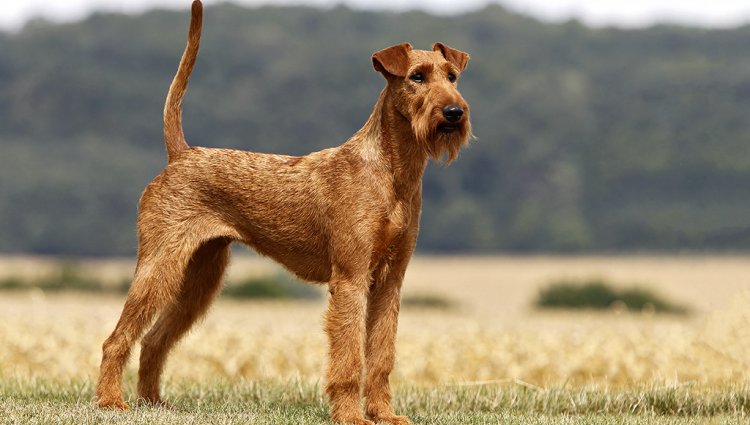
| Height | 46–48 cm |
| Weight | 11–13 kg |
| Lifespan | 13–15 years |
| FCI group | 3 · terriers |
| Origin | Ireland |
Exact ratings
- Hyperkeratosis of the pads
- Urolithiasis (cystinuria)
- Hip dysplasia
- Eye disease
- Melanoma
Quality food, with weight control; where cystinuria is a risk, monitor the urine and provide plenty of water. Regular stripping of the wiry coat.
The Irish Terrier is a living legend in the world of British dog breeds, combining a fiery spirit with a gentle devotion to its human family. Read on to learn about the origin, temperament, and care essentials for these “red devils.” Find out more on Tvaryny.
Among the many terrier breeds, the “Irishman” stands out for its athletic endurance, striking fiery coat, and boundless courage. These traits have earned it the nickname “the red daredevil.” This article provides well-structured, easy-to-read information, optimized for search engines (SEO) and formatted for the Gutenberg editor.
Irish Terrier: A Quick Breed Overview
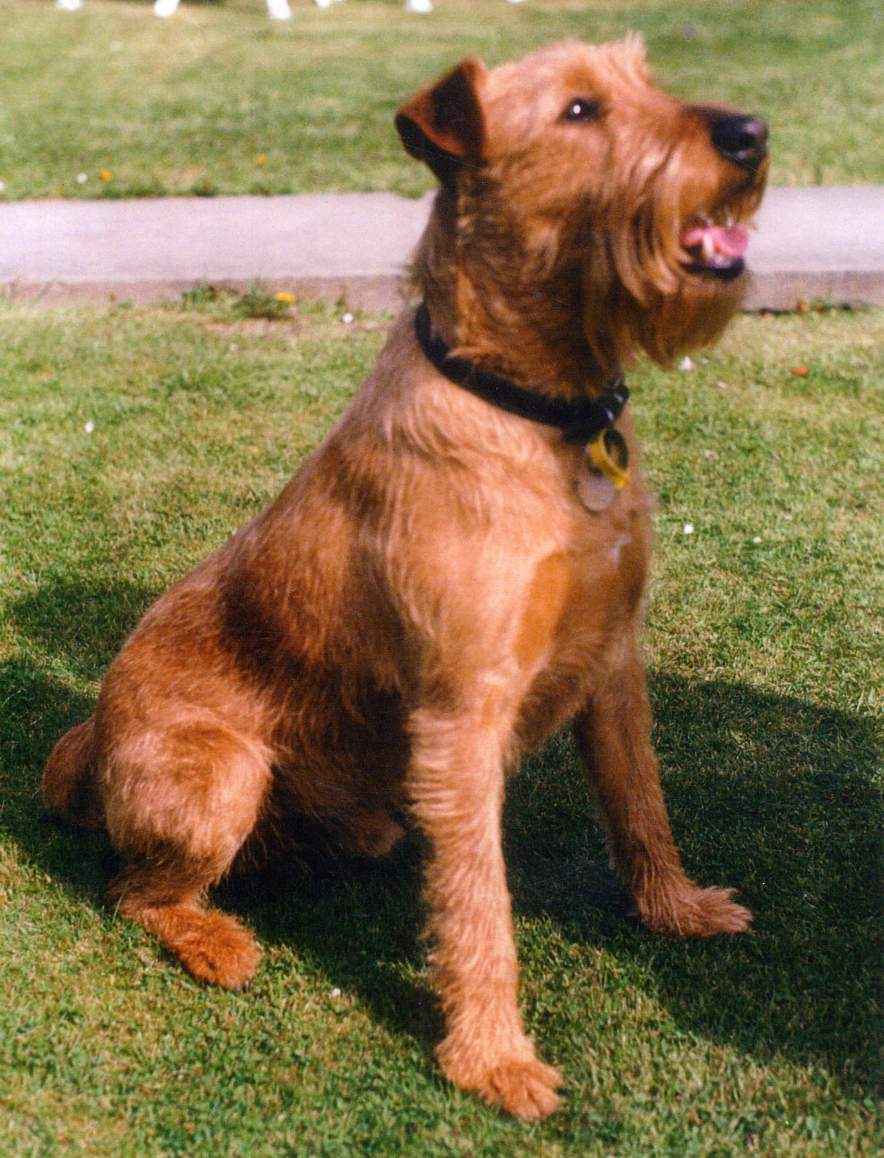
| Parameter | Detail |
|---|---|
| Origin | Ireland (Ulster, County Cork) |
| FCI Classification | Group 3: Terriers, Section 1 (Large and medium-sized terriers) |
| Year of Recognition | 1875 (IKC), 1879 (The Kennel Club, UK) |
| Height at Withers | 18–19 inches ♂ / ♀ |
| Weight | ≈ 25–27 pounds |
| Life Span | 13–15 years |
| Primary Purpose | Hunting, family companion, guard dog, sports |
Origin and History of the Irish Terrier Breed
Archaeological findings of terrier bones in Ireland date back to the 5th century, but the first detailed descriptions of the Irish Terrier come from the 1860s. Several theories exist about their lineage:
- Descendants of the black-and-tan wire-haired terrier, brought from England to control rats in the docks of Dublin.
- A mix of local farm dogs with the Lakeland Terrier and ancient Spanish hunting dogs.
- A deliberate selective cross with the Welsh Terrier and an early Kerry Blue Terrier to create a “flexible all-rounder” for hunting otters and foxes.
During World War I, these “Irishmen” served as messenger dogs for the British Army, where they earned a reputation as fearless communicators. Their popularity quickly spread across the Atlantic; by 1928, over 3,500 puppies were registered in the U.S.
Breed Standard and Appearance
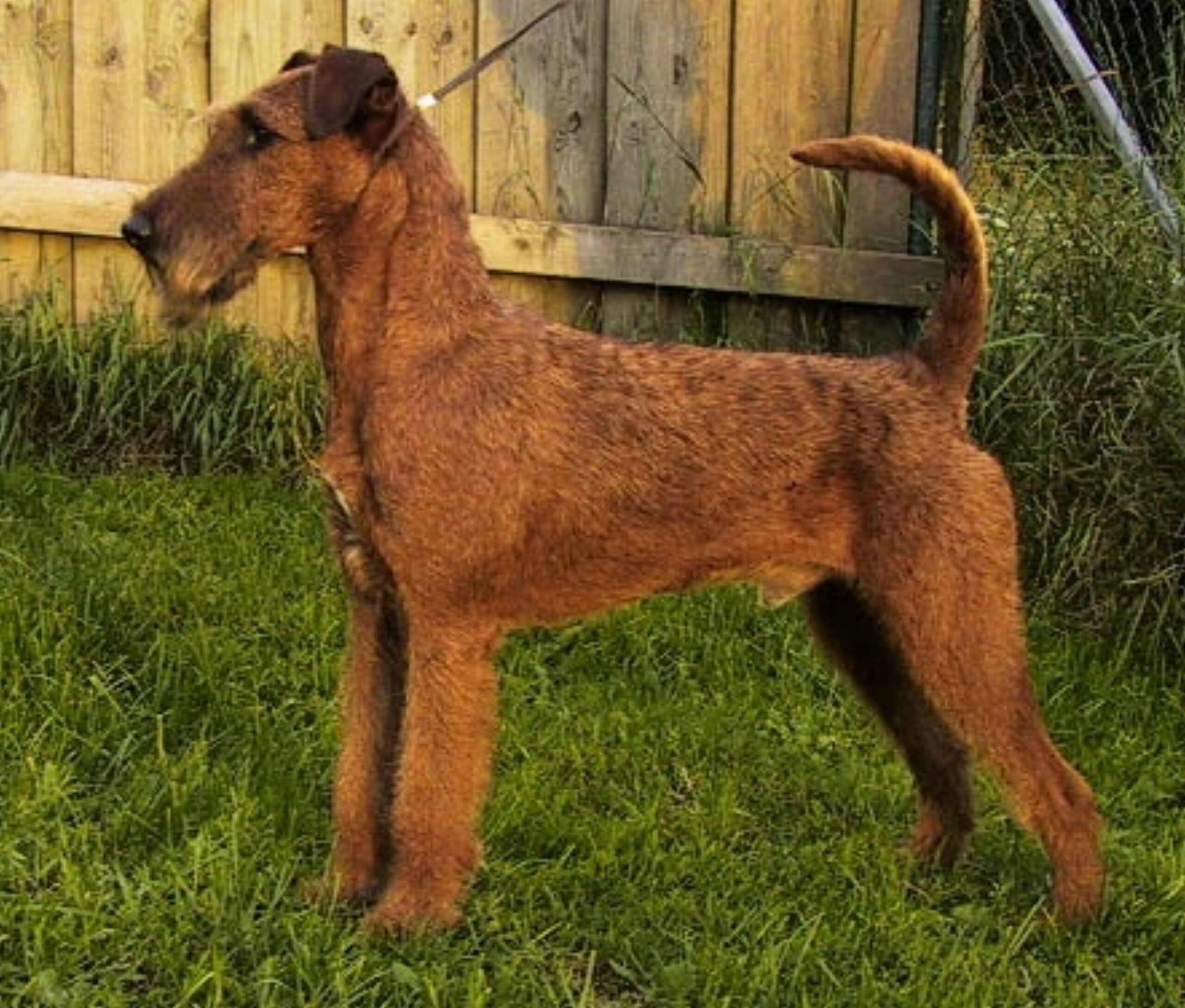
- Head: Long, well-proportioned; a slight stop between the forehead and muzzle.
- Eyes: Almond-shaped, a deep brown, “full of life and intelligence.”
- Ears: V-shaped, folded and carried close to the head, with the tip pointing toward the outer corner of the eye.
- Coat: Harsh, “wiry,” up to 2 inches long, with a soft undercoat; only shades of red are acceptable, from light wheaten to a rich mahogany.
- Tail: Set high; historically docked, but now often left natural.
The stunning red color is genetically linked to their pheomelanin stores, which is why the Irish Red looks so vibrant even next to a Bernese Mountain Dog or an Austrian Black and Tan Hound.
Temperament and Behavior of the “Red Knight”
The Irish Terrier is the ultimate energizer in the canine world. Their motto is: “Never a dull moment.” A few key traits:
- Courage — never backs down from a challenge.
- Loyalty — chooses “their person” and sticks with them for life.
- Independence — can easily get “lost” in their own world while exploring, straying hundreds of yards away.
- Playfulness — loves games like frisbee, agility, and scent tracking.
- Territorial Instinct — guards the yard without barking unnecessarily.
Despite their high threshold for irritation, the “Irishman” forms a strong emotional bond with children aged 6 and up, happily joining in on runs and bike rides. However, they are not a good fit for homes with small rodents or other prey animals.
Pros and Cons of the Breed
| Pros | Cons |
|---|---|
| Hardy in any climate, non-seasonal shedding | Requires regular hand-stripping (2–4 times a year) |
| Exceptional endurance, great for sports | Prone to hip dysplasia if over-exercised before 12 months |
| Rarely suffers from allergies | Bright coat can “fade” in the sun without a proper diet |
| Intelligent and clever—learns commands quickly | Independent—may chase after “prey” and run off |
| Natural guardian, non-aggressive towards people | Can be confrontational with other dogs of the same sex |
Training and Socialization
The key to success is play-based methods with minimal repetition. The breed gets bored with monotony, so a “5 minutes of training, followed by a game of fetch” session works better than a single 30-minute session. Use:
- A clicker and positive reinforcement.
- “Role reversal”: the dog finds a hidden object, and the human rewards them with a treat.
- Nose work—their natural inclination for scent-tracking.
Renowned dog trainer Kevin Billings calls the Irish Terrier “a partner, not a subordinate”—and that perfectly captures the essence of the breed.
Health and Hereditary Conditions
Generally, the “Irishman” is a hardy dog, but there are 3 areas of risk that require attention:
| Syndrome / Disease | Symptoms | Prevention |
|---|---|---|
| Hip Dysplasia | Limping at 6–18 months, pain after running | X-ray at 9 months, limit high-impact activities |
| Hypothyroidism | Lethargy, weight gain, brittle coat | Annual T4 test, balanced diet |
| Von Willebrand’s Disease (Type I) | Prolonged bleeding after cuts | Genetic screening for breeding pairs |
The vaccination schedule is standard, but some vets in the U.S. are starting to recommend antibody titer testing before vaccinations to ensure the dog has adequate immunity.
Coat Care and Grooming
The wiry coat does not shed, but it grows in cycles. To maintain a rich color and healthy skin, follow this schedule:
- Hand-stripping — manually plucking the dead coat every 3 months; clippers should only be used to trim the undercoat in hot weather.
- Grooming brush with natural bristles — once a week.
- Ear cleaning with a lotion — twice a month.
- Tooth polishing with enzymatic toothpaste — three times a week.
Nutrition and Diet
Due to their high metabolism, the “Irishman” needs approximately 20–23 calories per pound of ACTIVE body weight. Choose a premium brand with a “lamb / salmon” protein source; chicken is less likely to cause a food reaction but may “soften” the coat’s pigment.
| Life Stage | Protein % | Fat % | DHA+EPA mg/kg |
|---|---|---|---|
| Puppy 2–12 months | 28–30 | 18–20 | ≥ 1,000 |
| Adult Sport | 26–28 | 15–17 | ≥ 800 |
| Senior 8+ | 24–26 | 10–12 | ≥ 650 |
Always monitor the calcium/phosphorus balance (1.2:1)—excess calcium increases the risk of dysplasia in fast-growing adolescents.
Physical Activity and Sports
- Agility — excels with their explosive speed.
- Canicross — running with a dog; the “Irishman” can handle a 3-mile run at a pace of around 7:15/mile.
- Earthdog trials — a competition in artificial burrows that revives their hunting instinct.
- Flyball — jumping hurdles with a ball, balancing their drive with control.
Interesting Facts About the Irish Terrier
- The first dog to cross the Atlantic by plane (in 1934) was an Irish Terrier named Aerial Pilot.
- Famous writer Jack London dedicated the short story “Brown Wolf” to the breed, describing the unwavering loyalty of this dog.
- British postmen in the 1920s called the breed a “red sentinel“—the dog would guard the yard but never bit the mail carrier if properly introduced by the owner.
- A specific RSPO2 gene has been identified in the breed’s genome that is responsible for its characteristic “beard” and eyebrows but doesn’t affect coat length.
Frequently Asked Questions (FAQ)
Is the Irish Terrier a good apartment dog?
Yes, provided they get two hours of daily exercise and mental stimulation. Their compact size allows them to adapt well to urban living.
How much does an Irish Terrier puppy cost in the US?
No exact answer is possible: it comes down to the individual litter and the individual breeder. Ask to see the registration papers, the parents’ orthopedic and eye clearances, the vaccination and deworming record, and the home the litter was raised in.
Is the breed hypoallergenic?
The wiry coat breaks less often and “dusts” less, so allergens spread slower. However, no dog is truly 100% hypoallergenic.
Video About the Breed
- Brave and devoted
- Energetic, hardy
- Sheds little
- Robust health, long-lived
- Keen, possible animal aggression
- Strong hunting instinct
- Needs plenty of exercise
- Terrier stubbornness
| Airedale Terrier | Kerry Blue Terrier | Lakeland Terrier | |
|---|---|---|---|
| Height | 56–61 cm | 44–50 cm | 33–38 cm |
| Energy | 4.5 | 4.5 | 4.5 |
| Apartment | 3 | 3 | 3 |
| Beginners | 2.5 | 2.5 | 3 |
Is the Irish Terrier good with children?
Does the Irish Terrier get on with cats?
How much exercise does the Irish Terrier need?
FCI Standard No. 139 · The Kennel Club
For apartments · For kids · For beginners · Active · Smartest · Hypoallergenic · All rankings →