

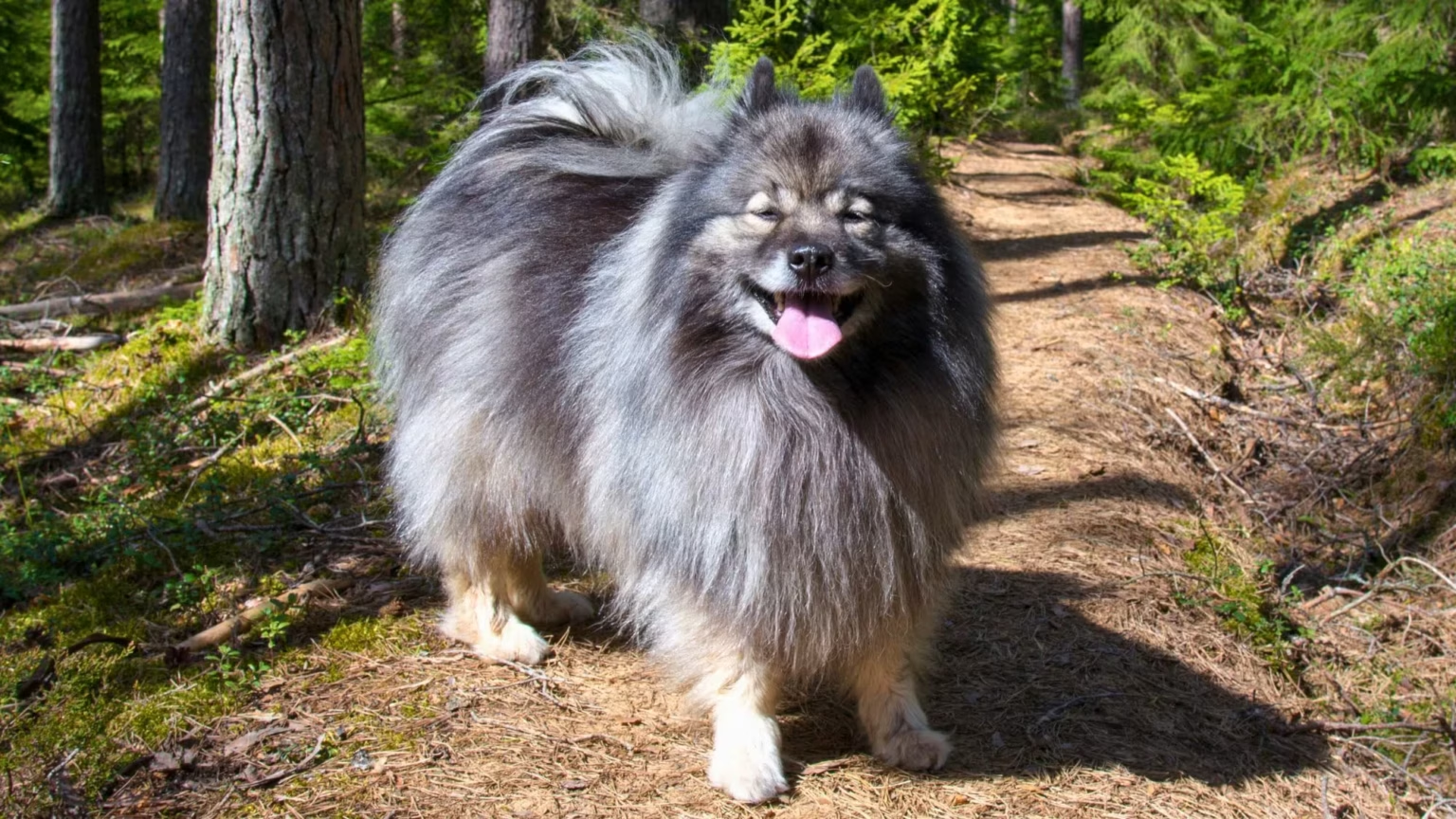
| Height | 43–46 cm |
| Weight | 14–18 kg |
| Lifespan | 12–15 years |
| FCI group | 5 · spitz |
| Origin | Netherlands |
Exact ratings
Common health issues
Nutrition
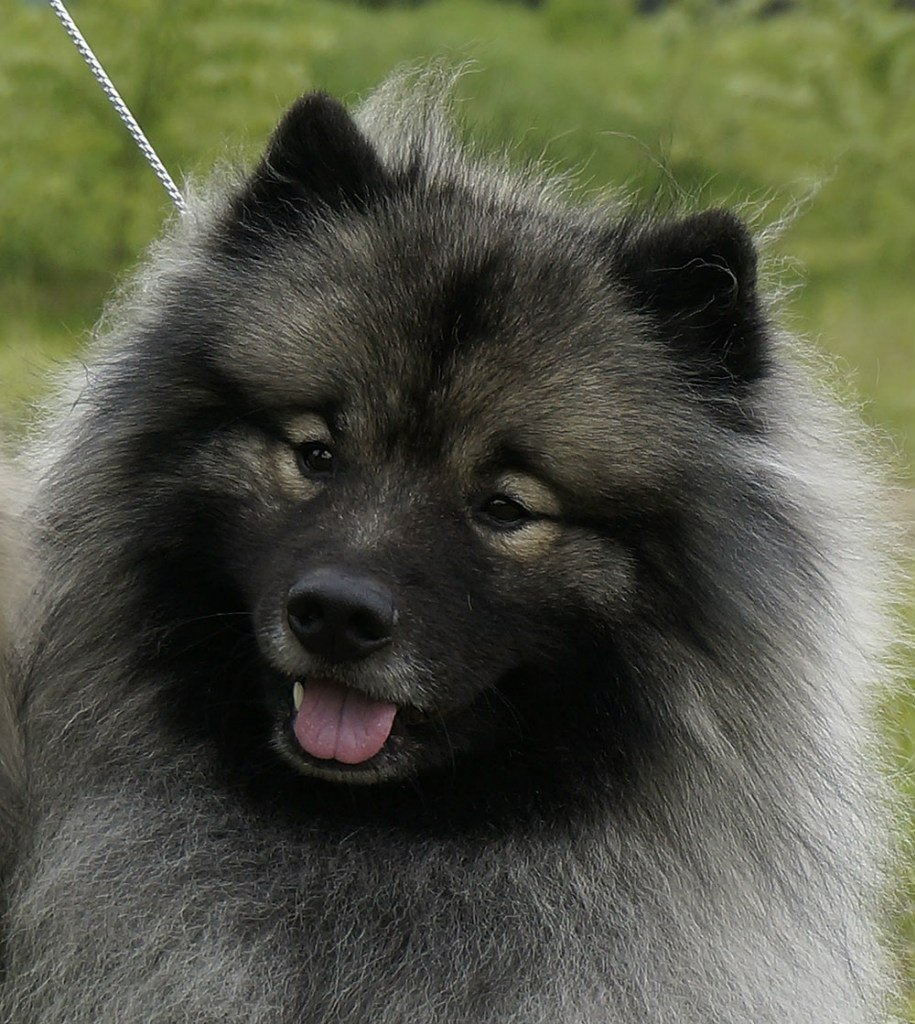
The Wolfspitz, or Keeshond, is the largest, most striking, and arguably the most charismatic member of the extensive German Spitz family. In many countries, including the Netherlands, the US, and the UK, these dogs are known solely as the Keeshond. This creates a certain amount of confusion even among experienced dog experts. Breeders often insist that the Wolfspitz and the Keeshond are two distinct breeding lines with different traits in character and appearance. Keeshonds are described as being more compact, decorative, and “plush,” whereas the classic German Wolfspitz is a larger format dog with better-defined guarding instincts. However, the Fédération Cynologique Internationale (FCI) holds a different view: officially, it is a single breed united by one standard. Read more about this on Tvaryny.
Wolfspitz (Keeshond): A brief breed overview and characteristics
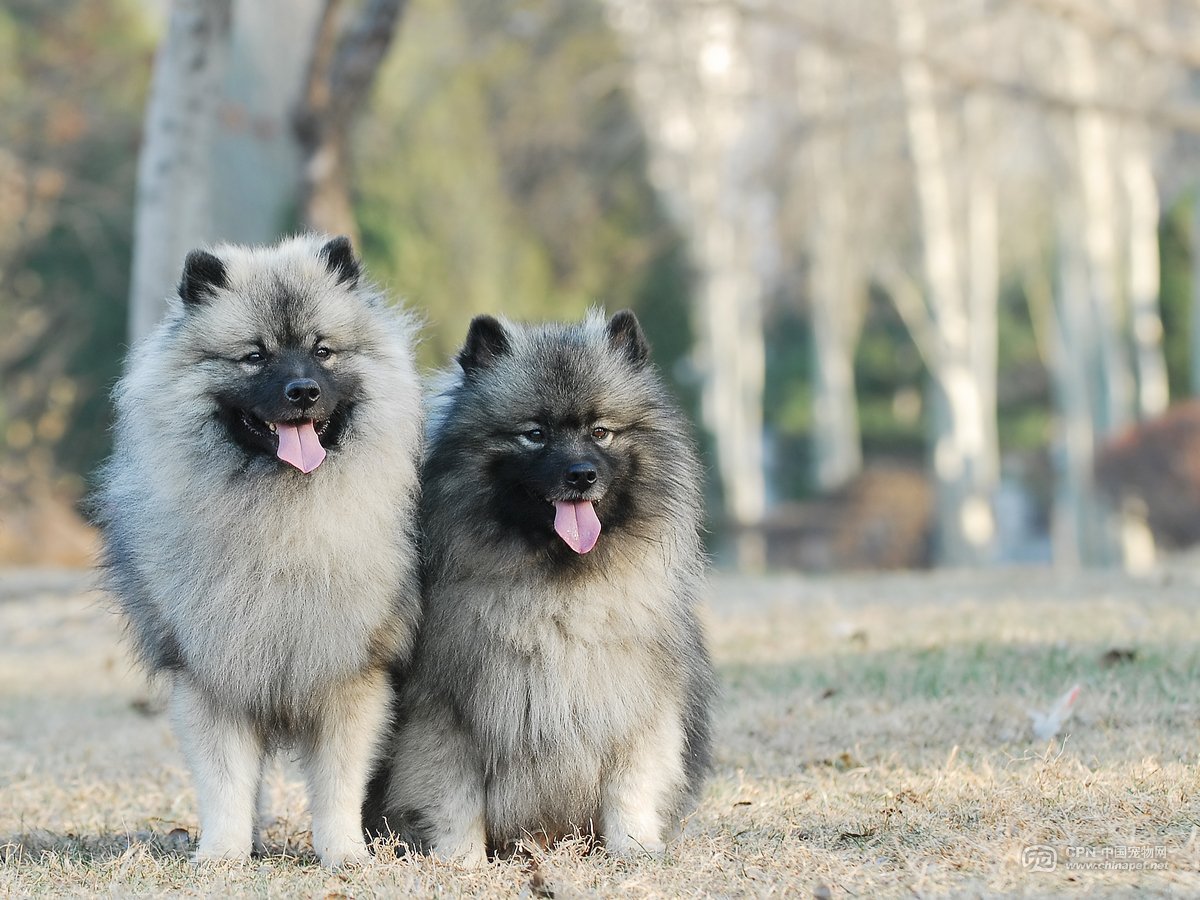
| Country of Origin | Germany (Wolfspitz), Netherlands (Keeshond) |
| FCI Group | Group 5 (Spitz and primitive types), Section 4 (European Spitz) |
| Year of first official mention | 1898 (standard), though known since the 18th century |
| Life span | 13-16 years (long-livers are frequently met) |
| Height at withers | 43-55 cm (deviations allowed, but harmony is more important) |
| Weight | 16-25 kg (depends on height, proportionality is key) |
| Coat type | Long, thick, with abundant undercoat, not prone to matting with proper care |
| Color | Exclusively wolf-gray (zonary gray) with a characteristic mask |
History of the breed: From barge dog to national symbol
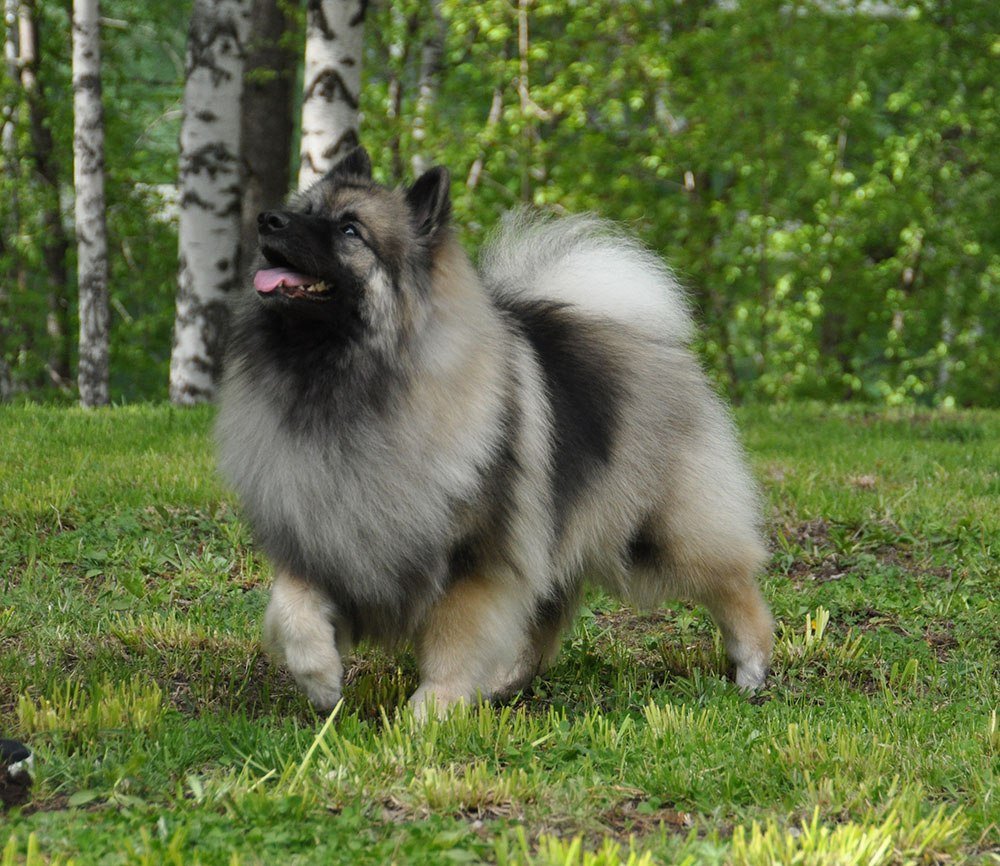
The history of the Wolfspitz is a fascinating journey through time, closely interwoven with the political events of Europe. The ancestors of modern Keeshonds lived alongside humans for centuries. Initially, these were the working “horses” – Danish and Dutch barge dogs. They didn’t just decorate the decks of vessels plying the Rhine but performed hard and vital work: guarding cargo from thieves and exterminating rats, which were a genuine scourge for sailors.
A turning point in the breed’s history came in 1781. Holland was engulfed in political flames – a rebellion was brewing against the Prince of Orange (William V). Society split into two factions: the “Orangists” (supporters of the Prince) and the “Patriots.” The leader of the Patriots was the charismatic Cornelius de Gyselaer. He had a faithful companion – a Spitz named Kees. The dog accompanied his master everywhere and became a living symbol of the resistance. Since then, all dogs of this type began to be called “Keeshond” (Kees’s dog). It is one of the few breeds named after a specific historical figure, albeit through the prism of a dog’s nickname.
Unfortunately, after the rebellion was crushed, keeping a Keeshond became dangerous – it was tantamount to demonstrating opposition views. The breed found itself on the brink of extinction. Many owners got rid of their pets to avoid incurring the wrath of the authorities. Only thanks to devoted farmers and river barge captains, who valued working qualities over politics, did the breed survive in the countryside.
The renaissance of the breed began in the late 19th century. In 1899, the “Verein für Deutsche Spitze” (Association for German Spitz) was created in Germany, developing standards for Spitz of all size categories. It was then that German cynologists systematized the varieties: from miniature to giant. By the way, if you are interested in other varieties or relatives of the Spitz, we recommend looking at the article on the German Spitz Small (Kleinspitz), which is a miniature copy of our hero, or learning about the rare Lapponian Herder, which shares similiar roots in the Spitz group.
What the Wolfspitz (Keeshond) looks like: Detailed description of appearance
The Wolfspitz is a medium-sized dog, compact and square in format, radiating confidence and strength but without excess weight. The main adornment is, of course, the luxurious coat and unique coloration.
Head and Muzzle
The head resembles that of a fox, medium-sized and wedge-shaped. When viewed from above, it is broadest at the back of the skull and tapers smoothly to the tip of the nose. The transition from forehead to muzzle (stop) is moderate, not abrupt. The nose is always black, small, and round. Lips are dry, fitting tightly to the teeth; lip pigmentation is exclusively black, creating a striking “smile” outline.
The eyes attract special attention. They are medium-sized, almond-shaped, dark in color, and set slightly obliquely. But the main feature is the “spectacles.” This is a mandatory breed trait: a thin dark line running from the outer corner of the eye to the lower corner of the ear, along with clear, expressive eyebrows. This gives the face an expression of intelligence and constant interest.
Body and Limbs
The neck is medium length, without a dewlap, but appears very powerful thanks to the thick mane. The withers are high, flowing smoothly into a short, straight, and strong back. The loin is short and broad. The chest is deep with well-sprung ribs, and the belly is moderately tucked up. The tail is the pride of the Spitz. It is set high, curled over the back in a tight ring, and covered with very long, bushy hair. The limbs are straight, parallel, with strong bone. Paws are gathered in a “clump” (cat feet), and claws are black.
Coat and “Wolf” Color
The coat is double: long, straight guard hair that stands off the body, and a thick, cotton-like, soft undercoat. It is the undercoat that supports the guard hair, preventing it from parting. There is a luxurious ruff on the neck and profuse “trousers” on the hind legs.
Color – only wolf-gray. This means a silver-gray color with black tips on the guard hairs. Intensity may vary, but the following are mandatory:
- A black mask on the muzzle (but not too large).
- Lighter “mane” and “trousers.”
- Black tip of the tail.
- Light silver underside of the tail.
Character: Temperament, intelligence, and behavior
Wolfspitzes are the extroverts of the canine world. They are incredibly friendly, cheerful, and people-oriented. If you are looking for a dog that will live its own life in a corner of the yard – that’s not the Keeshond. They need to be at the center of events. This breed is often called the “owner’s shadow” because they follow you from room to room, simply to be close by.
Key Character Traits:
- Lack of aggression. The Wolfspitz is primarily a companion. It has virtually no hunting instinct. This makes it an ideal friend for other pets. They get along famously with cats, parrots, and hamsters. Related breeds, such as the Samoyed or the Eurasier, are also famous for their gentle nature, but the Wolfspitz stands out for its particular empathy.
- Vigilance. Despite their kindness, they make excellent “doorbells.” Their historical past as a barge guard makes itself felt. The Wolfspitz will certainly warn of a stranger’s approach with a bark, but is unlikely to bite. Its job is to notify.
- High Intelligence. They learn instantly. Sometimes too quickly, memorizing not only commands but also your weak spots.
- Love for children. They are wonderful nannies who patiently tolerate children’s pranks.
It is worth noting that the character of the “German” and the “Dutchman” may differ slightly. German lines are often more serious and reserved, closer to the guarding type, much like their larger relative, the German Spitz Giant (Grossspitz). Keeshonds, as a rule, are more playful and affectionate.
Health: Typical diseases and prevention
Coat care and hygiene
Many are frightened by the volume of the Wolfspitz’s coat, but caring for it is simpler than it seems. The structure of the coat is such that dirt does not cling to it. Even after a walk in the rain, when the dog dries off, the dirt falls off by itself, and the dog becomes clean again.
Grooming Rules
- Brushing. Once or twice a week is sufficient. Use a pin brush with long metal pins (without balls on the ends, as they damage the coat) and a comb to check for mats behind the ears and under the armpits.
- Shedding. Twice a year (spring and fall) the Spitz “blows” its coat. During this period, the dog needs to be brushed daily with a slicker brush. If this is not done, the coat will mat into felt, and the skin will stop breathing, which can cause dermatitis.
- Bathing. Rarely! Once every 2-3 months or as needed. Frequent washing strips the protective oily layer. Use only professional moisturizing shampoos for voluminous coats.
- CLIPPING IS A TABOO! Never, under any circumstances, clip a Wolfspitz with clippers or cut it short for the summer. This disrupts thermoregulation (the coat works like a thermos: it warms in winter and protects from overheating in summer). Clipping can lead to alopecia (baldness), after which the coat may never recover. Only hygienic trimming is permitted: shaping the paws (“cat foot”), the area under the tail, and the tips of the ears.
Do not forget about the eyes (wipe with lotion or chamomile tea), teeth cleaning (Spitz breeds are prone to tartar buildup), and claw trimming, which do not wear down well on asphalt due to the dog’s light weight.
Training and Socialization
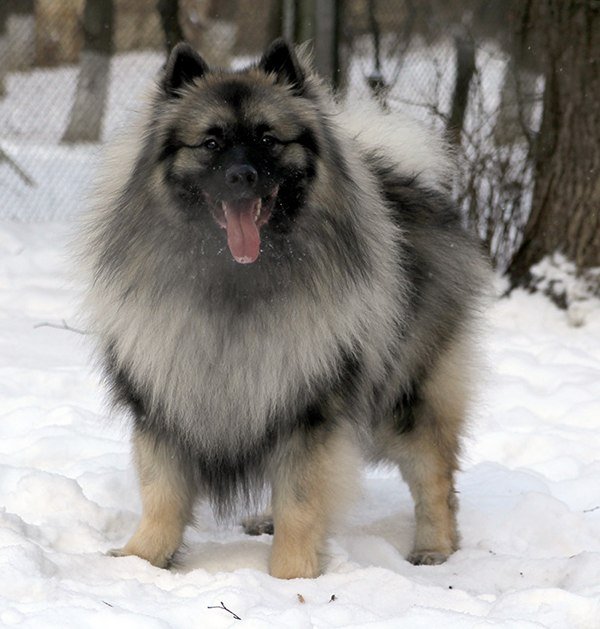
The Keeshond is an intellectual. It will not blindly follow commands like a shepherd if it sees no sense in them. Training should be based on positive reinforcement. Harshness and shouting do not work with this breed – the dog will withdraw into itself or start ignoring you.
They perform excellently in agility, obedience, and even heelwork to music (freestyle). In the Netherlands, they are often used as therapy dogs in nursing homes, as their smiling faces and soft coats work wonders. An important point in upbringing is bark control. If you don’t teach the puppy the “Quiet” command from childhood, you risk getting a very noisy roommate.
Nutrition: Key recommendations
Pros and Cons of the breed
| ✅ Pros | ❌ Cons |
|---|---|
| Excellent family companion, loves children. | Loves to bark (requires training). |
| Has no hunting instinct, friendly with cats. | Intense shedding twice a year (fur will be everywhere). |
| High intelligence and trainability. | Needs constant companionship, does not tolerate loneliness. |
| Robust health and longevity. | Tendency to overeat and gain weight. |
| Coat does not smell “doggy” and is self-cleaning. | Coat takes a long time to dry after bathing. |
| Striking appearance that attracts attention. |
Interesting facts about Wolfspitzes
- The Revolutionary Dog. This is arguably the only breed in the world that became the symbol of a political party and nearly vanished because of it.
- Two Homelands. Germans consider it theirs (as the largest Spitz), and the Dutch consider it their national heritage (Keeshond).
- The Smile. Thanks to the peculiar structure of the skull and the coloring of the muzzle, it seems that the dog is constantly smiling. They are even called the “Smiling Dutchman.”
- Wool. Combed-out undercoat of the Keeshond can be spun. Items made from such “wool” turn out very warm and reportedly have a therapeutic effect (like a belt made of dog hair).
Frequently Asked Questions about the breed (FAQ)
Is the Wolfspitz suitable for an apartment?
Yes, absolutely. Despite the thick coat and medium size, they do not take up much space and are not hyperactive indoors. The main thing is to ensure good walks.
Do they shed heavily?
Yes. If you are a fan of sterile cleanliness and black clothing, this breed might annoy you. There will be hair, especially during the seasonal shed. But the plus side is that it gathers easily from carpets into clumps, unlike the small “needles” of short-haired dogs.
Can a Wolfspitz be kept on a chain in a doghouse?
Categorically no! They have a warm undercoat for winter, but their psyche will not withstand isolation. This is a social dog; without contact with the “pack” (family), it will become unhappy, apathetic, or aggressive. An outdoor enclosure is possible only on the condition of constant interaction and walking, but better yet – free access to the yard from the house.
Video about the breed
- Very friendly and sociable
- Clever, easy to teach
- An excellent "doorbell" watchdog
- Excellent with children
- Inclined to bark
- Dense coat sheds heavily
- Dislikes being alone
- Needs regular brushing
| Eurasier | German Giant Spitz | American Eskimo Dog | |
|---|---|---|---|
| Height | 48–60 cm | 40–55 cm | 38–48 cm |
| Energy | 3 | 3.5 | 3.5 |
| Apartment | 3 | 3.5 | 3.5 |
| Beginners | 3 | 3.5 | 3.5 |
Does the Keeshond bark a lot?
Does the Keeshond shed a lot?
Is the Keeshond good for a family?
FCI Standard No. 97 · The Kennel Club
For apartments · For kids · For beginners · Active · Smartest · Hypoallergenic · All rankings →