

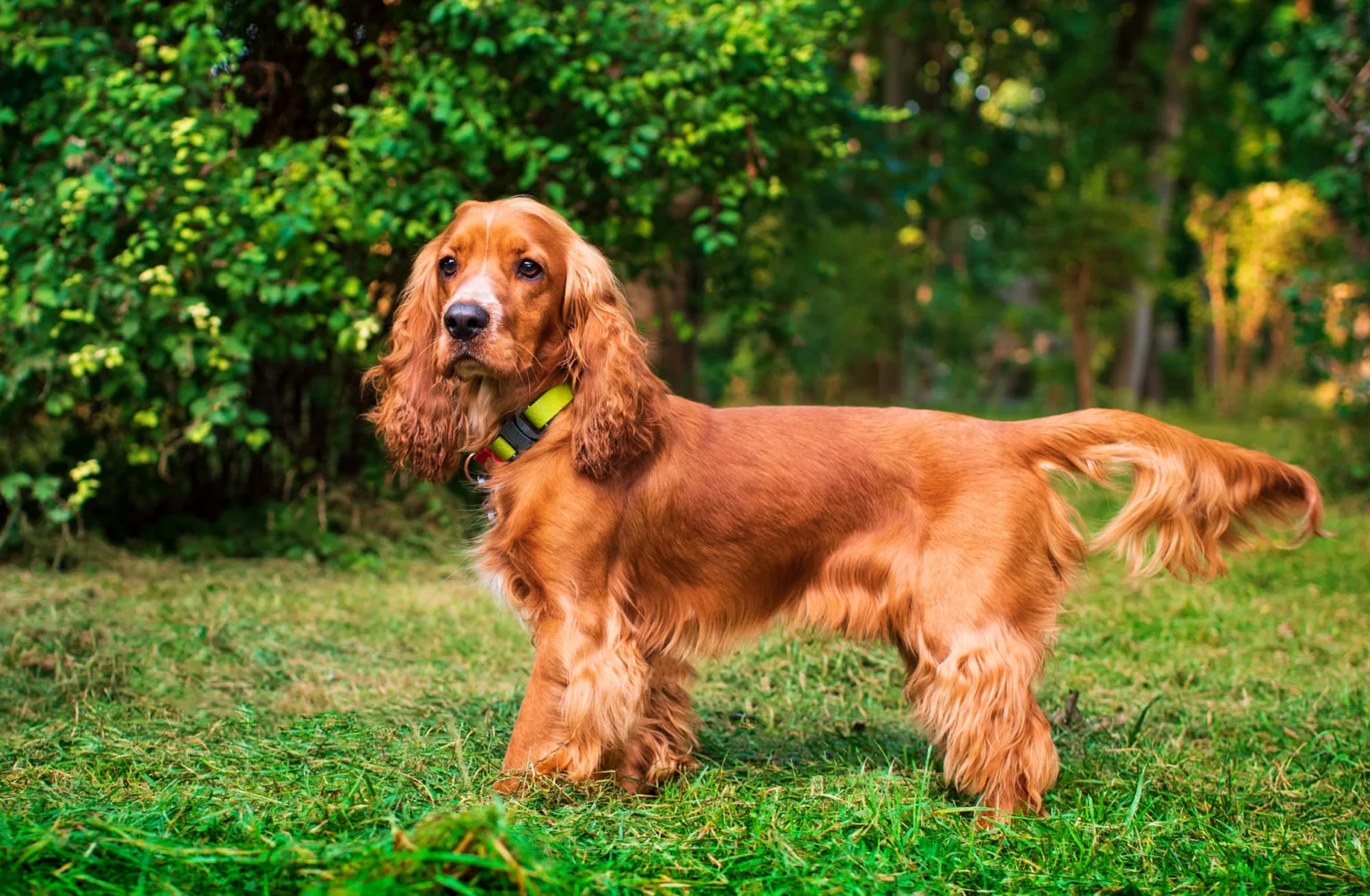
| Height | 38–43 cm |
| Weight | 12–16 kg |
| Lifespan | 12–14 years |
| FCI group | 8 · spaniels |
| Origin | Great Britain |
Exact ratings
- Ear infections (long drop ears)
- Progressive retinal atrophy (PRA)
- Cataracts and glaucoma
- Hip dysplasia
- Kidney disease (family lines)
Quality food and weight control (prone to weight gain). Regular coat grooming and ear cleaning (prone to infections).
The English Cocker Spaniel is more than just a dog; it’s a true member of the family, an energetic companion, and a relentless optimist. Thanks to a combination of sharp intelligence, impressive obedience, and a cheerful disposition, training this dog is an absolute joy, even for a novice owner. This gentle and loyal pet easily gets along with everyone in the household. Its charming appearance and famous “spaniel eyes” can melt anyone’s heart, especially when it’s begging for a tasty treat. Find out more on this at Tvaryny.
English Cocker Spaniel: Key Breed Information

| Origin | Great Britain |
| Year of Recognition | 1892 |
| AKC Group | Sporting Group |
| Lifespan | 12–15 years |
| Height at Withers (Males) | 15–16 inches |
| Height at Withers (Females) | 15–15.5 inches |
| Weight | 28–32 lbs |
| Temperment | Energetic, playful, affectionate, intelligent |
| Grooming Needs | High |
| Activity Level | High |
History of the Breed
The history of the English Cocker Spaniel dates back centuries. It’s believed that their ancestors, the “spaniels,” were brought to the British Isles from Spain during the Roman Empire era (the name “spaniel” itself comes from “Spanish”). For centuries, these dogs were used for hunting game birds in dense thickets. Their job was to find the birds and flush them out for the hunter. Initially, spaniels weren’t divided into separate breeds but were classified by their hunting style: “Land Spaniels” and “Water Spaniels.”
It wasn’t until the 19th century that a deliberate effort began to separate Land Spaniels by size. Puppies from the same litter could be classified into different types: larger ones, weighing over 25 pounds, were called “starters” or “field spaniels” (ancestors of the modern English Springer Spaniel), while the smaller ones were dubbed “cockers.” The name “cocker” comes from the “woodcock,” a type of bird these small and agile dogs were frequently used to hunt. They were perfectly suited for working in dense underbrush where larger dogs struggled to move.
The breed was officially recognized in 1892 when the English Kennel Club finally acknowledged the English Cocker Spaniel as a distinct breed. From that point on, their popularity soared, not just as hunting dogs but also as companion animals. Their merry personalities, loyalty, and attractive looks have won the hearts of millions around the world.
What Does an English Cocker Spaniel Look Like: Standard and Appearance
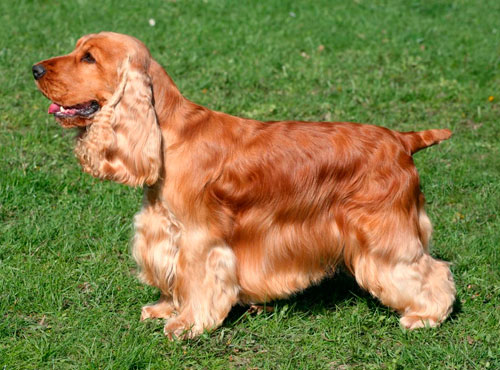
The English Cocker Spaniel is a well-balanced, compact, and sturdy dog with an athletic build. Its appearance radiates energy and cheerfulness. An important distinction from its closest relative is that it is slightly taller and not as low-set as the American Cocker Spaniel, with a less dense coat and a longer muzzle.
- Head: Clearly defined with a distinct stop (the transition from forehead to muzzle). The muzzle is rectangular, not pointed.
- Eyes: Large but not bulging, dark brown or brown in color, harmonizing with the coat. The expression is very intelligent, soft, and slightly pleading – a trademark of the breed.
- Ears: Set low, at eye level. They are long, thin, and covered with silky, straight hair. When pulled forward, they reach the tip of the nose. This is one of the breed’s most recognizable features.
- Body: Strong and compact, with a deep chest and a level topline that slopes slightly toward the tail.
- Tail: Traditionally, the tail was docked to about half its length, especially for working dogs, to prevent injuries in the brush. Today, docking is banned in many countries, so it’s increasingly common to see Cockers with long, merry tails. The tail is set slightly below the line of the back, carried level with it, and is in constant motion.
- Coat: Smooth and silky with “feathering” (longer hair) on the ears, chest, belly, and legs. The coat should not be too thick or curly, as this would interfere with the dog’s work in the field.
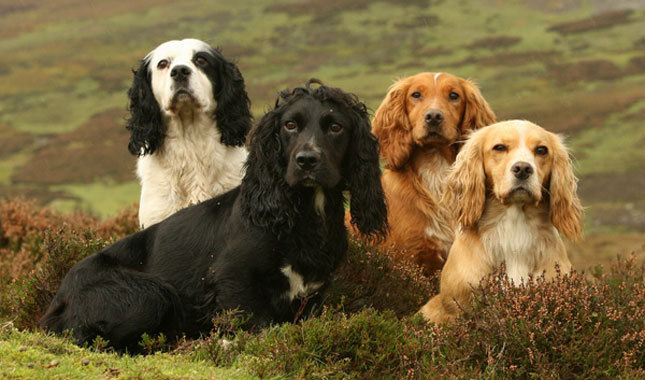
English Cocker Spaniel Colors
The range of colors in this breed is incredibly wide. They can be broadly divided into two main categories: solid colors and parti-colors.
Solid Colors:
- Black: A deep, rich black without any reddish tint.
- Red: Ranging from light gold to a deep, rich red.
- Liver/Chocolate: A solid, rich brown color.
- Black and Tan: Black with distinct tan markings above the eyes, on the muzzle, chest, and legs.
- Liver and Tan: Similar to black and tan, but the main color is chocolate.
Parti-Colors:
- Bicolors: Black and white, red and white, liver and white. Ideally, the patches should be evenly distributed.
- Tricolors: Black and white with tan markings, liver and white with tan markings.
- Roans: This pattern consists of colored hairs evenly mixed with white hairs, creating a “flecked” appearance. Varieties include blue roan, orange roan, and liver roan. Blue roan is one of the most popular colors.
- Roan and Tan: Blue roan with tan markings, liver roan with tan markings.
Temperament: A Perpetual Motion Machine and an Affectionate Friend
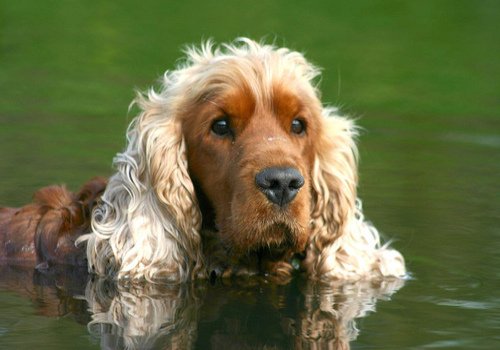
The hallmark of the English Cocker’s personality is its relentless optimism and “the ever-wagging tail.” These are lively, playful, and active dogs that need constant physical and mental stimulation. A sad Cocker is practically unheard of. They are always ready for an adventure, whether it’s a walk in the park, a trip to the countryside, or just a game of fetch.
They are incredibly people-oriented. The English Cocker Spaniel forms a deep bond with its family and does not tolerate being alone for long. If left by themselves for extended periods, they can suffer from separation anxiety, which may lead to destructive behavior and incessant barking. This dog wants to be the center of attention, participate in all family activities, and follow its owner around like a shadow. They often choose one “favorite” person in the family but love everyone equally.
Their friendliness extends not only to people but to other animals as well. They generally get along well with other dogs and cats, especially if raised together. However, their hunting instinct might kick in around smaller pets like hamsters or birds, so introductions should be handled with care. Despite their hunting background, the English Cocker is not an ideal guard dog. It might bark to announce visitors, but it’s more likely to greet them with a happily wagging tail.
Pros and Cons of the Breed
Before bringing such an active companion into your home, it’s crucial to weigh all the pros and cons. Choosing a dog is a major commitment that will shape your life for the next 12-15 years. For comparison, breeds with a different purpose, like the Romanian Carpathian Shepherd Dog, require a completely different approach and living environment.
| Pros (+) | Cons (-) |
|---|---|
| Cheerful and affectionate personality. An ideal companion for active individuals and families. | High need for activity. Not suitable for sedentary people; requires long daily walks. |
| High intelligence and trainability. Easy to train and excels in various dog sports. | Prone to separation anxiety. Does not handle being left alone well. |
| Compact size. Suitable for living in an apartment or a house. | Complex grooming needs. Requires regular brushing, trimming, and clipping. |
| Good with children and other pets. An excellent family dog. | Tendency to gain weight. Has a hearty appetite that requires strict diet control. |
| Attractive appearance. An elegant look with a wide variety of colors. | Prone to certain hereditary diseases. Needs careful health monitoring. |
| Strong hunting instinct (a plus for hunting enthusiasts). | Strong hunting instinct (may chase birds and small animals on walks). |
Health: Common Diseases and Prevention

English Cocker Spaniels are generally a healthy breed, but like many purebreds, they are prone to certain genetic and acquired conditions. Responsible breeders test their breeding stock for hereditary diseases to minimize risks for future generations.
- Eye Conditions: Progressive Retinal Atrophy (PRA) and hereditary cataracts are the most common issues. Both conditions lead to blindness. Genetic tests are available to identify carriers. Glaucoma and corneal dystrophy can also occur.
- Familial Nephropathy (FN): This is a fatal kidney disease that affects young dogs, leading to renal failure. Fortunately, a DNA test is available to identify carrier dogs and remove them from breeding programs.
- Hip Dysplasia: Although more common in larger breeds, hip dysplasia is also found in Cockers. It’s an improper formation of the hip joint that leads to arthritis and pain.
- Otitis (Ear Infections): Due to their long, hanging ears that have poor air circulation, Cockers are highly susceptible to ear infections. Regular ear cleaning and inspection are mandatory for this breed.
- Cardiomyopathy: A disease of the heart muscle that can lead to heart failure.
- Obesity: Cockers love to eat and are prone to gaining weight. Obesity can, in turn, lead to joint problems, heart issues, and diabetes.
Prevention involves choosing a puppy from a reputable breeder who provides health clearances for the parents, regular veterinary check-ups, a proper diet, and sufficient physical activity.
How to Care for an English Cocker Spaniel?
Grooming: Beauty That Requires Effort
The English Cocker’s long, silky coat is its pride and joy, but also a major task for its owner. To keep it looking neat and free of mats, regular and thorough grooming is essential.
- Brushing: At least 3-4 times a week, but ideally every day. Pay special attention to the areas with long feathering: ears, legs, chest, and “skirt.” This helps remove dead hair and prevent mats from forming.
- Clipping and Trimming: Professional grooming is recommended every 6-8 weeks. A groomer not only clips the coat to the breed standard but also performs trimming or hand-stripping to remove the dead outer coat, which helps maintain the proper texture and color. The coat should not be shaved down completely, as this can permanently ruin its texture.
- Bathing: About once a month or as needed, using a shampoo specifically for long-haired dogs.
- Ear Care: This is the most critical aspect of grooming. Check the ears weekly for any redness, bad odor, or debris. Clean them with a special ear-cleaning solution. Always dry the ears thoroughly after bathing or swimming.
Activity and Walks
The English Cocker Spaniel is a hunting dog that needs a significant amount of physical exercise. Two short potty breaks a day are not enough. A proper walk should last at least an hour per day, with opportunities to run off-leash in a safe, enclosed area. Ideally, you should aim for two such walks daily.
They love water, so don’t hesitate to let your dog swim if you have the chance. Cockers also excel in dog sports like agility, flyball, and obedience, or simply enjoy a good game of fetch. A bored Cocker that doesn’t get enough exercise can become unruly and destructive at home.
Training and Socialization
Thanks to their high intelligence and desire to please, English Cocker Spaniels are easy to train. They learn commands quickly and enjoy performing them. However, their cleverness has a downside-they can be cunning and manipulative, especially when using their charming gaze. Therefore, consistency and persistence are key in their upbringing.
Early socialization is crucial. The puppy needs to be introduced to various people, sounds, places, and other animals. This will help it grow into a confident and well-balanced dog. Training methods should be based on positive reinforcement (treats, praise), as Cockers are sensitive to yelling and harsh treatment.
Feeding: How to Control a Boundless Appetite?
A notable trait of the English Cocker Spaniel is its boundless appetite. This dog is always ready to eat anything that even remotely resembles food, including inedible items found on the street. This makes them extremely prone to obesity. Therefore, controlling their diet is one of the owner’s most important jobs.
The diet can be based on high-quality premium or super-premium dry kibble or a natural, home-prepared diet. It is crucial to strictly adhere to the daily feeding amount recommended on the food packaging or calculated by your veterinarian. Do not give in to those pleading eyes and avoid feeding your dog scraps from the table.
Another challenge during feeding is their long ears, which constantly fall into the food bowl. To prevent this, use special tall, narrow bowls designed for spaniels or tie the ears back with a soft scrunchie or a special head covering called a “snood” during meal times.
| Food Group | Examples |
|---|---|
| Meat (base of the diet) | Lean beef, turkey, chicken (boneless), organ meats (heart, tripe). |
| Grains | Rice, buckwheat. |
| Vegetables | Carrots, pumpkin, zucchini, broccoli (cooked or raw). |
| Dairy Products | Low-fat kefir, plain yogurt, cottage cheese (in small amounts). |
| Fats | Vegetable oil (1 teaspoon per day), fish oil. |
The English Cocker Spaniel and Its “Relatives”
The world of spaniels is very diverse. The English Cocker is most often confused with its American “cousin.” However, other similar breeds exist. For example, the Field Spaniel is a close relative but is slightly larger and typically has a solid, dark coat. It’s important to understand the distinctions, especially when choosing a dog. The main diference between the English and the American Cocker Spaniel lies in the head structure (the American’s is more dome-shaped with a shorter muzzle and more prominent eyes) and coat quality (the American’s is much thicker and longer), making it more of a show dog with higher grooming demands.
Fun Facts About the Breed
- The first dog trained to detect cancer by scent was an English Cocker Spaniel named Tangle.
- The famous character Lady from Disney’s “Lady and the Tramp” is an American Cocker Spaniel, but her elegance and personality traits are very similar to those of the English variety.
- The Duke and Duchess of Cambridge, Prince William and Kate Middleton, owned an English Cocker Spaniel named Lupo, which significantly boosted the breed’s popularity in the UK. In the US, celebrities like Oprah Winfrey have also been proud owners, enhancing their visibility.
- The shoe brand “Sperry Top-Sider” was created after its founder, Paul Sperry, noticed how easily his Cocker Spaniel, Prince, ran on ice. He decided to create a shoe sole with a pattern similar to the pads on his dog’s paws.
Frequently Asked Questions (FAQ)
Are English Cocker Spaniels suitable for apartment living?
Yes, thanks to their compact size, they adapt well to apartment life, but only under one crucial condition: they must get enough daily physical and mental exercise. Without long walks, they can become destructive.
Do they shed a lot?
Yes, their shedding is moderate but constant. Regular brushing helps keep it under control and reduces the amount of hair in your home.
Do they bark a lot?
Cockers can be quite “talkative.” They bark when they’re happy, when someone arrives, when they want to play, or when they’re bored. Proper training from a young age can help manage excessive barking.
Is it difficult to care for an English Cocker Spaniel puppy?
Like any puppy, a young Cocker requires a lot of attention, patience, and time for training and socialization. It’s important to get them used to grooming procedures like brushing and ear/paw inspections from day one to avoid issues in adulthood.
Video About the English Cocker Spaniel
- Gentle and sociable
- Excellent with children and animals
- Intelligent, keen to learn
- Hardy, joyful
- Lush coat needs grooming
- Long ears prone to infections
- Can gain weight
- Dislikes long spells alone
| American Cocker Spaniel | English Springer Spaniel | Cavalier King Charles | |
|---|---|---|---|
| Height | 34–39 cm | 46–56 cm | 30–33 cm |
| Energy | 3.5 | 5 | 3 |
| Apartment | 3.5 | 2.5 | 4 |
| Beginners | 3.5 | 3 | 4 |
Does the Cocker Spaniel need a lot of grooming?
Is the Cocker good for a family?
Is the Cocker prone to weight gain?
FCI Standard No. 5 · The Kennel Club
For apartments · For kids · For beginners · Active · Smartest · Hypoallergenic · All rankings →