

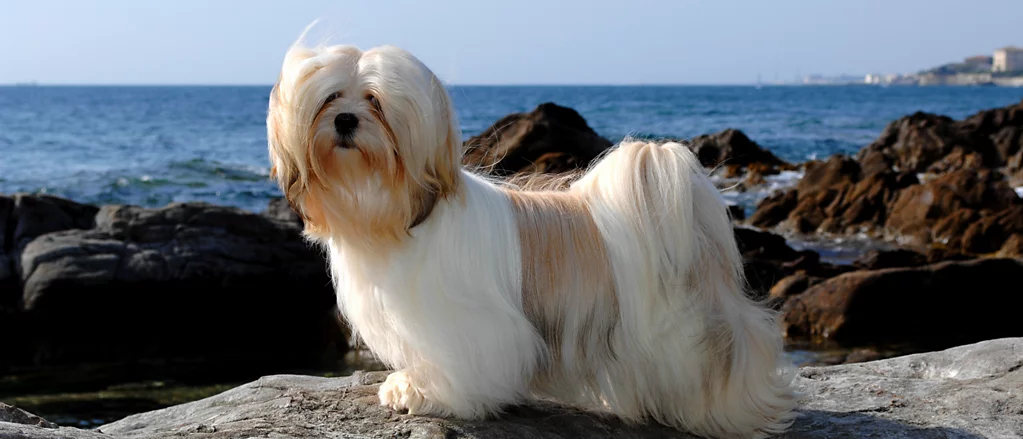
| Height | 25–28 cm |
| Weight | 5–8 kg |
| Lifespan | 12–15 years |
| FCI group | 9 · companion dogs |
| Origin | Tibet |
Exact ratings
Common health issues
Nutrition
Lhasa Apso – this golden miniature dog is capable of charming you at first glance, but be warned: its gaze, hidden beneath strands of mane, can figure out all your thoughts. At least, that is what they believe in the breed’s homeland – Tibet. The independent character of the little “lion” might add some difficulties for owners, but he bonds strongly with the family members he lives with. This decorative indoor pet gets along well with kids but traditionally dislikes strangers. Guard genetics and robust health can make him a reliable sentry for your home. Read more on Tvaryny.
Lhasa Apso: Detailed Overview of Breed Characteristics
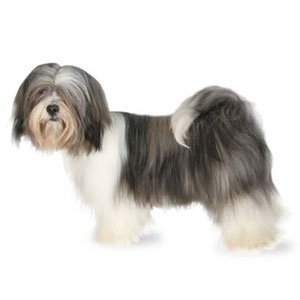
| Characteristic | Indicators and Description |
|---|---|
| Country of Origin | Tibet (China) |
| Year of Official Recognition | 1959 (FCI standard) |
| Life Span | 12-18 years (long-livers up to 20 years are common) |
| Height at Withers | Males: 10-11 inches (25-28 cm); Females: slightly smaller |
| Weight | 13-18 lbs (6-8 kg) (ideal weight for show dogs) |
| Coat Type | Long, heavy, straight, hard, not woolly; dense undercoat |
| FCI Group | Group 9 (Companion and Toy Dogs), Section 5 (Tibetan breeds) |
History of the Breed: From Tibetan Temples to Modern Sofas
The history of the Lhasa Apso is shrouded in the mystical atmosphere of Tibetan temples and monasteries, where this unique genotype was formed over centuries. The ancestors of these miniature dogs served not just as companions, but as vigilant internal guards. While huge Tibetan Mastiffs guarded the monastery entrances from the outside, the small but vocal Apsos warned monks of any intrusion inside the sanctuary. This shaped their famous distrust of strangers.
In the vein of Buddhist teachings, these dogs were identified with the mythical “Snow Lion” – the king of beasts, symbolizing power and protection, which is why they were treated as living amulets. There was a legend that the souls of lamas who did not reach nirvana due to errors in earthly life were reincarnated in the bodies of Lhasa Apsos. That is precisely why they were treated with immense respect.
For a long time, taking dogs out of the country was forbidden under pain of death. The decorative dog with special spiritual significance was gifted only to Chinese emperors as a sign of the highest respect and diplomatic favor. Consequently, these temple amulets remained unknown to Europeans until the beginning of the 20th century. The official debut in the Western world took place in Great Britain, where the breed was initially confused with other shaggy Eastern dogs.
What a Lhasa Apso Looks Like: Appearance Standards
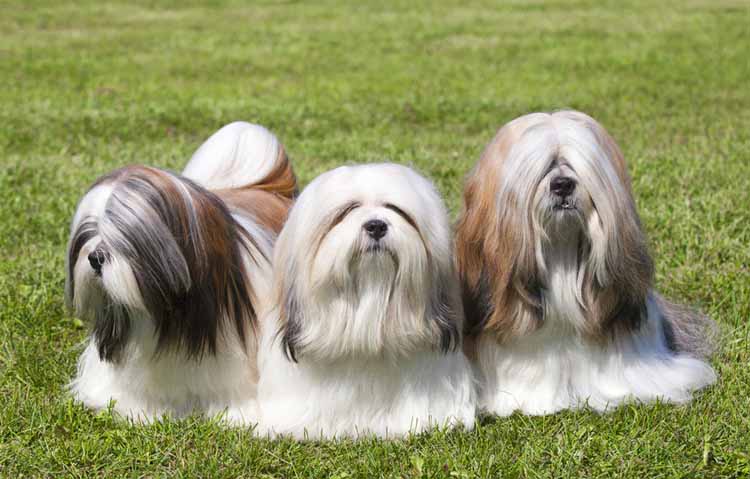
This is a hairy, low-set dog with a sturdy, balanced physique. Its silhouette is rectangular – the body length exceeds the height at the withers. The pride of the breed is the tail, curled into a ring and elegantly thrown over the back, often creating a “fan” effect due to the long hair at the tip.
The head of the Lhasa Apso is rather narrow, but not flat, with a distinct transition from the forehead to the straight muzzle (stop). An important element of the image is a thick beard with whiskers, giving the dog the look of a wise old man. The eyes are dark, oval-shaped, medium-sized, not bulging, but not deep-set either – exactly the gaze that Tibetans call “human”.
Variety of Colors and Coat Structure
The well-constructed body, round “cat-like” paws, and tail are densely covered with lush hair. Its long strands are quite heavy, straight, and feel like human hair to the touch, not soft down. The traditional color resembles a lion (golden, sandy, honey), with black tips on the ears and muzzle being particularly prized. However, the standard allows a wide palette:
- White and cream;
- Smoke-gray and slate;
- Dark grizzly (a mixture of dark and light hairs);
- Black and brown;
- Parti-color (spotted).
Comparison with Other Breeds: How Not to Get Confused
Due to the thick coat and Eastern origin, the Lhasa Apso is often confused with its closest relatives. However, an experienced handler will notice the difference immediately. For example, the Shih Tzu, which comes from crossing a Lhasa Apso with a Pekingese, has a shorter muzzle, a rounder skull, and a more open, friendly “facial” expression, unlike the slightly arrogant Apso.
It is also worth mentioning the bigger brother – the Tibetan Terrier. Despite the name, this is not a terrier, but a herding dog, significantly higher on the legs and with a square body shape, whereas the Lhasa is more elongated. Another relative, the Tibetan Spaniel, generally has short hair on the muzzle and resembles a small lion without the lush mane falling over the eyes.
If we talk about the coat structure, it is unique in the Lhasa. It has nothing in common with the soft down possessed by the Chinese Crested Dog (Powderpuff), whose hair is light and prone to matting in the slightest breeze. And of course, this is the complete opposite to such exotica as the Chinese Crested Dog (Hairless), where hair is present only in fragments.
Character: Temperament and Behavior of the Little Emperor
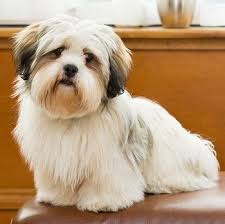
This reliable watchman treats strangers with suspicion, but for the owner’s family members, it can become a devoted friend. However, its affection does not soften the characteristic stubbornness of the imperial dog’s independent nature. The cautious Lhasa Apso knows its worth, so you will have to treat the fluffy native of Tibet with understanding and patiience.
A well-bred “amulet dog” will get along famously with children, provided they respect its personal space. The Lhasa will not tolerate rudeness or intrusive tail-pulling. Calm behavior and an enigmatic gaze from under a waterfall of hair contribute to the mystery of this unusual little fellow. They are very intuitive and often try to “heal” their owners by lying on the sore spot.
Behavioral Features at Home
The Lhasa Apso is an alarm dog, but not a yapper. It barks only when it truly senses a threat or hears something suspicious. At home, they behave with dignity, sometimes even slightly aloof, reminiscent of cats. They can watch what is happening through the window for hours, fulfilling their historic mission as a sentry. They don’t need your attention 24/7; they are quite self-sufficient, which makes them a decent option for busy people.
Health: Typical Diseases and Prevention
Hygiene and Grooming: How to Care for the Lhasa Apso’s Coat?
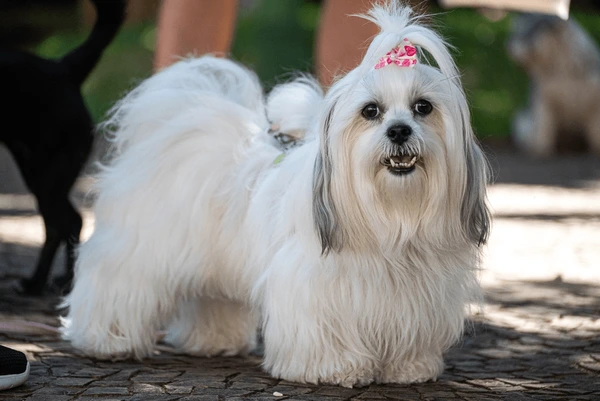
The Lhasa Apso is exclusively an indoor dog that does not require marathon runs, but requires marathon patience in care. The luxurious coat is the main object of concern. If you do not plan to show the dog, it is reccomended to have a hygienic cut (“puppy cut”), which will make life significantly easier for both you and the animal.
Coat Care Algorithm
- Brushing: Two or three times a week, comb out the long strands using a slicker brush and a metal comb with long teeth. Never brush dry hair – always use a spray conditioner to avoid breaking the hair.
- Bathing: Bathe your pet once every 7-10 days. Use professional moisturizing shampoos for long-haired breeds. Applying a conditioner or mask after shampooing is mandatory.
- Drying: The Lhasa Apso’s coat needs to be blow-dried, straightening the strands with a brush. Natural drying can lead to the formation of dense mats right near the skin.
- Top-knot: So that the hair does not fall into the eyes and irritate the cornea, the bangs on the head are gathered into a ponytail or braided.
It is important to introduce the procedure of brushing the dog’s teeth from puppyhood, as small breeds are prone to tartar formation. Also monitor the condition of its hairy ears – pluck dead hair from the ear canal to ensure ventilation. Although Lhasa Apso claws can grind down on asphalt by themselves, check their length regularly, especially on the fifth toe.
Training and Socialization: Who is Training Whom?
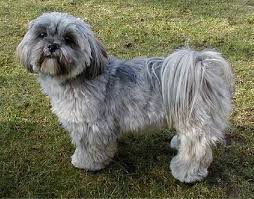
Training an independent tot with an “imperial” past and its own place in Eastern belief is a responsible and tricky business. Lhasa Apsos lived for centuries in temple spaces closed to outsiders, where their independent character crystallized and mistrust of strangers was formed.
They will not follow commands just to please you, as sheepdogs do. The Lhasa must see sense in the action. The “stick” method is categorically forbidden with this breed – the dog will withdraw into itself or become aggressive. Only positive reinforcement and treats work.
Tips for Successful Training:
- Start socialization as early as possible – carry the puppy outside in your arms, introduce it to different sounds and people.
- Training sessions should be short (10-15 minutes) and interesting.
- Do not allow the dog to dominate (for example, growling when you want to move it off the sofa), but do this calmly and confidently.
- Accustom it to handling (brushing, teeth inspection) from the first days, otherwise grooming will turn into a battle.
Nutrition: Key Recommendations
Pros and Cons of the Breed
Before acquiring this Tibetan beauty, it is worth weighing up all the “pros” and “cons”, as the breed is not suitable for everyone.
Advantages:
- Compactness: ideal for apartment living.
- No smell: clean and well-groomed hair has no specific “doggy” smell.
- Vigilance: an excellent alarm that will warn of guests.
- Low need for activity: does not require hours of jogging.
- Robust health: one of the healthiest breeds among toy dogs.
Disadvantages:
- Complex coat care: requires significant expenditure of time and money on cosmetics.
- Stubbornness: difficulty in training for novices.
- Independence: not suitable for people who want a dog that constantly sits on their lap.
- Loud barking: without education, can become a problem for neighbors.
Interesting Facts about the Lhasa Apso
- The breed name comes from the name of the capital of Tibet – Lhasa, and the word “apso”, which can be translated as “bearded” or, according to another version, “goat-like” (due to the coat structure).
- The Lhasa Apso often loves to sit on the high backs of sofas, like a cat, to have a better overview of the territory.
- It is believed that the breed has existed unchanged for over 2000 years.
- Genetic studies have shown that the Lhasa Apso is one of the breeds closest to the ancient wolf in terms of its DNA, despite its cute appearance.
Frequently Asked Questions about the Breed (FAQ)
Do Lhasa Apsos shed a lot?
Lhasa Apsos shed very moderately. Their hair falls out just like human hair, and dead hairs often remain within the mass of the coat rather than falling to the floor. This is a plus for cleanliness in the house, but a minus for care – if they are not brushed out, terrible mats form.
Is this breed suitable for allergy sufferers?
They are often considered hypoallergenic due to the hair-like structure of their coat. However, allergies are most often caused not by the hair, but by saliva and skin particles (dander). Therefore, before buying, it is recommended to spend a few hours in the company of an adult dog of this breed.
Can they live outside in a kennel?
Categorically not. Despite the warm coat, this is a companion dog that requires constant contact with humans. Furthermore, in a kennel, their luxurious coat will turn into dirty rags within a few days.
Video about the Breed
- Devoted, dignified, long-lived
- Compact, for an apartment
- A confident "doorbell" watchdog
- Hardier than many small dogs
- Independent, stubborn
- Inclined to loud barking
- The lush coat needs grooming
- Reserved and distrustful of strangers
| Shih Tzu | Tibetan Terrier | Tibetan Spaniel | |
|---|---|---|---|
| Height | 20–28 cm | 35–41 cm | 25–25 cm |
| Energy | 2 | 3.5 | 3 |
| Apartment | 4 | 3.5 | 4 |
| Beginners | 3.5 | 3 | 3.5 |
Does the Lhasa Apso live long?
Is the Lhasa Apso good for a novice?
Does the coat need a lot of care?
FCI Standard No. 227 · The Kennel Club
For apartments · For kids · For beginners · Active · Smartest · Hypoallergenic · All rankings →