

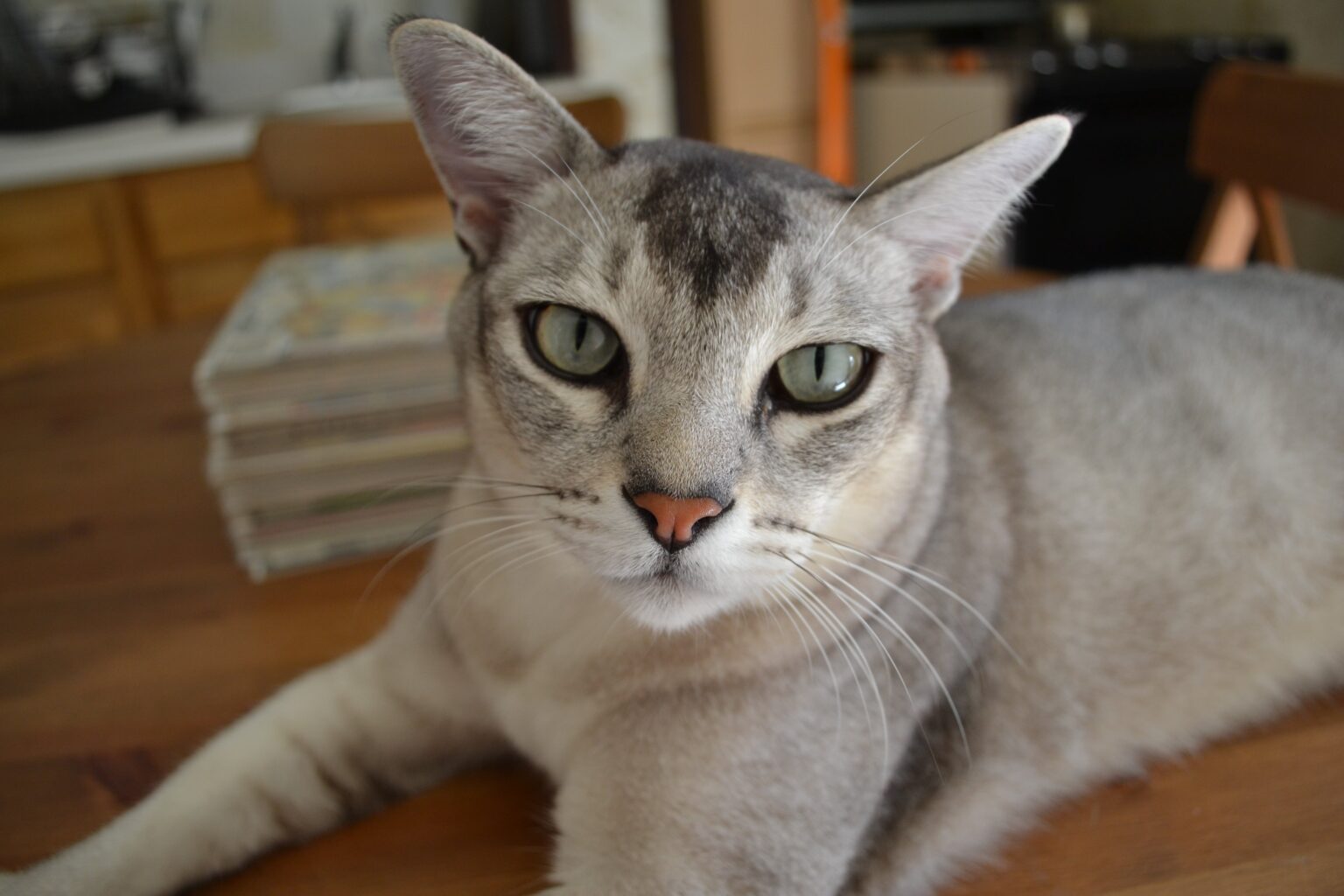
| Weight | 3.5–7 kg |
| Lifespan | 12–16 years |
| Coat | short or semi-long, silver-tipped |
| Recognition | TICA · WCF · GCCF · FIFe |
| Origin | Great Britain |
Exact ratings
- Polycystic kidney disease (PKD, from the Persian-Chinchilla line)
- Hypertrophic cardiomyopathy (HCM)
- Allergies and skin problems
- Dental disease (gingivitis)
- Generally healthy with responsible breeding
Quality food for house cats, with weight control. Brush the short/semi-long coat 1–2 times a week; buy a kitten from a breeder who tests for PKD and HCM.
The Burmilla is Britain’s own silver cat: a shorthaired beauty with a coat like frost on glass and eyes that look as though someone has drawn round them in kohl. She began as an accident in an English cattery in 1981, and within a decade she had a written standard, a breed advisory committee and a place on the show bench. You can find out more on Tvaryny. This guide is written from inside the breed’s homeland: what the GCCF recognises and under what name, which two DNA results belong on a pedigree, and what the law here asks of you.
Burmilla: A Brief Breed Overview
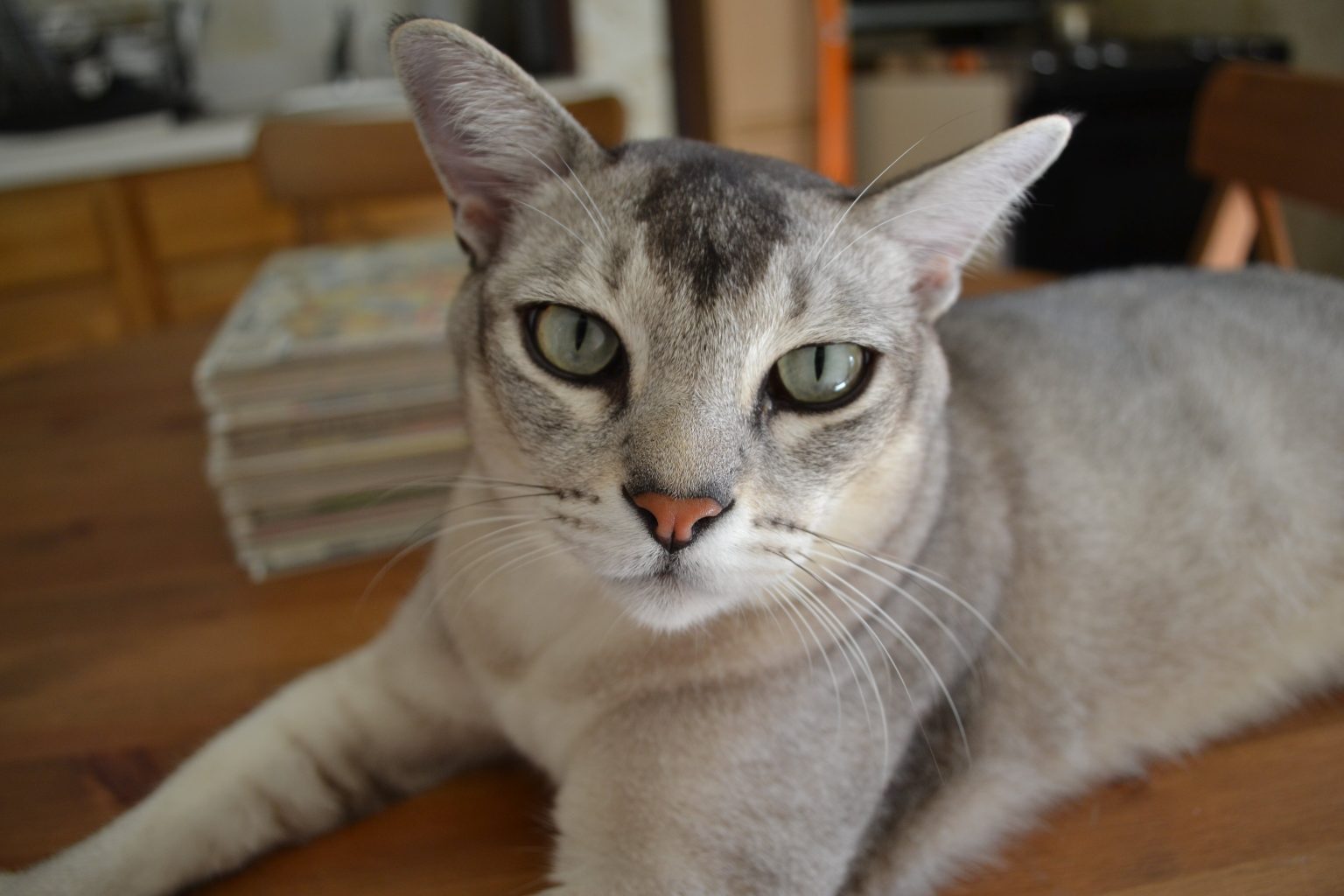
She is a medium-sized cat who feels heavier in the arms than she looks on the sofa. The coat is short and finely tipped with colour over a pale undercoat, which is why she seems to change shade as she crosses a room. Underneath the glamour sits an even temperament that made her a quiet favourite among British families who wanted a Burmese and found the volume too high.
| Quick Facts About the Burmilla Breed | |
|---|---|
| Origin | Great Britain, 1981 |
| Name in her home registry | Asian Shaded, one of the five varieties of the GCCF’s Asian Group |
| GCCF status | Preliminary recognition for the Asian Group in 1990; championship status for the Burmilla in 1997; all five varieties complete by 2003 |
| Adult weight | 3.5–7 kg, queens usually lighter than toms |
| Average lifespan | 12–16 years |
| Coat | Short, fine and glossy, lying close to the body. The semi-longhaired sister variety is the Tiffanie. Unlike a heavier-boned breed such as the British Shorthair, she carries very little undercoat bulk. |
| Eyes | Large and expressive; any shade of green, with clear green preferred |
Important: the Burmese cat gave the Burmilla her build, her warmth and her attachment to people, whilst the Chinchilla line of the Persian cat contributed the silver undercoat and the dark pencilling round the eyes, nose and lips. Both parents also handed down a health risk apiece, which is why this article gives the two DNA tests a section each.
The Accident at Astahazy: How Britain Gained a New Cat in 1981
The breed exists because a door was left open. Miranda von Kirchberg, a baroness by marriage and by then an established British breeder working under the Astahazy prefix, had bought a silver Chinchilla Persian male named Jemari Sanquist as a pet rather than as breeding stock. He was due to be neutered. Before that appointment came round, a cleaner left a door ajar and Sanquist found his way to one of the household’s Burmese queens, a lilac girl called Bambino Lilac Faberge.
On 11 September 1981 the mating produced four kittens, all female, all shorthaired, and all a smoky black shaded silver nobody in Britain had seen on a cat of Burmese type. They were registered as Astahazy Gabriella, Galatea, Gemma and Gisella. Note what that means: the founders were shaded silver females of a single colour, so the vast colour range the breed now enjoys was built afterwards, deliberately, by British breeders. The accident supplied the idea; it did not supply the breed.
Why She Is Called a Burmilla, and Why the GCCF Calls Her Something Else
The obvious name was “Silver Burmese”, and it was rejected sensibly: they were not Burmese, and the label would have muddled two breeding programmes for ever. Miranda von Kirchberg and her fellow breeder Thérèse Clarke took the first syllable of Burmese and the last of Chinchilla and produced Burmilla, a coinage so neat that it travelled into every other registry unchanged.
Her home registry files her differently. As breeders carried on crossing Burmese with Chinchillas, the litters threw far more than silver shaded kittens: selfs, smokes, tabbies in four patterns, and a semi-longhaired variety from the recessive longhair gene. Rather than register half a dozen breeds, the Governing Council of the Cat Fancy grouped them. The family became the Asian Group, and the original silver cat became Asian Shaded. In 1985 the founders formed the Burmilla-Asian Association inside the GCCF, whilst the Clarkes pursued a parallel route through the Cat Association of Britain, which worked to continental FIFe standards.
The British Ladder: From Preliminary Recognition to Championship Status
British recognition is a ladder with rungs that have to be earned. Preliminary recognition came in 1990, less than a decade after the accidental litter. It allows a new variety to be registered and exhibited, but not to compete for the certificates that make champions.
The step to championship status is deliberately demanding. A new breed needs a Breed Advisory Committee approved by the Board, a breeding policy passed by the Genetics Committee, a confirmed standard of points and registration policy, enough fully appointed judges, at least fifty cats registered, and fifteen individual cats each awarded a minimum of four merit certificates by at least four different judges. The Burmilla, the Asian Smoke and the Asian Tabby got there in 1997; the Selfs followed in 2000 and the Tiffanie completed the set in 2003. You will see “1994” and “1995” quoted online, and neither matches the registry’s own record.
The Asian Group Explained: Five Varieties, One Type
British breeders describe the Asian Group as “Burmese in fancy pyjamas”, and it is a fair summary: every variety shares the Burmese body, head and boning, and what differs is what is printed on the coat. The five are the Asian Self and Tortie, which includes the black Self better known as the Bombay; the Asian Smoke; the Asian Shaded, our Burmilla; the Asian Tabby in ticked, spotted, classic and mackerel patterns; and the semi-longhaired Tiffanie. The GCCF’s breeding policy recognises 816 permutations of colour, pattern and coat length within the Asian standard, so a Burmilla is not a colour of cat but one pattern within a deliberately enormous palette, and her litter-mates may legitimately be smokes, tabbies or selfs.
Who Recognises the Burmilla, and Under What Name
The breed is accepted everywhere that matters, but each registry files her slightly differently. This is the table to photograph before you enquire about a kitten abroad or enter a show outside Britain.
| Registry | Name and code used | Status |
|---|---|---|
| GCCF (Britain) | Asian Shaded, within the Asian Group; GEMS notation, no three-letter breed code | Preliminary 1990, championship 1997, whole group complete 2003 |
| FIFe | Burmilla, code BML, category III shorthair | Fully recognised. The semi-longhair is a separate entry, Tiffanie, and is not recognised |
| WCF | Burmilla, code BMS; Burmilla Longhair, code BML | BMS carries the note “recognised by all”, the widest status the list gives |
| CFA | Burmilla, shorthair and longhair divisions | Accepted for registration in 2011; advanced to championship in 2014 |
| TICA | Burmilla | Board decision in 2014, championship effective from 1 May 2015 |
Two corrections are worth making loudly. The Burmilla was not given TICA championship status in 1999; that date belongs to nothing in this breed’s history. And CFA acceptance came in two stages, registration first and championship three years later, so a single CFA year quoted alone is usually wrong.
The Code Trap: BML Means Two Different Cats
Here is a genuine trap for a British owner taking a GCCF-registered cat to the Continent, or buying one from there. Under FIFe, BML is the shorthaired Burmilla. Under WCF, BML is the longhaired Burmilla, and the shorthair you actually own is BMS. The same three letters describe two different cats depending on whose paperwork is in front of you.
It goes one layer deeper. FIFe does not recognise the semi-longhaired variety as a Burmilla at all: the Tiffanie is listed separately as a non-recognised breed, so a coat length that is championship-worthy in Britain has nowhere to compete under FIFe rules, whilst WCF gives the longhair its own entry. The GCCF uses neither convention: British pedigrees run on GEMS notation with breed numbers, so your kitten’s paperwork will not say BML or BMS anywhere. A certificate carrying a three-letter code came from a different registry, which may be perfectly legitimate but is not a GCCF pedigree.
| System | Shorthaired Burmilla | Semi-longhaired variety |
|---|---|---|
| FIFe | BML | TIF, Tiffanie, listed as not recognised |
| WCF | BMS | BML, Burmilla Longhair, recognised |
| GCCF | Breed number 72 with pattern 43, written ASH in GEMS | Breed number 68, written ASL, shown as Tiffanie |
Silver, Shaded and Tipped: The Genetics Behind the Shimmer
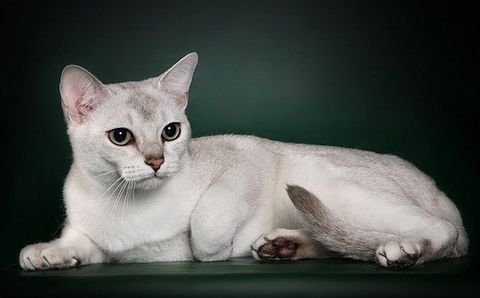
Three genetic ideas produce the whole effect. The first is agouti, the ancestral banding that alternates light and dark along each hair; every domestic cat is genetically a tabby underneath, and the Burmilla wears that inheritance lightly. The second is the dominant Inhibitor gene, which suppresses pigment at the base of the hair shaft and leaves it silvery white whilst the tip keeps its colour. The third is wide-banding, which the GCCF’s genetics advisers describe as most probably a group of genes rather than one; it pushes the coloured section further up towards the tip.
Turn wide-banding down and you get a heavily shaded cat with roughly a third of each hair coloured. Turn it up and only the last fraction carries pigment, which is the tipped or shell look. Because polygenes are involved, the range is continuous and litter-mates sit at different points along it. The undercoat need not be silver either: the Asian Shaded is recognised in both silver and non-silver, the latter called standard or golden.
Reading the Colour Code on a British Pedigree
This is where a great deal of published material goes wrong, so be exact. In the continental EMS system, 11 means shaded and 12 means shell, the heavily tipped version. Plenty of breed articles print those two the other way round. A black silver shaded Burmilla is therefore BML ns 11 under FIFe, where n is black, s is silver and 11 is the pattern.
GEMS reaches the same cat by another road. The breed number for the Asian shorthair is 72 and for the Tiffanie 68; the shaded pattern is 43, corresponding to GEMS pattern code 11; colours are single letters, n for black, a for blue, b for chocolate, c for lilac; and s marks silver. So a black silver shaded Burmilla appears as 72 43ns, written in GEMS as ASH ns 11. A caramel tortie silver shaded Tiffanie, a properly baroque example from the breeding policy, is 68 43ps, or ASL ks 11.
| FIFe code | Colour name | What you see |
|---|---|---|
| BML ns 11 | Black silver shaded | The classic Burmilla: a dark mantle graduating down the sides, with white chin, chest and belly |
| BML ns 12 | Black silver shell, also called tipped | Far lighter, as though the colour had been dusted on only at the very ends of the coat |
| BML as 11 | Blue silver shaded | The dilute version, softer and cooler, with slate-grey pencilling |
| BML ny 11 | Black golden shaded | Non-silver undercoat: the base of the hair is warm apricot rather than white |
Worth knowing: BSH is the code for the British Shorthair, not for anything in this group. A Burmilla colour written with a BSH prefix means the source has confused two breeds, and whatever else it says deserves checking.
What the Burmilla Looks Like: The Standard in Plain English
- Body – medium-sized, lithe and muscular, heavier than the eye expects; a straight back and a chest rounded in profile.
- Head – a gently rounded wedge with good width between the ears and a firm chin; toms develop broader cheeks than queens.
- Ears – medium to large, set well apart with rounded tips and a slight forward tilt, continuing the line of the cheeks.
- Eyes – large and set well apart, the upper line curved and angled towards the nose, the lower fuller; luminous, any shade of green, clear green preferred.
- Nose – short with a gentle break; in the black shaded the leather is brick red, outlined in the colour of the tipping.
- Legs and paws – slender in proportion, hind legs slightly longer than the front, with neat oval paws.
- Tail – medium to long, of even thickness and tapering only slightly, carried proudly rather than curled.
- Coat – short, fine, close-lying and glossy; the Tiffanie’s version is silky and semi-long with a full tail plume.
The feature everyone notices first is the make-up. Eyes, nose leather and lips are outlined in the colour of the tipping, as though drawn with a fine pen. It comes from the same pigment distribution that produces the tipping, which is why heavily shaded cats carry the strongest outline.
Character: Temperament and Behaviour of the Burmilla
The Burmilla strikes a balance neither parent breed manages alone. From the Burmese she takes the need for company, the confidence with strangers and the readiness to join in. From the Chinchilla side she takes a slower fuse and a quieter voice. British owners who have kept both describe her as a Burmese with the volume turned down a notch: just as affectionate, considerably less insistent about it. What she does badly is being fed and admired at weekends; she wants a lap, a conversation and somebody in the room.
- Sociability. She greets visitors rather than vanishing under the bed, and supervises plumbers, guests and deliveries with genuine interest.
- Adaptability. Moving house, a new baby, a change of furniture: she copes better than most pedigree breeds, provided her people stay accessible.
- Playful intelligence. Puzzle feeders, wand toys and clicker work keep her busy well into middle age; she solves cupboard catches for entertainment.
- A moderate voice. She talks, but it is a soft chirruping commentary rather than the carrying Burmese demand, which makes her easier to live with in a flat or a terrace.
The Burmilla in a Modern British Household
Set the breed against the way Britain actually keeps cats now, because the fit is not automatic. Cats Protection’s annual survey of the national cat population found that 58% of cat owners work more than thirty hours a week, and that pedigree cats are far more likely than moggies to be kept permanently indoors, at 46% against 32%. Put those together and you have the exact situation a Burmilla handles worst: a sociable, indoor-only cat alone in a quiet house all day.
That does not make her wrong for a working household; it makes her a cat who needs the problem solved rather than ignored. A second cat of compatible temperament is the most reliable answer. Failing that, a window perch overlooking a bird feeder, a puzzle feeder holding part of the daily ration, and somebody home at lunchtime will carry her through the week.
Children, Dogs and Other Cats
She is one of the better pedigree breeds for a family with children: robustly built, quick on her feet and confident enough to remove herself before a situation becomes a problem. Even so, she is entitled to somewhere a toddler cannot follow. With a resident dog she usually settles quickly, provided introductions are slow and there is vertical space to observe from. Two Burmillas are genuinely less trouble than one, because they entertain each other during the working day.
Health, Part One: PKD1, the Dominant Gene From the Persian Side
Autosomal dominant polycystic kidney disease is the inheritance the Chinchilla Persian brought into the pedigree. Fluid-filled cysts form in the kidney tissue and enlarge over time, gradually replacing working kidney and ending in chronic renal failure. Cysts are often detectable on ultrasound within the first year of life, long before the cat looks unwell.
The word that matters is dominant. A single copy of the faulty PKD1 gene is enough to cause the disease; there is no such thing as a silent carrier who stays healthy and quietly passes it on. That makes the result easy to read, because British laboratories report it simply as normal or affected. If both parents test normal, the kittens cannot have inherited PKD1 from them.
How common is it in the breed? Almost nobody has measured it. The one published figure comes from an Australian screening study by Barrs and colleagues in 2001, which examined 320 cats and found two of the fourteen Burmillas in the sample positive. Fourteen cats is far too small a group to build a breed statistic on, and the percentages circulating online have no study behind them at all. What is solid is that Langford Vets, the laboratory of the University of Bristol, lists the Burmilla among the breeds for which PKD testing is appropriate, in the lower-risk band, whilst the Persian, Chinchilla, Exotic and British Shorthair sit in the moderate-risk band.
Health, Part Two: Hypokalaemia and the WNK4 Gene From the Burmese Side
The second inheritance came down the Burmese line, and it is the one British breeders talk about most. Feline hypokalaemic polymyopathy is caused by a mutation in the WNK4 gene that leaves the cat unable to retain potassium properly. Blood potassium falls, muscles stop working correctly, and affected cats show episodes of weakness that classically involve the neck and shoulder girdle: the head hangs low, the gait becomes stiff or wobbly, and in a bad episode the limbs give way. Episodes come and go, which makes the condition easy to misread as a knock or a passing virus.
This one is recessive, and that changes how you ask after it. Two copies are needed to make a cat ill. A cat with one copy is a carrier: perfectly healthy, indistinguishable from any other cat, and capable of passing the fault down the generations undetected. Mate two carriers together and, on average, a quarter of the litter will be affected. That is exactly why the fault could hide inside pedigrees for years before anyone knew it was there.
The scale is not trivial. In the review published by Malik and colleagues in 2015, 17 of 133 Burmillas tested carried the mutation, a carrier rate of 13%. Among Burmese themselves, 411 of 2,099 cats were carriers, roughly 20%, with 1.6% actually affected. The breeds carrying the Burmese legacy, and therefore the risk, make a long list: Asian, Australian Mist, Bombay, Burmese, Burmilla, Cornish Rex, Devon Rex, Singapura, Sphynx, Tiffanie and Tonkinese.
Dominant or Recessive: Why the Two Tests Ask Different Questions
Most buyers ask “has the cat been health tested?” and accept a yes. The useful question is narrower, and it depends on knowing that the breed’s two inherited risks behave in opposite ways.
| Question | PKD1, from the Persian side | WNK4 hypokalaemia, from the Burmese side |
|---|---|---|
| Inheritance | Autosomal dominant | Autosomal recessive |
| Copies needed to make a cat ill | One | Two |
| Can a healthy cat hide it? | No; a cat with the gene has the disease | Yes; carriers are completely normal |
| How results are reported | Normal or affected | Normal, carrier or affected |
| What two normal parents mean | Kittens cannot inherit it from them | Kittens cannot be affected, though wider ancestry still matters |
| Measured frequency in the Burmilla | One small study only: two of fourteen cats, Australia, 2001 | 17 of 133 cats tested were carriers, about 13% |
| British registry position | Negative registers are maintained for cats testing clear | Testing mandatory for active-status Asians since 1 January 2018 |
The two questions write themselves. For PKD1: may I see a normal result for both parents? For hypokalaemia: are both parents normal, or is one a carrier, and if so what was the other parent’s result? A carrier parent is not a scandal. A carrier mated to another carrier is.
What the GCCF Has Required Since 1 January 2018
This is the most practical thing a British buyer can know, and it is not widely advertised outside breeder circles. The Asian Breed Advisory Committee decided that with effect from 1 January 2018, every Asian registered with active status must be tested for hypokalaemia, unless both parents are already known to be clear of the gene, and the result must be supplied to the GCCF office at the time of registration.
“Active status” is the registry’s term for a cat that may legitimately be bred from; kittens sold as pets normally go on the non-active register, which is ordinary and responsible rather than a mark against the kitten. The committee’s line on carriers is sensible rather than absolutist: a carrier need not leave a breeding programme, but must only be mated to a non-carrier. Breed-specific testing is checked automatically when a litter is registered, so if a kitten is offered as a breeding-quality Asian on the active register, the certificate exists and you may ask to see it.
Where a British Owner Gets the Testing Done
Both tests are available domestically. Langford Vets, the diagnostic laboratory attached to the University of Bristol, offers polycystic kidney disease testing and Burmese hypokalaemia testing within its feline genetic panel, and the Bristol molecular diagnostic unit was involved in the research that identified the hypokalaemia mutation. Both run from a mouth swab or a blood sample.
One procedural detail catches people out. For a result to be accepted onto a negative register held by the GCCF or another authority, the sample must be taken by a veterinary surgeon who confirms the cat’s identity by its microchip number. A swab taken at home by the breeder may be perfectly accurate, but it will not be accepted for registration. That is why the microchip has become the spine of the whole British system: it ties the DNA result to an animal, the registration to that result, and since 2024 the animal to a legally required database entry.
Burmilla Health: What Else the Breed Advisers Watch
The GCCF’s breeding policy for the Asian Group is refreshingly measured about the rest, noting that there is little, and in some cases no, confirmed evidence of the ancestral breeds’ other disorders appearing in the Asian, whilst asking breeders to stay alert.
| Concern | What is actually known | What to do about it |
|---|---|---|
| Polycystic kidney disease | Inherited from the Chinchilla side; dominant; the Burmilla sits in the lower-risk band, and the only measurement is a fourteen-cat sample from 2001 | Ask for a normal PKD1 result on both parents rather than relying on any percentage |
| Hypokalaemic polymyopathy | Recessive; about 13% of tested Burmillas were carriers; rare but documented in the Asian | Mandatory testing for active-status Asians; ask to see the certificates |
| Flat-chested kitten syndrome | A compressed rib cage causing breathing difficulty in newborns; probably a simple recessive, possibly more complex; no DNA test yet | A sampling study has been running at Langford; ask whether the line has produced it |
| Feline orofacial pain syndrome | Exaggerated licking, chewing and pawing at the mouth, often around teething; identified as genetic, with a test under development | Report episodes to your vet; it is not simply “fussy teething” |
| Hypertrophic cardiomyopathy | The commonest feline heart disease in general, but there is no published prevalence figure for the Burmilla; the number often quoted for her appears borrowed from a study of British Shorthairs in Denmark, and the available DNA tests are validated for the Maine Coon and the Ragdoll, not for this breed | Ignore the percentages; if a murmur is heard, the answer is an echocardiogram performed by a cardiologist |
| Weight gain after neutering | Very common across the breed and entirely manageable | Weigh monthly and feed to condition rather than to the packet |
| Dental disease | Ordinary feline risk; incorrect bites are noted in the Asian and monitored by breeders | Brush regularly and have the mouth checked yearly |
No one has studied this small breed systematically, so no list of hereditary diseases exists for it — that is a gap in the data, not evidence of health. That claim cannot survive contact with the two DNA tests above, and it does the breed a disservice: she is in good genetic shape precisely because British breeders identified the risks and test for them, not because the risks were never there.
Buying a Burmilla Kitten in Britain: What the Law Says
British law is unusually clear about kitten sales, and knowing it protects you as much as the cat. Under the Animal Welfare (Licensing of Activities Involving Animals) (England) Regulations 2018, as amended in 2019, kittens must be at least eight weeks old before they can be sold, and it is illegal for anyone to sell kittens they have not bred themselves. That third-party ban, popularly known as Lucy’s Law, came into force in England on 6 April 2020 and covers kittens explicitly; Scotland and Wales introduced equivalent provisions in September 2021. In practice you deal with the breeder in the home where the kitten was born, or with a rehoming centre, and with nobody else.
Eight weeks is the legal floor, not the target: the cat sector’s code of practice on breeding states that best practice is to home kittens at thirteen weeks old and fully vaccinated. The same regulations require a pet vendor licence where kittens are sold for profit or repeatedly, forbid the sale of sick kittens, and require truthful adverts. Vaccination normally begins at eight to nine weeks with a second dose at twelve weeks, covering feline panleukopenia and the two cat flu viruses.
The Paperwork a British Breeder Should Hand Over

The GCCF runs a voluntary Breeder Scheme with assessed standards, and its handover list is the most useful checklist a first-time buyer can carry, whether or not the breeder is a member. At the point of sale you should receive five things: a three-generation pedigree certificate showing registration numbers and GEMS codes and signed by the breeder; the registration document with an explanation of active and non-active registration; an insurance cover note; the microchip documentation; and any health test results for the kitten, the sire and the dam. One line deserves highlighting: all documentation must include the kitten’s microchip number. That is what turns a folder of paper into evidence about one specific animal.
Scheme breeders are also expected to microchip kittens by the second vaccination, to have each kitten vet-checked before sale, and to supply a kitten pack. Socialisation is not a bonus extra: the sensitive window runs from about two weeks to seven or eight weeks of age, entirely inside the breeder’s house. A confident adult Burmilla is largely made before you ever meet her.
Microchipping: The Law That Changed in June 2024
Under the Microchipping of Cats and Dogs (England) Regulations 2023, compulsory microchipping of cats came into force in England on 10 June 2024. Every owned cat must be microchipped before it reaches twenty weeks of age, and the keeper’s contact details must be recorded on a compliant database and kept up to date. The only exception is where a veterinary surgeon certifies that a particular cat should not be chipped for health reasons, and that certificate must state how long the exemption lasts.
Two devolution points matter. The requirement applies in England. It has not been extended to Wales, Scotland or Northern Ireland, where microchipping a cat remains strongly recommended but voluntary. And the duty does not end at the vet’s table: keeping the database entry current when you move house is part of the legal obligation, and it is the part that most often fails.
Compliance is patchier than you might expect. Cats Protection’s national survey put UK microchipping at 74% of cats, essentially unchanged since the law came in, with more than 2.6 million cats potentially unchipped and 37% of the public unaware the requirement exists. Most striking here: pedigree cats were less likely to be chipped than moggies, 65% against 82%.
Caring for a Burmilla: Coat, Claws, Ears and Teeth
Grooming is among the least demanding jobs in the pedigree cat world. The short coat lies flat and does not mat, so once a week is enough, rising to twice when she moults. Central heating blurs the seasons in British houses, so many owners find a low-level moult running most of the year rather than two sharp ones. The Tiffanie needs brushing twice a week, with attention behind the ears.
- Brushing – once weekly with a silicone mitt, twice during a heavy moult. Follow the lie of the coat, then finish with a chamois for shine.
- Bathing – rarely necessary. She is not usually afraid of water, but frequent washing strips the coat’s oils and dulls the silver.
- Eyes – a light wipe from the inner corner outwards with damp cotton wool if discharge collects; a fresh piece for each eye.
- Ears – check weekly for wax or a coffee-ground deposit, which suggests mites; clean only the visible part and never probe into the canal.
- Claws – trim every couple of weeks for an indoor cat, taking only the clear tip; provide sisal posts of several heights.
- Teeth – brushing with a feline paste two or three times a week is the most effective preventative measure most owners never start.
Feeding a Burmilla and Keeping Her in Trim
She is an obligate carnivore of ordinary appetite and slightly above-ordinary greed. A good complete wet food, or a considered wet-and-dry combination, suits her; what matters is protein quality, moisture intake and portion control. Cats evolved to take most of their water with their food, and an entirely dry diet puts more work on the kidneys of a breed that already has a kidney question in its ancestry.
Weight is the real risk, and it arrives after neutering, which the sector code suggests at around four months for cats not intended for breeding. Energy requirement drops whilst appetite stays where it was. Weigh her monthly, feed to body condition rather than to the number on the packet, and put part of the ration into a puzzle feeder.
Indoors, Outdoors or a Bit of Both? The British Question
Britain has historically let its cats out, and the cat flap is close to a national institution. That tradition sits awkwardly with a silver pedigree cat. Most Burmilla breeders here ask buyers to keep the cat indoors or to provide secure outdoor access, and the reasoning is practical rather than snobbish: a friendly, confident cat who approaches strangers is the easiest of all cats to pick up and carry off.
There is also an uncomfortable legal asymmetry every British cat owner should know. Section 170 of the Road Traffic Act 1988 requires a driver to stop and report a collision involving an animal, but the animals listed are horses, cattle, asses, mules, sheep, pigs, goats and dogs. Cats are not on the list, so there is no legal duty to report hitting one; proposals to add them have been raised in Parliament and declined, on the reasoning that the list concerns working animals rather than pets. A cat-proofed garden or a secure run gives her the smells, the grass and the sunshine without the road.
The British Year With a Burmilla
Autumn brings the one predictable ordeal in the British cat calendar. Cats Protection’s survey found that 65% of cat owners say their cat has been affected by fireworks, with hiding, startling, fearful body language, attempts to escape and increased clinginess as the five commonest reactions. Bonfire Night is not a single evening any more; displays scatter across late October and early November, and again at New Year.
The preparation is simple and it works. Bring her in and lock the cat flap well before dusk, close the curtains, leave the radio on at normal volume to blur the bangs, and build a covered hiding place at height in an interior room. Do not haul her out from under the bed to comfort her. Midsummer is the opposite hazard: thinly tipped ears burn, and shade matters more for a pale cat than for a black one.
Taking Your Burmilla Abroad
Travel out of Great Britain changed again recently, and the old habits no longer apply. Since 22 April 2026, GB residents can no longer use an EU pet passport to travel into the EU; the document you need is an animal health certificate, issued by an official veterinarian shortly before departure. It records the cat’s microchip code and her rabies vaccination details, and a fresh certificate is required for each outward journey. Once issued it can be used for up to six months for onward travel within the EU and for returning to Great Britain, provided the rabies vaccination remains valid.
The sequence is the part people get wrong. The microchip must be implanted before the rabies vaccination, because the vaccination record has to be tied to an identified animal. Rabies is not part of the routine British course, since Great Britain is free of the disease in its terrestrial animals; here it is a travel vaccine. Allow weeks rather than days.
Showing a Burmilla in Britain: Three Registries, One Cat
An owner who fancies the show bench has more than one door to knock on. The GCCF is the domestic registry, and the Asian Group has its own Breed Advisory Committee together with affiliated clubs such as the Asian Cat Association, the Asian Group Cat Society and the Bombay and Asian Cats Breed Club. The Asian Cat Association also maintains the register of Asians and Burmese tested for hypokalaemia, which is where the mandatory testing rule grew from.
Alongside it sits Felis Britannica, formed in 2003 as the United Kingdom member of FIFe. It is a federation of British clubs, it runs its own pedigree registry, and its awards are recognised by every other FIFe member across Europe. From 1 January 2025 it began accepting entries from non-FIFe members in all show classes, which makes it easier for the owner of a GCCF-registered cat to try a continental-style show. TICA-affiliated clubs operate in Britain too.
Numbers show where the breed stands at home. In the GCCF’s registration figures the Asian Shorthair ranked twentieth of all breeds with 101 cats registered in 2025, down from 138 the year before, whilst the Asian Longhair, the Tiffanie, recorded 20 against 30. For comparison, the parent Burmese registered 805 and the British Shorthair 5,873. The Burmilla is not endangered, but she is genuinely uncommon, and a British buyer should expect a waiting list rather than a same-week kitten.
Pros and Cons of the Breed
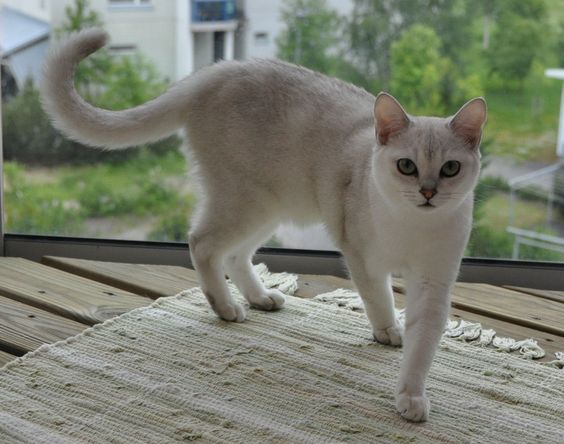
| Advantages | Challenges |
|---|---|
| Sociable and even-tempered; good with children and usually with dogs | Genuinely dislikes long days alone; a working household needs a plan |
| A soft, chirruping voice rather than the carrying Burmese demand | Two inherited risks, PKD1 and hypokalaemia, that must be tested for |
| Very low grooming requirement for such a striking coat | Puts on weight readily once neutered |
| Bright and willing; takes to clicker work and calm carrier handling | Uncommon in Britain, so expect a waiting list and a journey to collect |
| Adapts well to flats and to changes of routine | Confident with strangers, which argues for secure outdoor access |
Interesting Facts About the Burmilla
- All four founding kittens were female, shorthaired and black shaded silver, and all four carried the Astahazy prefix: Gabriella, Galatea, Gemma and Gisella.
- The name is a portmanteau of Burmese and Chinchilla, chosen in preference to “Silver Burmese” to keep two breeding programmes distinct.
- The Asian Group recognises 816 permutations of colour, pattern and coat length, one of the widest ranges of any breed the GCCF registers.
- Registrations tell their own story: 67 Asians registered in 1988, more than 700 a year by 2001, and 101 Asian Shorthairs in 2025.
- The only outcross permitted within the group is to the Burmese, with a defined four-generation route back to full Asian registration for approved outcross breeds.
- No cat breed is hypoallergenic. Claims that the Burmilla produces dramatically less Fel d 1 than other cats are unsupported, and an allergic visitor should be offered an antihistamine rather than a reassurance.
Frequently Asked Questions About the Breed
Where does the Burmilla come from?
From Britain, and from an accident. In 1981 a Chinchilla Persian named Jemari Sanquist reached a lilac Burmese queen, Bambino Lilac Faberge, in the household of the breeder Miranda von Kirchberg, whose prefix was Astahazy. The litter of four silver shaded females born on 11 September that year became the foundation of the breed, and of the wider Asian Group that grew up around it.
Is the Burmilla recognised by the GCCF, and under what name?
Yes. In her home registry she is the Asian Shaded, one of five varieties in the Asian Group. The group received preliminary recognition in 1990; the Burmilla reached championship status in 1997, and all five varieties had done so by 2003. “Burmilla” remains the everyday name, but the registry’s classification governs shows and registration.
My kitten’s pedigree says ASH ns 11. What does that mean?
It is a black silver shaded Asian shorthair, which is to say a classic Burmilla. ASH is the Asian shorthair, n is black, s marks the silver undercoat and 11 is the shaded pattern; in GCCF breed numbers the same cat is 72 43ns. If a document shows BML or BMS it came from FIFe or WCF rather than the GCCF, and if it shows BSH somebody has confused the breed with the British Shorthair.
Which two DNA test results should I ask a British breeder to show me?
PKD1 and hypokalaemia. PKD1 is dominant, so a single copy causes disease and results read normal or affected; two normal parents settle it. Hypokalaemia from the WNK4 mutation is recessive, so results read normal, carrier or affected, and what matters is that two carriers were not mated together. Since 1 January 2018 the GCCF has required hypokalaemia testing for all Asians registered with active status, so the certificate should exist.
Does my cat legally have to be microchipped?
In England, yes. Since 10 June 2024 every owned cat must be microchipped by twenty weeks of age and registered on a compliant database, with the keeper’s details kept up to date; the only exception is a vet-certified health exemption. In Wales, Scotland and Northern Ireland it is strongly recommended but not compulsory. Wherever you live, a chip whose database record still lists the breeder is not doing its job.
How does the Burmilla differ in character from the Burmese?
She keeps the Burmese attachment to people and dislike of solitude, but she is calmer, quieter and less relentless about being the centre of attention. The Chinchilla side softened both the voice and the pace. If a Burmese joins in with everything loudly, a Burmilla joins in with everything and then settles.
Is she hypoallergenic, or at least better for allergy sufferers?
No. There is no hypoallergenic cat. All cats produce the Fel d 1 protein in saliva and skin secretions, output varies far more between individual cats than between breeds, and no reliable evidence places the Burmilla below average. Anyone with a cat allergy should spend time with the individual cat and take medical advice rather than breed advice.
Does she moult, and how much grooming does she need?
She moults, like every cat, typically in spring and autumn, though British central heating spreads it thinly across the year. The coat does not mat, so a weekly brush with a rubber mitt is enough, twice weekly during a heavy moult and all year for a Tiffanie.
Can a Burmilla be left alone while I am at work?
For a normal working day, yes, but only with company or occupation arranged. This is the breed’s weakest point. A second compatible cat is the best answer; puzzle feeders, a high perch and someone dropping in are workable alternatives. A Burmilla left alone from early morning to late evening on most days becomes vocal, clingy or destructive, and none of that is naughtiness.
Conclusion
The Burmilla is one of the few pedigree cats Britain can claim entirely as her own, and one of the very few anywhere that exists because somebody left a door open. Everything worth having in her was built afterwards by British breeders who wrote a standard, formed a committee, climbed the GCCF’s ladder rung by rung and then, in 2018, obliged themselves to test for the one fault they knew was hiding in the pedigrees.
That is the spirit in which to take one on. Ask for the two certificates, check the microchip number appears on every document, home her at thirteen weeks rather than eight, and be honest about how many hours a day the house stands empty. Do those four things and a Burmilla cat will give you twelve to sixteen years of company that is warm without being wearing, and a coat that catches the light in a way no photograph has ever quite managed.
- Affectionate, sociable, balanced
- Calmer than the Burmese, good with children
- A striking silver-tipped coat
- Clever, playful, friendly to everyone
- Dislikes being left alone for long
- A tendency to polycystic kidney disease (PKD, from the Persian line)
- A tendency to allergies
- Needs attention and company
| Burmese | British Shorthair | Asian Tabby | |
|---|---|---|---|
| Weight | 3–6.5 kg | 4–8 kg | 4–7 kg |
| Energy | 4 | 2.5 | 4 |
| Apartment | 5 | 5 | 5 |
| Beginners | 4 | 4.5 | 4 |
Where does the Burmilla come from?
Is the Burmilla recognised by the GCCF, and under what name?
My kitten's pedigree says ASH ns 11. What does that mean?
Which two DNA test results should I ask a British breeder to show me?
Does my cat legally have to be microchipped?
How does the Burmilla differ in character from the Burmese?
Is she hypoallergenic, or at least better for allergy sufferers?
Does she moult, and how much grooming does she need?
Can a Burmilla be left alone while I am at work?
TICA / WCF / GCCF / FIFe standards (Burmilla)
For apartments · For kids · For beginners · Most affectionate · Quietest · Hypoallergenic · All rankings →