

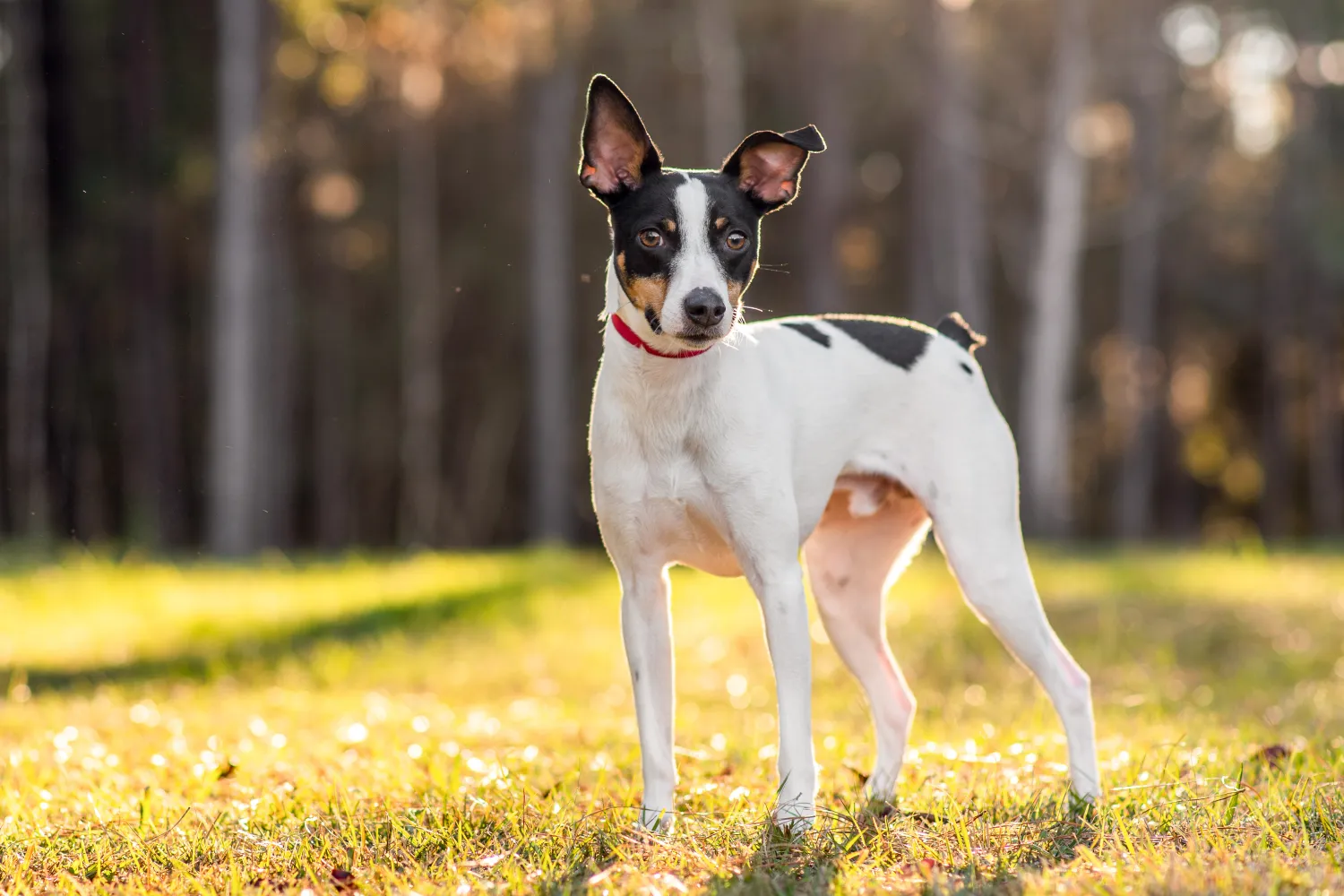
| Height | 25–46 cm |
| Weight | 4.5–11 kg |
| Lifespan | 13–18 years |
| FCI group | not recognized by the FCI (recognized by UKC/AKC) |
| Origin | USA |
Exact ratings
- Generally a very healthy, long-lived breed
- Patellar luxation
- Legg-Calvé-Perthes disease
- Allergies; hip dysplasia (less often)
- Dental disease (in smaller individuals)
Moderate quality food, with weight control. The smooth coat is low-maintenance; protect it from the cold in winter; provide exercise and activity for its sharp mind — this is an active working breed.
The Rat Terrier isn’t just a dog; it’s a bundle of energy, intellect, and devotion packed into a compact and elegant frame. This American breed has come a long way from being an indispensable farmhand to becoming a beloved companion in modern city apartments. If you’re looking for a dog that combines a sharp mind, endurance, and boundless love for its owner, this article will help you navigate all the nuances of the breed. Learn more on Tvaryny.
Breed History
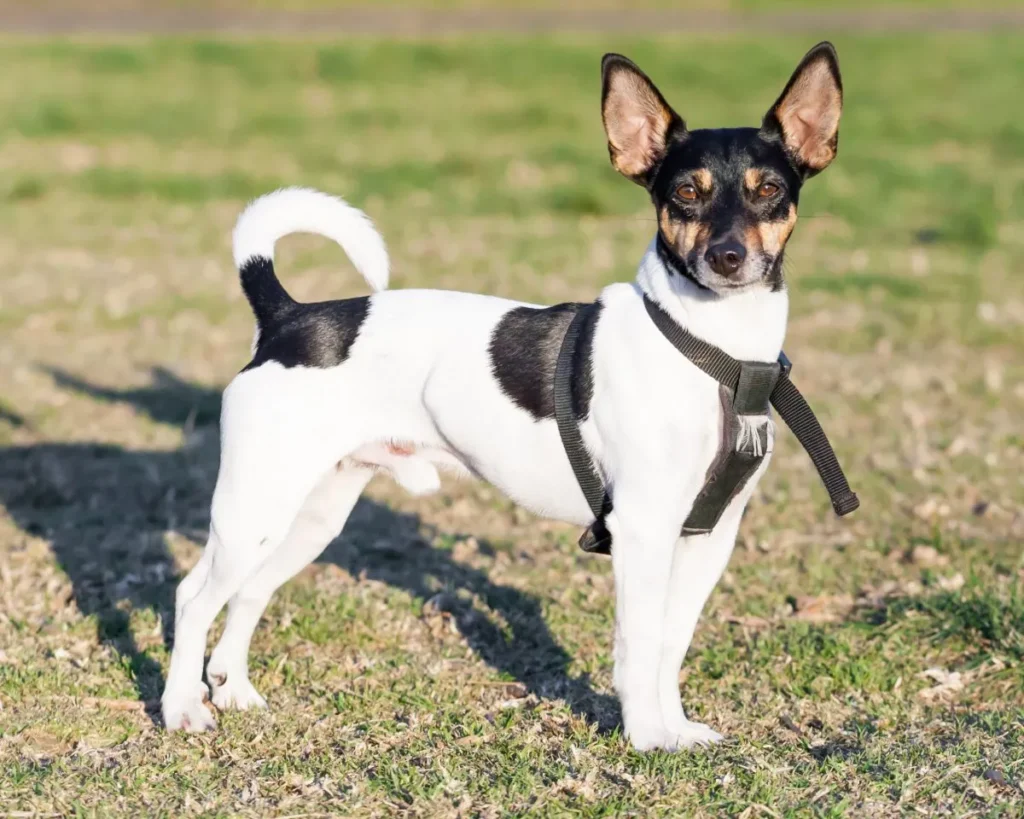
The history of this breed is a classic example of the American Dream. The breed was formed not in show rings, but in the field, where maximum efficiency was required from the dog. In the 19th century, immigrants from Britain brought various terriers (Manchester, Fox Terriers) to the US for pest control. Later, Italian Greyhound and Whippet bloodlines were added to increase speed, along with Beagles to improve their nose.
Legend has it that the breed was named by Theodore Roosevelt himself, whose dog named Skip did a brilliant job dealing with rats in the White House. Although there is little documentary evidence of this, the name “Rat Terrier” perfectly describes their original purpose. In the 1920s and 40s, this was one of the most common breeds on American farms. However, with the advent of chemical pest control and the industrialization of agriculture, the breed’s popularity declined somewhat, only to be revived as a family dog in the late 20th century.
Appearance and Breed Standards
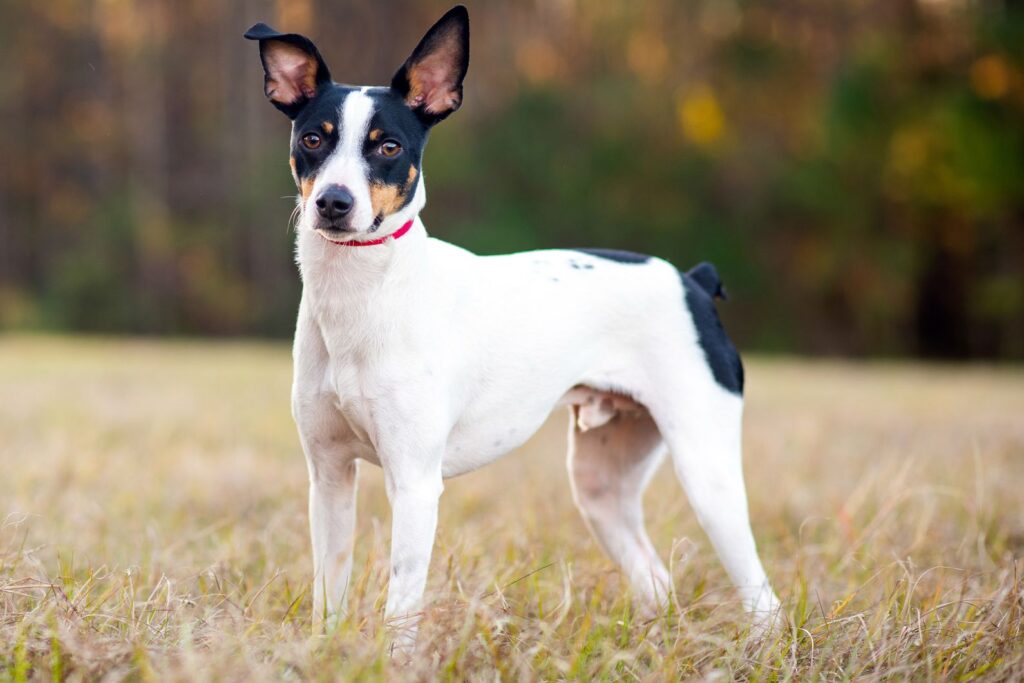
The Rat Terrier is a sturdy, compact dog with a smooth coat and an intelligent gaze. They look athletic but not coarse. One of the features of the breed is the variety of sizes. Unlike many other breeds where there is a single height standard, Rat Terriers are divided into two main size categories: Miniature and Standard.
| Characteristic | Miniature | Standard |
|---|---|---|
| Height at withers | 10 – 13 inches | 13 – 18 inches |
| Weight | 10 – 18 lbs | 18 – 25 lbs |
| Coat type | Short, dense, smooth | Short, dense, smooth |
| Lifespan | 15 – 18 years | 15 – 18 years |
The dog’s head is wedge-shaped. The ears are a separate topic entirely. They can be erect, semi-erect, or button ears. All these variants are acceptable; the main thing is expressive mimicry and ear mobility, indicating the animal’s attentiveness.
Rat Terrier coloration is extremely variable. The classic look is piebald (parti-color), where the base color is always white, and spots can be black, chocolate, red, apricot, or blue. Tricolor is also very common.
Character and Temperament: More Than Just a Hunter

Many people confuse this breed with other small terriers, but the Rat Terrier has a unique set of traits. They are less “yappy” and hyperactive than their close relatives. This is a dog with an “on/off” switch. Outdoors, they are tireless athletes ready to chase a ball for hours, but at home, they love to curl up on the couch next to their owner.
- Intellect: They are extremely smart and learn quickly, but can show some stubbornness.
- Socialization: They get along well with other dogs if raised together. However, due to a high prey drive, small animals (gophers, hamsters, rats) will always be viewed as prey.
- Relationship with humans: This is a very people-oriented breed. They intuitively sense their owner’s mood.
Working Qualities and Training
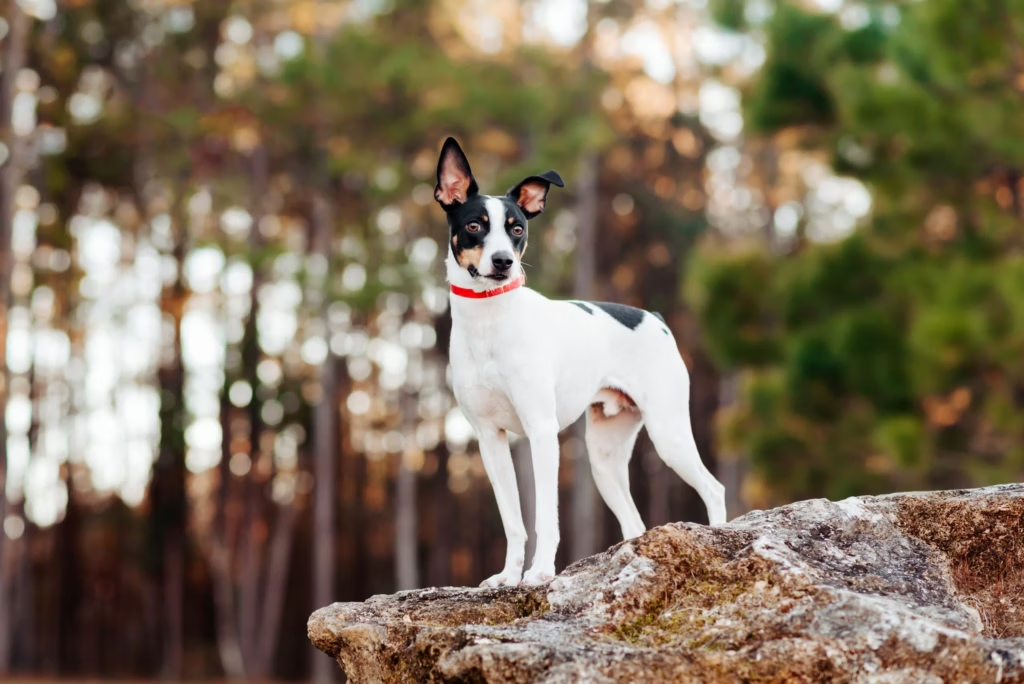
The Rat Terrier is a universal soldier. Its hunting instincts are strong, but they work differently than in specialized breeds. For example, while the Estonian Hound is built for long-distance pursuits by scent and voice, the Rat Terrier works by sight and smell over short distances, attacking prey lightning-fast in burrows or on the surface. He won’t chase a hare for miles; his job is to find and neutralize right here, right now.
As for guarding qualities, the Rat Terrier is an excellent “alarm system.” They are vigilant and brave. Of course, physically they cannot stop an intruder the way a powerful Moscow Watchdog would, but not a single rustle at the door will go unnoticed. Their task is to warn the owner, and they handle this perfectly.
Training Features
Training this breed is a pleasure if you find the right approach. They do not tolerate drilling or roughness. The best method is positive reinforcement (treats, play, praise). Consider these points:
- Short sessions: Rat Terriers get bored quickly with monotonous repetition.
- Early socialization: Introduce the puppy to different people, sounds, and surfaces as early as possible.
- Instinct control: Pay special attention to recall commands like “Come” and “Leave it,” because upon seeing a squirrel, the dog might suddenly “lose its hearing.”
Care and Maintenance
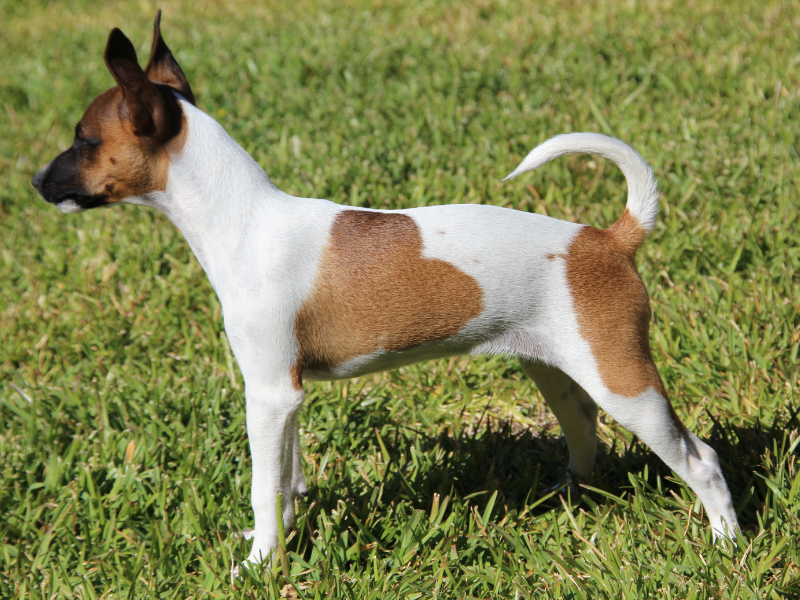
This breed is ideal for those who don’t want to spend hours on grooming. The Rat Terrier’s coat is short and requires minimal maintenance.
- Brushing: It’s enough to go over them with a rubber mitt once a week to remove dead hair. During shedding seasons (spring/fall), the rountine can be done more often.
- Bathing: Only when necessary. Too frequent washing can dry out the skin.
- Nails: Trimming nails is mandatory every 2-3 weeks if they don’t wear down naturally on asphalt.
- Teeth: Regular tooth brushing will help avoid the formation of tartar, which small terriers are prone to.
Nutrition: Key Recommendations
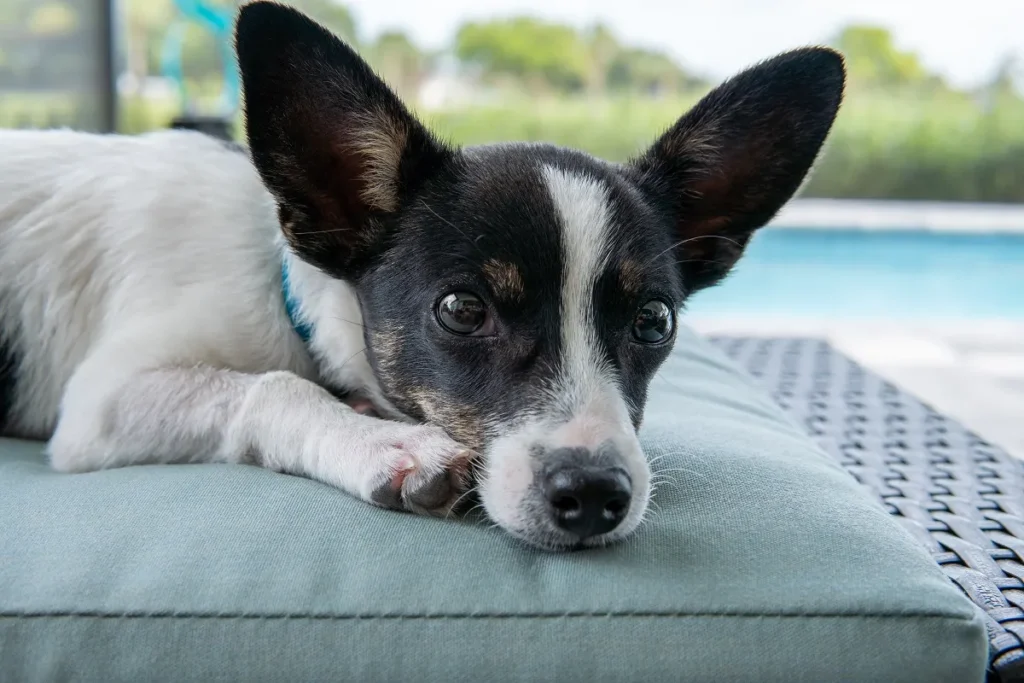
Rat Terriers love to eat and can quickly gain excess weight if portions aren’t controlled. The choice between dry food (super-premium or holistic class) and a raw diet depends on your capabilities, but the nutrient balance must be ideal.
| Component | Importance for Rat Terrier | Sources in Natural Diet |
|---|---|---|
| Proteins | Building material for muscles, energy | Beef, turkey, rabbit, ocean fish |
| Fats | Skin and coat health, energy | Salmon oil, chicken fat (moderate) |
| Carbs | Source of fiber, digestion | Rice, buckwheat, zucchini, pumpkin |
| Vitamins | Immunity, metabolism | Seasonal vegetables, fruits (apples), supplements |
Health and Genetic Predispositions
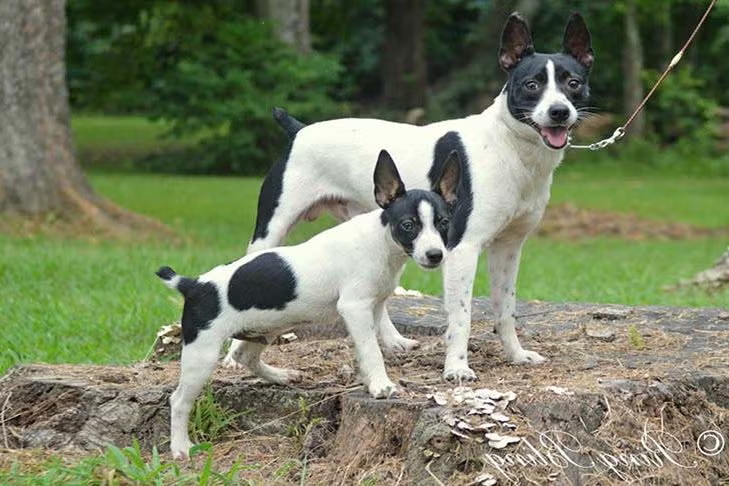
“A healthy breed” here means “no mass breed-wide syndrome”, not “no risk” — see the list below. However, like any breed, they have thier weak points. A responsible owner should be aware of the following risks:
- Patellar Luxation: A common problem in small breeds. It can manifest as intermittent limping.
- Primary Lens Luxation (PLL): A genetic eye disease that can lead to glaucoma and blindness. DNA tests exist to identify carriers.
- Allergies: Skin reactions to food or household chemicals.
- Hip Dysplasia: Although rarer than in large dogs, it occurs, especially in the standard variety.
Comparing the Rat Terrier with Similar Breeds
Future owners often hesitate between several terrier breeds. To make the choice easier, it’s worth understanding the key differences. For instance, if you compare with a popular relative, the Jack Russell Terrier is usually more assertive, louder, and requires even more experience in training, whereas the Rat Terrier has a somewhat softer character.
Another close relative is the Toy Fox Terrier. In fact, the Toy Fox Terrier branched off from Rat Terriers as a smaller, more decorative version, but the Rat Terrier retained more working qualities and a sturdier build.
It is also interesting to mention the American Hairless Terrier. This breed actually originated from Rat Terriers due to a natural mutation. Therefore, if you like the Rat Terrier’s character but are allergic to fur, the hairless variant might be the ideal alternative.
| Characteristic | Rat Terrier | Jack Russell Terrier | Toy Fox Terrier |
|---|---|---|---|
| Energy Level | High, but manageable | Very high, explosive | Medium/High |
| Attitude to Strangers | Wary | Friendly or aggressive | Friendly |
| Tendency to Bark | Moderate | High | High |
| Training Needs | Medium | Very high | Medium |
Pros and Cons of the Breed
Advantages
- Compact size, convenient for apartments and travel.
- High intelligence and ability to learn.
- Robust health and longevity (often living up to 16-18 years).
- Easy coat care.
- Almost no specific “doggy” smell.
Disadvantages
- High energy level – they need active walks.
- Hunting instinct can create problems with other small animals.
- Tendency to dig holes in the garden (it’s in their blood).
- Can be wary of strangers, requiring socialization.
Interesting Facts About the Breed
- Catching Champions: One Rat Terrier destroyed a record number of rats in a barn in 7 hours – 2,501 of them. This is a historical fact that demonstrates their incredible work capacity.
- Star Owners: Besides Theodore Roosevelt, fans of the breed included writer William Faulkner and many Hollywood stars of the last century.
- Long-livers: Rat Terriers often make the lists of breeds that live the longest. 17-18 years is not rare for them, but rather the norm with good care.
- Natural Bobtails: Many puppies are born with naturally short tails, although others traditionally had their tails docked (now this practice is prohibited in many countries).
Frequently Asked Questions (FAQ)
Is the Rat Terrier suitable for a family with children?
Yes, this is a great choice for families with school-age children. They are playful and patient. However, you should be careful with toddlers – the dog does not like rough handling and might snap if hurt.
Do they shed a lot?
Shedding is moderate. This isn’t a dog that will have fur flying around the apartment in clumps, but short, sharp hairs can get stuck in furniture upholstery.
Can a Rat Terrier live outside in a kennel?
Absolutely not. They have no undercoat, so they get very cold in chilly weather. Furthermore, this is a social breed that suffers without human contact. In winter, they definitely need clothes for walks.
How do they handle being alone?
Rat Terriers can stay home alone if trained to do so. However, if left for a long time without toys and activity, they might find their own entertainment – for example, chewing on shoes or furniture.
Video About the Breed
- Sharp, easy to train, devoted
- Compact, suits an apartment and a novice
- Hardy and surprisingly long-lived (13–18 years)
- An affectionate family companion and a watchdog “doorbell”
- Keeps a strong hunting instinct (rodents)
- Prone to barking and digging
- Needs exercise and activity
- Feels the cold in winter (short coat)
| American Hairless Terrier | Jack Russell Terrier | Toy Fox Terrier | |
|---|---|---|---|
| Height | 30–41 cm | 25–30 cm | 22–29 cm |
| Energy | 4 | 4.5 | 4 |
| Apartment | 4.5 | 3.5 | 4.5 |
| Beginners | 4 | 3 | 4 |
What was the Rat Terrier bred for?
Is the Rat Terrier good for a family?
How long does the Rat Terrier live?
UKC/AKC standard (Rat Terrier) · USA
For apartments · For kids · For beginners · Active · Smartest · Hypoallergenic · All rankings →