

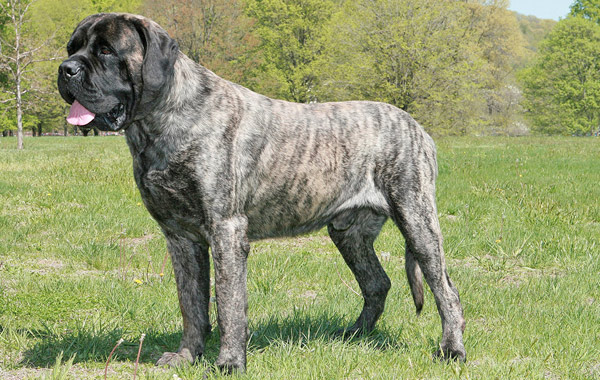
| Height | 70–80 cm |
| Weight | 55–100 kg |
| Lifespan | 6–10 years |
| FCI group | 2 · pinschers, schnauzers, molossoids |
| Origin | United Kingdom |
Exact ratings
- Hip and elbow dysplasia
- Gastric torsion (bloat, giant breed)
- Cancer (lymphoma, osteosarcoma) — the leading cause of death
- Heart disease; entropion
- A giant's short lifespan
Quality large-breed food, with controlled growth in puppyhood (joints) and feeding in small portions (torsion risk). Moderate exercise without overloading the joints when young; weight control.
The English Mastiff is a breed that embodies grandeur, power, and tranquility. This giant dog, one of the heaviest in the world, impresses with its sheer size, but behind that formidable appearance lies an incredibly good-natured and loyal heart. Despite its bulk, the Mastiff can be a wonderful companion for a family. They aren’t prone to unprovoked aggression and tend to treat strangers with caution rather than hostility. It seems English Mastiffs are well aware of their power and see no need to prove it without cause. They are calm, balanced, and endlessly loving toward their family, becoming a reliable gaurdian. Learn more on Tvaryny.
Brief Overview of the English Mastiff
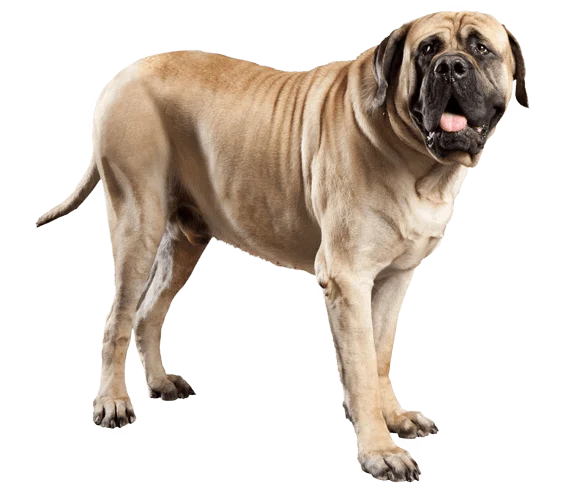
| Origin | United Kingdom |
| First Mentioned | Ancient times, modern standard from the 19th century |
| Lifespan | 6-10 years |
| Height at Shoulder | Males: 30+ inches, Females: 27.5+ inches |
| Weight | Males: 160-220+ lbs, Females: 120-170 lbs |
| Temperament | Calm, loyal, courageous, good-natured |
| Activity Level | Low |
| Drooling Tendency | High |
| Snoring Tendency | High |
History of the Breed
The history of the English Mastiff goes back to ancient times, and tracing it to the very beginning is almost impossible. It is beleived that huge dogs resembling Mastiffs arrived in Britain with Celtic tribes migrating across Europe. Thanks to the island’s isolation, a unique type of war dog was formed here, impressing everyone with their strength and courage. When the Romans invaded the British Isles, they were so astounded by these fierce dogs that they began exporting them to Rome to participate in gladiator battles, where their opponents were bears, lions, and bulls. It was likely the Romans who gave them the name “Mastiff” (from the Latin mansuetus – “tame” or “mild”, which is somewhat ironic).
In medieval England, Mastiffs were used as reliable guards for castles and estates, as well as for hunting big game like wolves and bears. Over time, as the need for war and hunting dogs vanished, the breed found itself on the brink of extinction, especially after World War II. To restore the population, enthusiasts had to put in considerable effort, crossing the surviving purebred Mastiffs with representatives of other Molosser breeds, such as the Bullmastiff and potentially the Great Dane. Thanks to this selective breeding work, the breed was revived, and the modern English Mastiff is the result of titanic labor by breeders, retaining its majesty but becoming significantly kinder and calmer.
What the English Mastiff Looks Like: Standard and Appearance
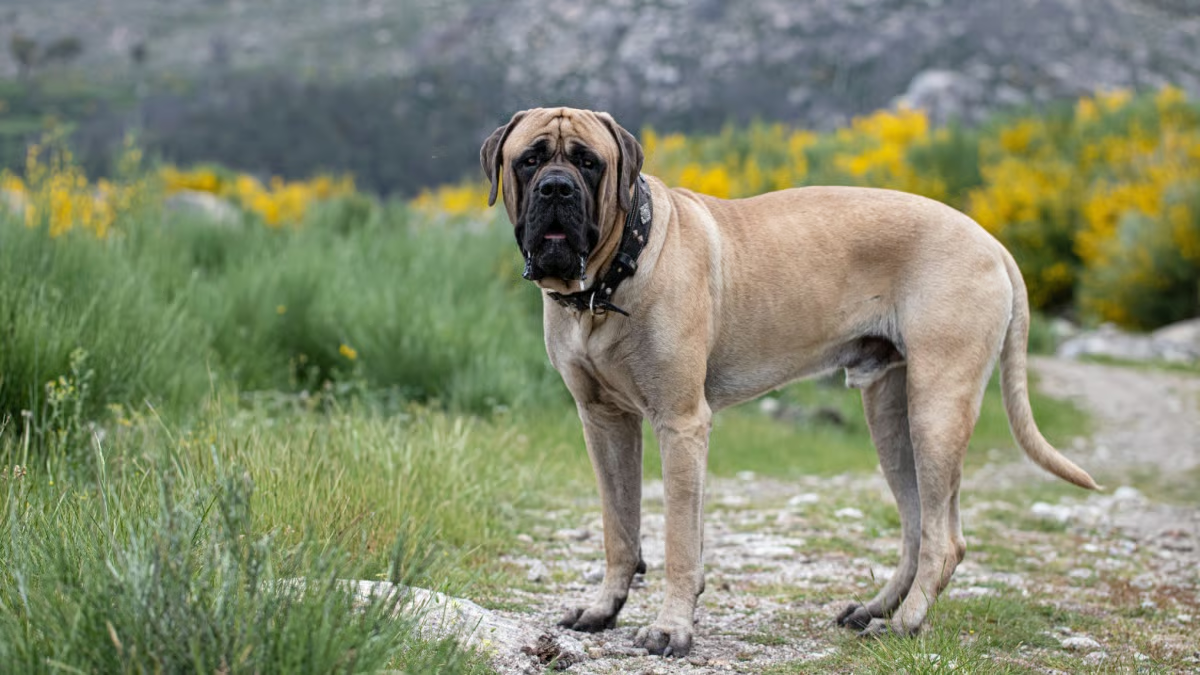
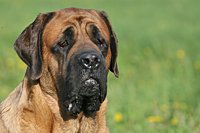
The English Mastiff is a dog that impresses with a harmonious combination of power and nobility. Its body is massive and muscular, with a wide and deep frame.
- Head: Very large, broad, and square. The wider the head, the better according to the standard. The forehead is flat, but wrinkles appear when the dog is interested in something.
- Muzzle: Short, broad, blunt, with a characteristic “black mask” covering the muzzle, ears, and area around the eyes.
- Eyes: Small, dark (hazel or dark brown), set wide apart. The gaze is calm and wise.
- Ears: Small, thin to the touch, V-shaped, set high and wide, lying flat against the cheeks.
- Body: The chest is broad and deep. The back is wide and muscular. The torso is long and powerful.
- Tail: Set high, wide at the base, and tapering toward the end. In a calm state, it hangs down; when excited, it rises but not above the backline.
- Coat: Short, close-lying, with a dense and soft undercoat that protects against bad weather.
- Color: Apricot, fawn, silver-fawn, or brindle. A black mask is an essential element.
Character and Temperament
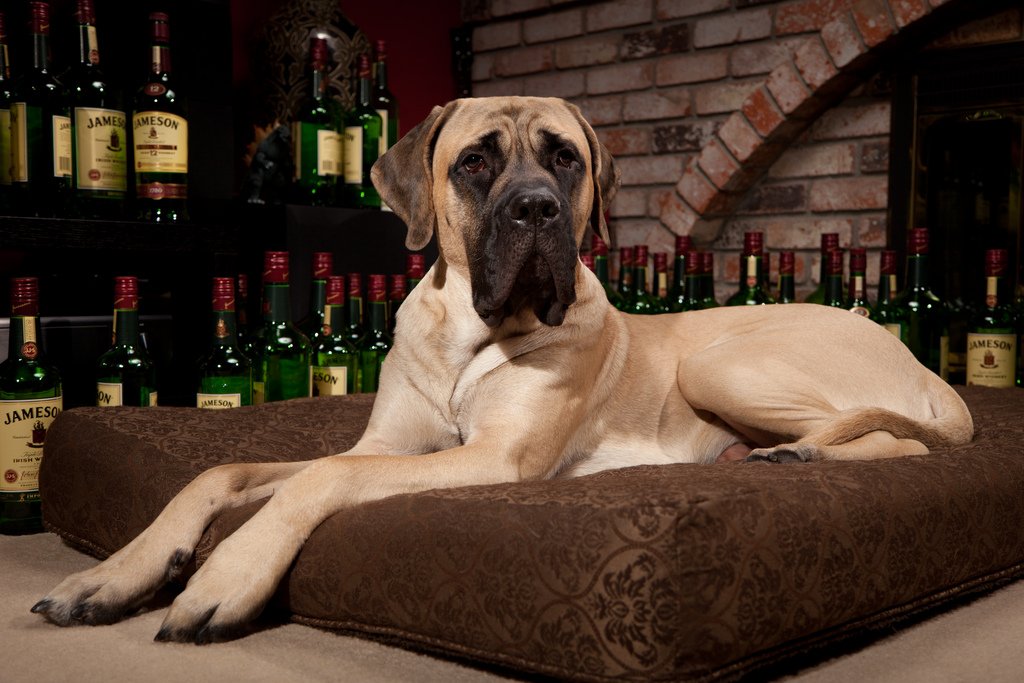
Despite their formidable appearance, the English Mastiff is a “gentle giant.” Their character can be described as calm, balanced, and extremely devoted to their family. This is a companion dog that craves human attention and does not tolerate loneliness well. Mastiffs rarely bark, voicing their opinion only if there is a real threat to their owners. They are not fussy and aren’t prone to active games, preferring to quietly observe what is happening from their favorite spot. However, this doesn’t mean they don’t need exercise. Much like the Sussex Spaniel, which is also a calm breed, the Mastiff requires daily but not exhausting walks.
They treat strangers with natural distrust. A Mastiff won’t lung at a guest but might position itself between them and the owner, carefully assessing the situation until convinced there is no threat. Their protective instinct is innate. They would rather knock a potential intruder off their feet with their mass than use their teeth. These are very intelligent and sensitive dogs that keenly sense their owner’s mood. Roughness and yelling can deeply offend a Mastiff, so training must be built on respect and patience.
Health: Common Issues and Prevention
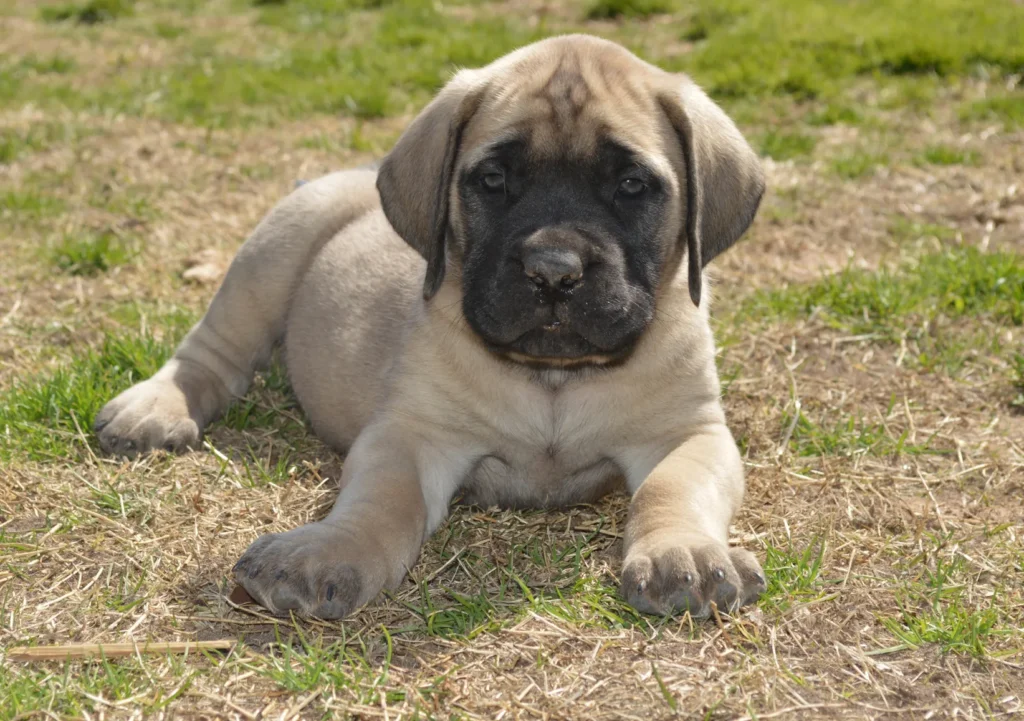
Like many giant breeds, English Mastiffs, unfortunately, are prone to a number of hereditary and acquired diseases. It is important to know about these risks to carry out prevention in time and consult a veterinarian.
| Condition | Symptoms and Prevention |
|---|---|
| Hip and Elbow Dysplasia | Lameness, pain during movement, reluctance to stand up. Prevention: weight control, moderate exercise (especially for puppies), high-quality food, X-rays for early diagnosis. |
| Gastric Torsion (Bloat) | Restlessness, attempts to vomit without result, swollen abdomen. Prevention: feeding small portions 2-3 times a day, avoiding activity immediately after eating. |
| Cardiomyopathy | Shortness of breath, coughing, rapid fatigue. Prevention: regular check-ups with a cardiologist, balanced nutrition. |
| Eye Diseases (Entropion, Ectropion, Cherry Eye) | Tearing, redness, purulent discharge. Prevention: regular eye exams, hygiene procedures. Surgical intervention is often required. |
| Cystinuria (Kidney Stones) | Frequent urination, blood in urine. Prevention: special diet, sufficient water intake. |
| Obesity | Excess weight, shortness of breath. Prevention: strict control over the diet, regular but moderate physical activity. |
Knowledge is power. Regular visits to the vet, proper nutrition, and paying close attention to any changes in your pet’s behavior and well-being are the keys to their long and happy life.
Caring for an English Mastiff
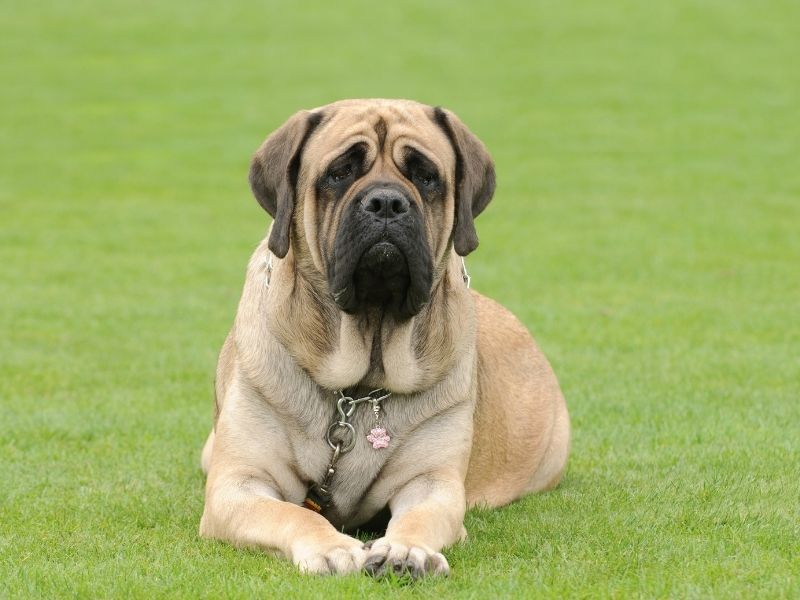
Caring for a Mastiff isn’t overly complicated, but it does have its nuances.
- Coat Care: The Mastiff’s short coat doesn’t require complex maintenance. Brushing it with a rubber brush or glove 1-2 times a week to remove dead hair is sufficient. During seasonal shedding (spring and fall), the procedure should be done daily.
- Bathing: Bathe your Mastiff only when necessary, no more than a few times a year. Use special shampoos for short-haired dogs to avoid skin irritation.
- Eye and Wrinkle Care: This is a very important aspect. The wrinkles on the muzzle need to be wiped daily with a dry cloth or special lotion to prevent bacterial infections. Eyes also require regular inspection and cleaning from natural discharge.
- Ears and Nails: Regularly check ears for dirt and signs of inflammation. Trim nails once a month if they don’t wear down naturally.
- Physical Activity: Mastiffs are not athletes. Leisurely walks totaling 30-60 minutes a day are enough for them. It is important not to overload puppies until their joints have strengthened.
Remember that Mastiffs tolerate heat poorly. On hot summer days, walks are best moved to the early morning or late evening, and during the day, provide the dog with a cool place to rest and access to fresh water.
Training and Socialization
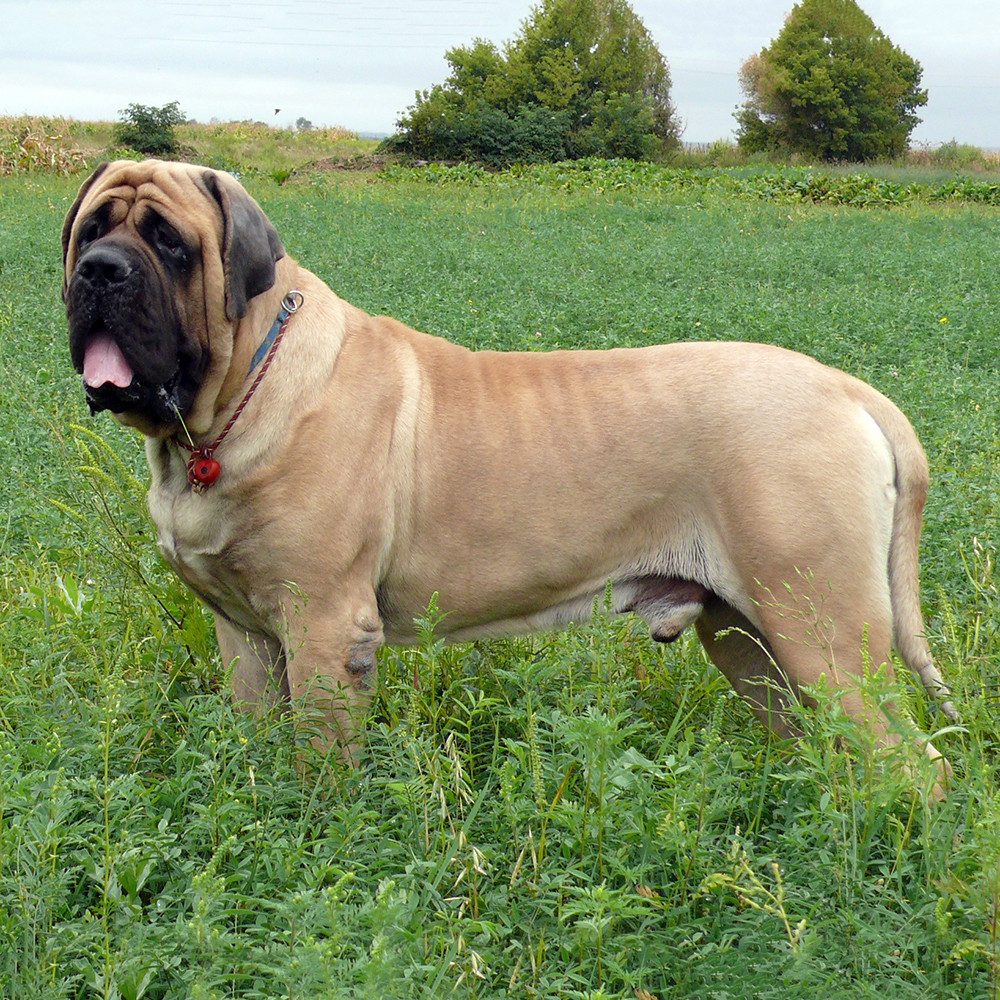
Mastiffs are smart dogs, but they can be stubborn. Training must be consistent, patient, and calm. They won’t mindlessly repeat the same command many times. A Mastiff memorizes a command and will execute it when they see fit. The key to success is positive reinforcement: praise, treats, and affection.
Early socialization is critical. From puppyhood, the dog needs to be introduced to different people, sounds, places, and other animals. This will help raise a confident and balanced dog that reacts appropriately to new situations. Given their size and strength, an uncontrollable Mastiff can be a serious problem. Therefore, an obedience course is mandatory. Never use physical force or yelling – this can permanently damage the dog’s trust.
Nutrition: Key Recommendations
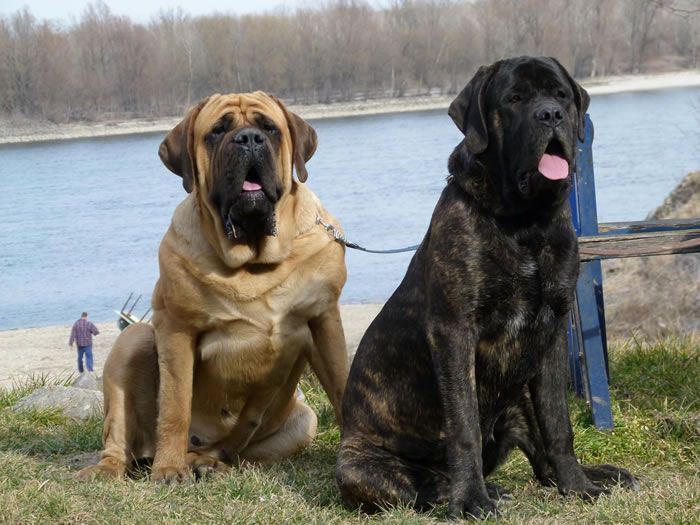
Feeding such a giant is a responsibility. The diet must be balanced and correspond to the dog’s age and activity level. Many owners and breeders prefer high-quality holistic or super-premium dry food for giant breeds. Such food already contains all the necessary vitamins, minerals, and chondroprotectors to support joint health.
With a natural diet, the basis should be lean meat (beef, turkey), organ meats, sea fish, fermented milk products (cottage cheese), grains (rice, buckwheat), and vegetables. The main rule is do not overfeed! Obesity is enemy #1 for a Mastiff’s joints and heart. An adult dog is fed twice a day, dividing the daily allowance into two portions to avoid the risk of gastric torsion. Clean drinking water should always be freely available.
Pros and Cons of the Breed
| Pros | Cons |
|---|---|
| Incredible loyalty to family. The Mastiff is its owner’s shadow. | Huge size. Requires a lot of space in the house and car. |
| Calm and balanced character. Not prone to tantrums or barking without cause. | High cost of ownership. Significant expenses for food and veterinary care. |
| Excellent guardian. Just its appearance scares off intruders. | Heavy drooling and snoring. You need to be ready for this. |
| Gets along well with children. Very patient and careful with little ones. | Short lifespan. On average 6-10 years. |
| Does not require intense physical exertion. Calm walks are enough. | Prone to certain diseases. Especially joint problems. |
| Easy to train. Smart and eager to please the owner. | Tolerates heat and loneliness poorly. |
Interesting Facts About the Breed
- Guinness World Record Holder: The heaviest dog in the world was an English Mastiff named Aicama Zorba. In 1989, he weighed 343 lbs.
- Dogs on the “Titanic”: There is a version that an English Mastiff belonging to one of the first-class passengers was on board the Titanic.
- Mastiffs and the Law: In medieval England, there was a law stating that only nobility were allowed to keep Mastiffs for protection.
- Origin of the Name: besides the Latin version, there is a suggestion that the name “Mastiff” comes from the Anglo-Saxon word “masty,” meaning “powerful.”
- Family Ties: The English Mastiff is an ancestor to many other Molosser breeds, including the Neapolitan Mastiff.
Frequently Asked Questions (FAQ)
Is the English Mastiff suitable for apartment living?
Theoretically, yes, if the apartment is large. Mastiffs are low-energy indoors. However, the main issue will be size. The dog needs a lot of space, and a small apartment will feel cramped. The ideal option is a house with a securely fenced yard.
Are English Mastiffs aggressive?
No. A properly raised and socialized Mastiff is the embodiment of calm. Aggression is not typical for this breed. They are excellent guardians, but their tactic is to intimidate, not attack.
Do they shed and drool a lot?
Yes. Mastiffs shed year-round, with peaks in spring and fall. Drooling is also a characteristic trait, especially after drinking, eating, or while waiting for treats. Owners should always have a towel on hand.
How much does an English Mastiff puppy cost?
The cost of a puppy from responsible breeders can be quite high, as it includes the cost of caring for the parents, vet tests, vaccinations, and quality raising. The price can vary significantly depending on the pedigree and the kennel’s reputation.
Can a Mastiff be left alone for long periods?
No. This is a very people-oriented breed. They suffer from loneliness, which can lead to destructive behavior and depression. This breed is not suitable for people who spend a lot of time away from home. Even a self-sufficient dog like the Portuguese Water Dog needs interaction, but for a Mastiff, it is a vital necessity.
Video About the Breed
- Calm, level-headed, good-natured
- Devoted and gentle with the family
- Thoughtful — it assesses rather than reacting impulsively
- A reliable protector without needless aggression
- One of the heaviest dogs — needs space
- Drools heavily
- A giant's short life (6–10 years)
- A predisposition to cancer and joint problems
| Bullmastiff | Broholmer | Great Dane | |
|---|---|---|---|
| Height | 61–69 cm | 70–75 cm | 72–90 cm |
| Energy | 2.5 | 2.5 | 3 |
| Apartment | 2.5 | 2 | 2 |
| Beginners | 2.5 | 2.5 | 2.5 |
Is the English Mastiff aggressive?
Is the English Mastiff good for a family?
How long does the English Mastiff live?
FCI Standard No. 264 · The Kennel Club
For apartments · For kids · For beginners · Active · Smartest · Hypoallergenic · All rankings →